 how-to
Retain Members With Recovery Equipment: A Gym Owner's Guide
Table of Contents
- Why Recovery Equipment Drives Member Retention
- Step 1: Evaluate Your Facility Size and Member Demand
- Step 2: Select the Best Recovery Equipment for Gyms
- Step 3: Design a Profitable Recovery Zone Layout
- Step 4: Integrate Recovery Into Your Recovery Services Revenue Model
- Step 5: Train Staff and Establish Safety Protocols
- Step 6: Monitor Usage, Adjust Pricing, and Maximize Member Lifetime Value
- Conclusion
Last Updated: August 27, 2026
Why Recovery Equipment Drives Member Retention
Member retention is the difference between a thriving gym and one constantly chasing new signups. When members experience real results, stronger performance, faster recovery, reduced soreness, they stay. Recovery equipment bridges that gap. It's not just another amenity; it's a tangible reason members come back.
The connection is straightforward: members who use recovery services visit more frequently. They spend more time in your facility. They're more likely to renew their membership when they see measurable improvements in how they feel post-workout. At Eternall Wellness, we help facilities evaluate how to integrate recovery into their member experience, and the pattern is consistent, facilities that add dedicated recovery zones can see improvements in member lifetime value and reduced churn.
Recovery equipment serves a dual purpose. For members, it accelerates adaptation and reduces injury risk. For your business, it creates multiple revenue streams: service fees, premium membership tiers, and increased facility use. Members who use recovery services don't just stay longer, they justify higher membership costs and become advocates who bring friends.
The real opportunity isn't just adding equipment; it's designing a recovery experience that feels integrated into your gym culture, not bolted on. That requires understanding your facility size, your member base, and how to position recovery as essential to their fitness journey.
Step 1: Evaluate Your Facility Size and Member Demand
Before investing in recovery equipment, assess whether your facility and member base can support it. This isn't about having the fanciest gym in town, it's about matching equipment to realistic use and revenue potential.
Start with your current membership size and activity patterns. A 150-member gym operates differently from a 500-member facility. Smaller gyms benefit from compact, multi-use recovery solutions that don't demand dedicated square footage. Larger facilities can justify standalone recovery zones with multiple modalities. The key metric is use: equipment sitting idle generates no revenue and damages your ROI story.
Survey your members directly. Ask what recovery services they'd actually use and what they'd pay for. Members interested in performance metrics, injury prevention, or competitive fitness are typically your best recovery equipment candidates. Casual members may not prioritize recovery, so segment your audience. A gym with a strong powerlifting or CrossFit community will see higher recovery equipment adoption than a facility focused on general fitness.
Consider your facility layout. Do you have unused treatment rooms, a back corner, or underutilized space? Recovery equipment doesn't require elaborate buildout, infrared saunas, massage chairs, and compression devices can fit into modest footprints. However, cramped layouts reduce perceived value and discourage use. Allocate at least 200-300 square feet if you're building a dedicated recovery zone (ihrsa.org).
Evaluate your current revenue model. If your gym relies purely on membership dues, recovery services represent a new revenue category. If you already offer personal training or specialized classes, members are primed to view recovery as part of a holistic fitness experience. Existing service infrastructure (staff trained in member interactions, billing systems, liability protocols) reduces your implementation burden.
Step 2: Select the Best Recovery Equipment for Gyms
Choosing the right equipment depends on your member profile, space constraints, and financial capacity. Not every modality works for every gym. Focus on equipment that aligns with member demand and your facility's positioning.
Infrared saunas deliver broad appeal. Members use them for muscle recovery, detoxification, and relaxation. They require dedicated space and electrical infrastructure but generate consistent revenue through session fees or membership tier upgrades. Saunas also create a premium perception, they signal that your facility prioritizes member wellness beyond basic training.
Massage chairs and percussive therapy devices offer high use and low barrier to entry. Members understand massage instantly; no education required. These devices fit into compact spaces and require minimal staff training. Revenue potential is solid: a chair generating 6-8 sessions per day at $15-25 per session creates meaningful income.
Cryotherapy chambers appeal to serious athletes and performance-focused members. They're premium equipment with higher price points, so they work best in facilities with affluent membership or strong competitive fitness communities. Cryotherapy requires staff training and safety protocols, which increases operational complexity.
Compression therapy devices (boots, sleeves) address a specific need, lymphatic drainage and circulation, making them valuable for injury recovery and athletic performance. They're compact, relatively affordable, and easy to operate. Members often use them between training sessions, which increases facility dwell time.
Red light therapy systems combine recovery benefits with aesthetic appeal. They're increasingly popular in wellness-focused facilities and align with broader health trends. Installation is flexible, and operational demands are minimal.
The best approach: start with 2-3 modalities that match your member base. A gym with CrossFit athletes might prioritize cryotherapy and compression therapy. A wellness-focused facility might lead with infrared sauna and red light therapy. Avoid the trap of adding every modality, it dilutes your focus, complicates training, and spreads your marketing message too thin.
Step 3: Design a Profitable Recovery Zone Layout
Your recovery zone layout determines use, member experience, and operational efficiency. A well-designed space feels intentional and premium; a poorly designed one feels like an afterthought.
Start with flow. Members should move from the main gym into the recovery zone naturally, not through a maze of hallways. Positioning matters: recovery equipment near the exit encourages post-workout use. Placing it near the main entrance creates a welcoming first impression for new members.
Allocate space strategically. Infrared saunas need privacy and ventilation, position them away from main traffic. Massage chairs and compression devices can be semi-public; members don't mind others seeing them use these tools. Red light therapy can be integrated into a corner or dedicated wall. Avoid cramming equipment into a tiny room; open layouts feel premium and encourage longer session times.
Create distinct zones if space allows. A "cool-down and mobility" area with stretching space and massage chairs. A "thermal recovery" zone with sauna and heat therapy. A "performance recovery" section with compression and cryotherapy. This segmentation helps members understand the progression and encourages them to use multiple modalities in sequence.
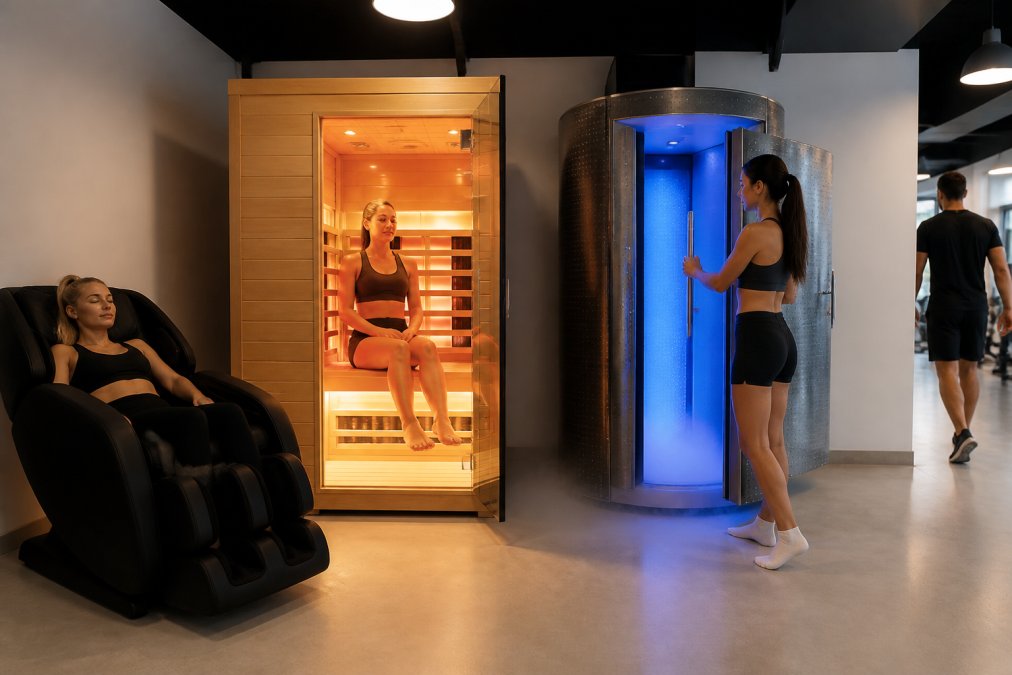
Lighting and atmosphere matter more than you'd think. Bright fluorescent lighting makes recovery feel clinical; soft, warm lighting encourages relaxation and extended stay. Add plants, calming colors, and perhaps ambient sound. Members should feel like they're entering a sanctuary, not a medical facility.
Plan for traffic flow during peak hours. If your gym sees 50 members between 5-7 PM, recovery equipment needs to accommodate simultaneous use. A single massage chair creates bottlenecks; two chairs or a chair plus a compression device spreads demand. Analyze your peak windows and size your recovery zone accordingly.
Include signage that educates and sells. Members unfamiliar with recovery equipment need guidance on benefits and session duration. Clear pricing and booking options (digital kiosk, app, staff-assisted) reduce friction and increase conversions.
Step 4: Integrate Recovery Into Your Recovery Services Revenue Model
Recovery equipment only generates revenue if members actually use it and pay for it. Your pricing and positioning strategy determines profitability.
Offer tiered access. A basic membership includes access to traditional gym equipment. A premium tier (add $20-30/month) unlocks recovery services. This creates a clear upgrade path and increases member lifetime value without forcing existing members into higher costs. Members already considering premium tiers see recovery as the justification.
Price sessions strategically. A single infrared sauna session might cost $25-35. A package of 10 sessions costs $200-250 (a 15-20% discount). Monthly unlimited recovery access costs $60-80. This ladder encourages higher commitment and predictable revenue. Unlimited access also increases use, members rationalize frequent use once they've paid the monthly fee.
Bundle recovery into personal training packages. A trainer selling a 12-week program can include 8 recovery sessions as part of the package. This increases perceived value, improves member outcomes (trained athletes who recover properly see better results), and creates a habit loop, members who experience recovery benefits often become repeat users.
Create seasonal promotions. "New Year's Resolution" packages bundling training and recovery. "Summer Performance" programs for athletes preparing for competition. "Injury Recovery" partnerships with physical therapists who refer clients to your sauna and compression therapy.
Track use obsessively. Which equipment generates the most sessions? Which members use recovery services? When do peak usage windows occur? This data informs staffing, pricing adjustments, and marketing. Equipment with low use signals either poor member awareness or poor product-market fit, adjust your approach or consider replacement.
At Eternall Wellness, we help facilities evaluate recovery equipment not just as capital purchases but as revenue-generating services. The difference is critical: equipment is a cost; a service is an asset that pays for itself through member fees.
Step 5: Train Staff and Establish Safety Protocols
Recovery equipment, especially thermal and cryotherapy modalities, requires proper operation and safety oversight. Inadequate training creates liability and damages member trust. Comprehensive protocols protect your business and your members.
Develop a training curriculum for every piece of equipment. Staff should understand contraindications, who shouldn't use specific modalities. A member with certain heart conditions shouldn't use cryotherapy (peer-reviewed research). Pregnant members should avoid saunas above specific temperatures (acog.org). Proper intake forms and staff knowledge prevent dangerous situations.
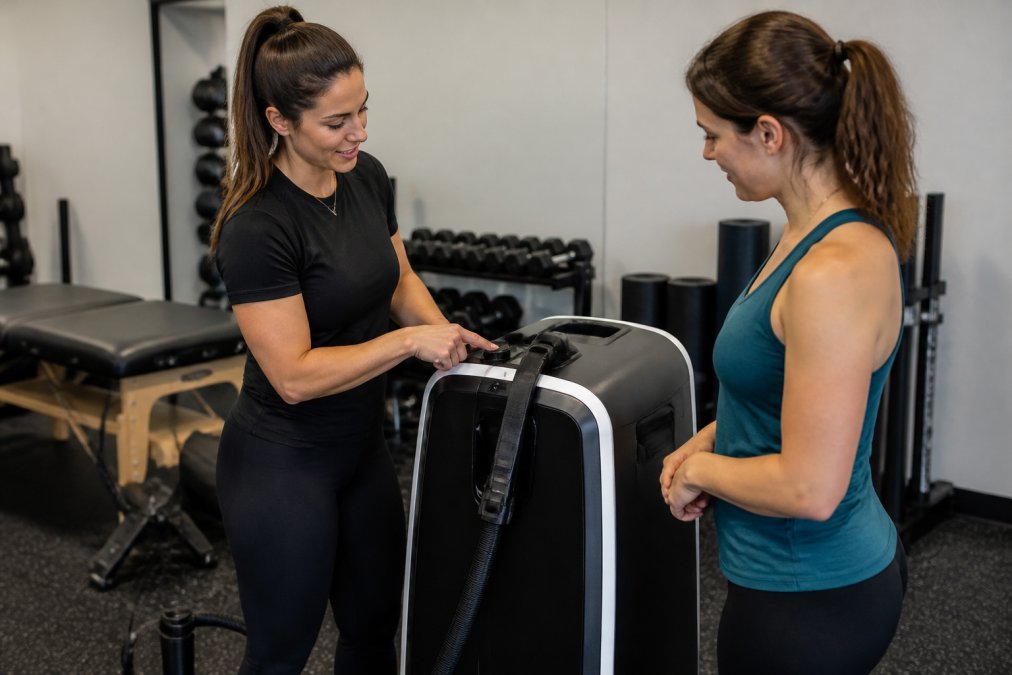
Create standard operating procedures for each device. How long should a session last? What temperature settings are appropriate? How do you clean and sanitize between uses? Documented procedures ensure consistency and reduce the risk of user error or equipment damage.
Establish liability protocols. Recovery equipment carries inherent risks, thermal stress, cold exposure, equipment malfunction. Work with your insurance provider to understand coverage and requirements. Proper waivers, informed consent, and documented safety training reduce liability exposure. Members should sign acknowledgments that they understand the risks and have been trained properly.
Implement hygiene standards rigorously. Recovery equipment often involves direct contact (massage chairs) or exposure to heat and moisture (saunas). Establish cleaning schedules and use antimicrobial protocols between sessions. Members notice cleanliness; poor hygiene undermines trust and discourages repeat use.
Schedule ongoing training. Equipment manufacturers often provide certification programs. Staff should refresh their knowledge quarterly. New hires need comprehensive onboarding before they're cleared to operate equipment independently.
Create a feedback loop. Members encountering issues should have a simple way to report problems. Equipment malfunction, discomfort, or safety concerns need immediate attention. Responsive problem-solving builds loyalty; ignoring issues creates frustration and negative word-of-mouth.
Step 6: Monitor Usage, Adjust Pricing, and Maximize Member Lifetime Value
Recovery equipment generates data. Track it obsessively. Usage patterns inform every subsequent decision, pricing adjustments, equipment replacement, marketing focus, and member targeting.
Implement booking and tracking systems. Digital platforms (app, kiosk, or staff-managed) create records of who used what equipment, when, and for how long. This data reveals which modalities drive engagement, which member segments prioritize recovery, and when peak demand occurs. A massage chair generating 12 sessions per day is a revenue engine; one generating 2 sessions per week suggests poor positioning or low member awareness.
Monitor member retention cohorts. Compare retention rates for members who use recovery services versus those who don't. Members using recovery equipment can show higher retention rates. This justifies investment in promoting recovery adoption.
Adjust pricing based on demand. If a sauna session consistently books out, increase the price incrementally. If compression therapy generates low use, lower the per-session cost or bundle it with other services. Price elasticity varies by member segment; premium members are less price-sensitive than budget-conscious ones.
Create loyalty mechanics. A member who uses recovery services 8 times per month earns a free session or discount on their next month. Gamification encourages higher use and builds habit.
Segment member communications. Members who've used recovery equipment should receive targeted content about new modalities, advanced techniques, and performance benefits. Members who haven't should see educational content addressing common objections. Personalized messaging drives adoption.
Calculate lifetime value for recovery users. A member who stays 20 months instead of 12 months (due to recovery benefits) can generate additional membership revenue. Add recovery service revenue, and the value multiplies. This justifies significant investment in recovery zone buildout and marketing.
Recovery equipment isn't a luxury add-on for elite gyms, it's a strategic lever for member retention and revenue growth. The gyms winning right now are those that view recovery not as an afterthought but as central to their member value proposition. Eternall Wellness helps facilities evaluate recovery technologies as business solutions, not just equipment purchases. Whether you're a 150-member facility or a 500-member operation, the right recovery strategy, properly implemented and marketed, transforms member experience and your bottom line. Ready to explore how recovery equipment can work for your specific facility? Our team can help you evaluate options, project ROI, and design an implementation plan that fits your space and member base.
Frequently Asked Questions
How does recovery equipment actually impact gym member retention rates?
Recovery equipment addresses a key pain point for active members: post-workout muscle soreness and fatigue. Members who have access to cryotherapy, compression therapy, infrared sauna, and massage modalities experience faster recovery and reduced downtime between workouts. This increases visit frequency and membership satisfaction. Facilities that integrate recovery services into their membership tiers can report higher member engagement and lower churn rates because the added value justifies membership cost and gives members more reasons to visit.
What's the typical payback period for recovery equipment at a smaller gym with 150 members?
Payback depends on equipment selection, pricing strategy, and utilization rates. A smaller facility starting with one or two modalities (such as an infrared sauna or massage chair) can achieve positive cash flow if priced as an add-on service and used consistently. Financing preserves capital while the equipment generates revenue to cover payments. Actual timelines vary based on your member base, local demand, and how aggressively you promote recovery services to existing members.
What staff training do I need to operate recovery equipment like hyperbaric chambers?
Hyperbaric chambers and thermal systems require operator certification and ongoing staff education. Your equipment provider should supply comprehensive training on safety protocols, member screening, equipment maintenance, and emergency procedures. Staff must understand contraindications (who cannot safely use the equipment), proper setup, session duration, and cleaning between uses. Establish written protocols for daily checks, maintenance logs, and member intake forms. This protects member safety and reduces liability exposure.
How should I price recovery services to maximize revenue without losing members?
Tier your recovery offerings into your membership model. Offer basic access (one modality per month) in standard memberships, premium access (unlimited recovery) in higher-tier memberships, and à la carte pricing for drop-in members or non-members. This creates upsell opportunities, members can upgrade to unlock more recovery access. Monitor usage metrics to refine pricing. If a modality sits idle, lower the price or bundle it with personal training. If demand exceeds availability, raise pricing or add another unit.
This article was written using GrandRanker