 ultimate-guide
Recovery Studio Business Plan Template 2026
Table of Contents
- Executive Summary: What Your Recovery Studio Business Plan Must Include
- Business Model Selection for Recovery Studios
- Wellness Center Startup Costs 2026: Equipment, Facility, and Operational Budget
- Hyperbaric Oxygen Therapy Business Plan: Service Menu and Pricing Strategy
- Recovery Studio Equipment ROI: Financial Projections and Break-Even Analysis
- Regulatory Compliance and Liability: Post-Pandemic Requirements for Recovery Facilities
- Marketing, Staffing, and Operational Workflow for Recovery Studios
- Conclusion: Building a Sustainable Recovery Studio Business
Last Updated: August 19, 2026
Executive Summary: What Your Recovery Studio Business Plan Must Include
A recovery studio business plan template 2026 serves as your operational and financial roadmap for launching or scaling a premium wellness recovery facility. Unlike generic business templates, a recovery studio business plan must address the unique capital requirements, regulatory landscape, and revenue models specific to hyperbaric oxygen therapy, thermal recovery, and advanced wellness modalities.
Your business plan should articulate three core elements: your value proposition for a specific target demographic, your financial projections tied to realistic equipment use rates, and your operational workflow for managing complex recovery equipment safely and compliantly. At Eternall Wellness, we've worked with gym owners, med spa directors, and wellness clinic managers to build plans that account for the high upfront capital expenditure while demonstrating clear pathways to break-even and profitability.
The sections below walk through each critical component of a recovery studio business plan template 2026. This guide covers everything from business model selection through post-pandemic regulatory compliance, with practical frameworks you can adapt to your specific facility size, location, and target market.
Business Model Selection for Recovery Studios
Your business model determines how you'll generate revenue from recovery services. Most facilities operate under one of three primary models: membership-based recurring revenue, pay-per-service transactional pricing, or hybrid models that combine both.
Membership models work best when you have consistent foot traffic and want predictable monthly revenue. A gym owner adding recovery services to an existing membership, for example, might offer recovery modalities as included benefits or as premium add-ons at tiered price points. The advantage here is retention: members who use recovery services stick around longer. The challenge is capacity management, you need enough equipment to serve peak demand without expensive idle time.
Pay-per-service models suit standalone recovery studios or med spas with variable clientele. Each session generates immediate revenue with no long-term commitment. This approach requires strong marketing and customer acquisition strategies to maintain consistent use, but it offers flexibility in pricing and service offerings.
Hybrid models combine membership revenue for core users with drop-in pricing for occasional clients. A wellness clinic might offer monthly recovery memberships to regular patients while accepting walk-in appointments at higher per-visit rates. This balances predictability with revenue upside.
Your business model choice directly impacts your financial projections, staffing needs, and marketing strategy. A membership-heavy model requires different customer acquisition tactics than a pay-per-service model. The business model you select should align with your existing customer base (if you're adding recovery to an established facility) or your target demographic (if you're launching a standalone studio).
Wellness Center Startup Costs 2026: Equipment, Facility, and Operational Budget
Startup costs for a recovery studio break into three categories: capital expenditure on equipment and facility, pre-launch operational expenses, and working capital for the first 6-12 months.
Equipment and facility capital expenditure represents the largest line item. Hyperbaric chambers, red light therapy systems, thermal recovery beds, cryotherapy units, and related wellness equipment require significant upfront investment. Facility costs include buildout, HVAC systems to support equipment operation, electrical infrastructure upgrades, and compliance-related modifications. Smaller studios (1,500-2,000 sq ft) typically require less facility investment than larger multi-modality centers.
Pre-launch operational costs include licensing, permits, liability insurance, staff training, initial inventory, and marketing spend to establish brand awareness before opening. Regulatory compliance costs vary by state but often include health department approvals, FDA compliance documentation for certain modalities, and staff certifications.
Working capital covers payroll, facility rent, utilities, and operational expenses for the first 6-12 months while you build clientele. Many recovery studios underestimate this figure, leading to cash flow strain during the ramp-up phase.
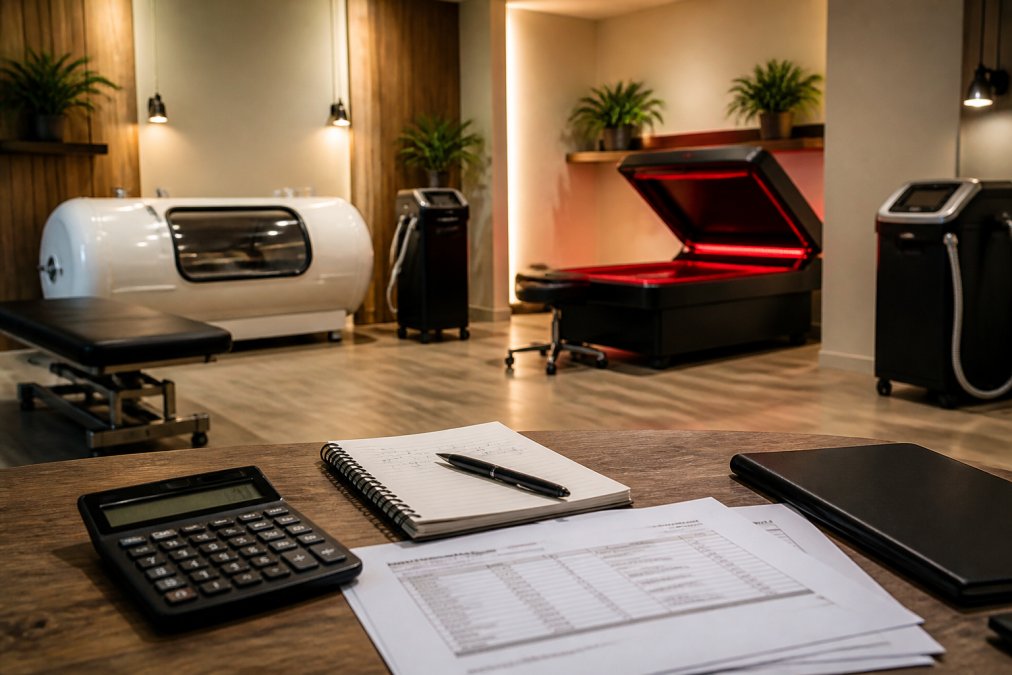
A realistic startup budget for a mid-sized recovery studio (2,000-3,000 sq ft with 2-3 major modalities) typically ranges across a wide spectrum depending on equipment selection, facility condition, and local labor costs. Rather than stating specific figures, we recommend requesting quotes from equipment providers and facility contractors specific to your market. Your recovery studio business plan should include detailed line-item budgets for each category, with contingency reserves for unexpected costs.
The key to accurate budgeting is understanding your equipment ROI timeline. How quickly will use rates generate enough revenue to cover capital costs? This calculation drives your entire financial model.
Hyperbaric Oxygen Therapy Business Plan: Service Menu and Pricing Strategy
Your service menu defines what recovery modalities you'll offer and how you'll position them to your target market. A recovery studio business plan should clearly articulate which services are core offerings versus premium add-ons, and how they work together to create a compelling value proposition.
Hyperbaric oxygen therapy, red light therapy, thermal recovery, and cryotherapy each serve different recovery goals. Some clients pursue hyperbaric chambers for athletic recovery, others for wellness and longevity. Understanding your target demographic shapes your service menu. A studio positioned toward athletes emphasizes performance recovery. A med spa positioning recovery services toward aesthetic clients emphasizes skin health and anti-aging benefits.
Pricing strategy must balance three factors: your cost structure (equipment depreciation, staffing, facility overhead), competitive positioning in your local market, and perceived value to your target demographic. Premium recovery modalities command higher pricing because they're perceived as exclusive and effective. Your pricing tiers should reflect service quality, session duration, and package discounts for committed clients.
A common mistake is underpricing recovery services to drive use. This strategy backfires because it trains customers to expect low prices and makes it difficult to raise rates later. Instead, price confidently based on the value you deliver and the exclusivity of your offering. A 60-minute hyperbaric session priced as a premium service attracts a different clientele than the same service offered at discount rates.
Your recovery studio business plan should include a detailed service menu with pricing for each modality, package options, and membership tiers. This section demonstrates to lenders and investors that you understand your revenue model and can articulate clear value propositions to different customer segments.
Recovery Studio Equipment ROI: Financial Projections and Break-Even Analysis
Equipment ROI is the central financial question for any recovery studio business plan. How many sessions must you deliver weekly to cover equipment costs, facility expenses, and staffing? At what point does the business become cash-flow positive?
Your break-even analysis should model three scenarios: conservative (60% equipment use), realistic (75% use), and optimistic (85%+ use). use rates vary dramatically by facility type, location, and marketing effectiveness. A gym adding recovery services to an existing membership base typically achieves higher use faster than a standalone recovery studio building clientele from scratch.
Equipment depreciation, maintenance costs, and replacement cycles must factor into your financial projections. A hyperbaric chamber or advanced thermal system requires regular servicing and eventual replacement. Your recovery studio business plan should allocate 10-15% of equipment revenue annually for maintenance and reserves for future equipment replacement.
Staff costs represent your second-largest operational expense after equipment depreciation. Each recovery modality requires trained operators. Payroll, benefits, and training costs scale with facility size and service complexity. A realistic financial projection accounts for staff growth as use increases.
Cash flow timing is critical. Most recovery studios require 12-24 months to reach break-even, depending on startup capital, market conditions, and execution quality. Your recovery studio business plan should include monthly cash flow projections for at least the first 24 months, identifying the minimum monthly revenue needed to sustain operations and the timeline to profitability.
Financing options can preserve capital during the ramp-up phase. Rather than paying equipment costs upfront, many facilities use equipment financing or lease arrangements, spreading costs over time as revenue grows. Eternall Wellness offers financing options designed to align payment schedules with revenue generation, reducing the cash flow pressure during the critical early months.
Regulatory Compliance and Liability: Post-Pandemic Requirements for Recovery Facilities
Post-pandemic regulatory requirements for recovery facilities have become more stringent. Your recovery studio business plan must address health and safety compliance, liability insurance, and equipment-specific regulatory requirements.
Hyperbaric oxygen therapy falls under FDA oversight as a medical device in certain applications. Your business plan should document FDA compliance requirements relevant to your specific service offerings and geographic market. Health departments regulate facility cleanliness, air quality, and sanitation standards. Different states impose varying requirements for staff certifications and operational protocols.
Liability insurance is non-negotiable. A recovery studio business plan must include comprehensive general liability coverage, equipment-specific liability, and professional liability insurance if your staff provides guidance on health outcomes. Insurance costs vary based on your service offerings, facility size, and claims history, but they represent a meaningful operational expense.
Many states require specific staff certifications for operating certain equipment, particularly hyperbaric chambers. Your operational plan should detail certification requirements, training timelines, and ongoing education requirements. Staff competency directly impacts both safety and liability exposure.
A common oversight is underestimating compliance costs and timelines. Regulatory approval processes can extend pre-launch timelines by weeks or months. Your recovery studio business plan should include realistic regulatory timelines and contingency buffers to avoid launch delays.
Documentation and record-keeping systems support both regulatory compliance and liability protection. Your operational workflow should include protocols for client intake, informed consent, session tracking, and incident reporting. Digital systems can automate much of this documentation, reducing administrative burden and improving consistency.
Marketing, Staffing, and Operational Workflow for Recovery Studios
Your recovery studio business plan must address how you'll attract clients, train and manage staff, and operate equipment safely and efficiently.
Customer acquisition strategy depends on your business model and target demographic. A gym adding recovery services to existing members relies heavily on internal marketing, signage, staff education, and membership communication. A standalone recovery studio or med spa must build awareness through digital marketing, partnerships, and community positioning. Your plan should specify marketing channels, budget allocation, and customer acquisition cost targets.
Staffing structure scales with facility size and service complexity. A small studio might operate with one trained technician and a part-time administrator. A larger facility requires multiple operators, a front desk team, and potentially a general manager. Your recovery studio business plan should detail staffing roles, compensation, and training requirements for each position.
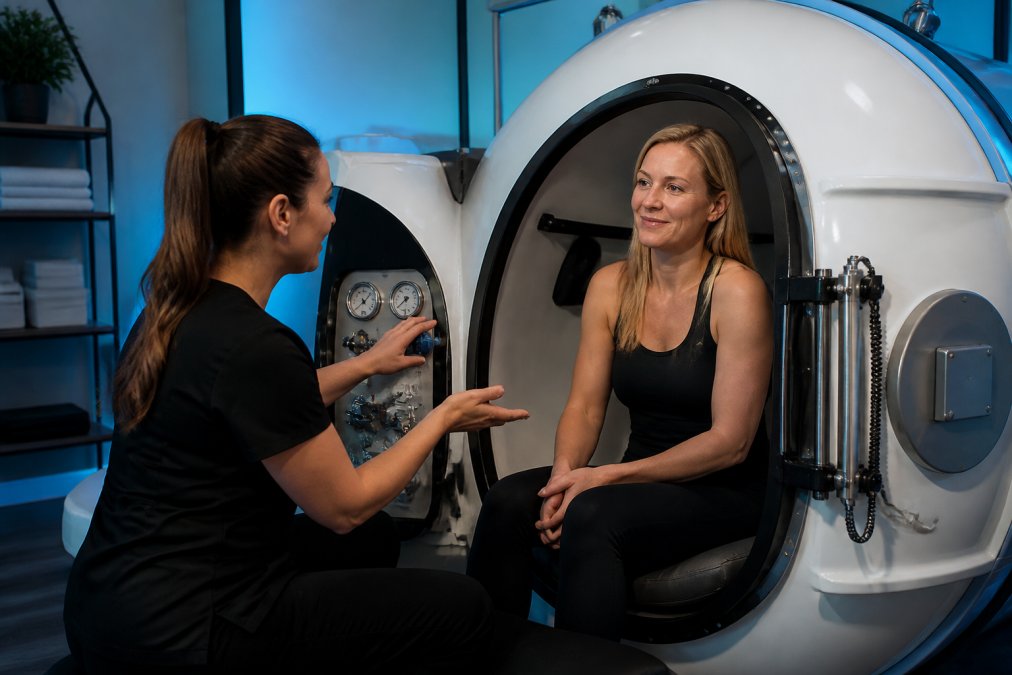
Operational workflow ensures consistent, safe service delivery. Standard operating procedures should cover equipment startup and shutdown, client intake and orientation, session monitoring, emergency protocols, and equipment maintenance. Well-documented workflows reduce errors, improve consistency, and demonstrate operational competence to regulators and insurers.
Client retention strategies are as important as acquisition. Recovery services create habit-forming wellness routines. Your business plan should include strategies for building client loyalty, progress tracking, personalized recommendations, community engagement, and membership incentives. Clients who see measurable results return consistently and refer others.
Technology integration supports operational efficiency and customer experience. Booking systems, client management software, and equipment tracking systems reduce administrative burden and improve data visibility. Your recovery studio business plan should identify key operational software and systems that support your business model.
Conclusion: Building a Sustainable Recovery Studio Business
A comprehensive recovery studio business plan template 2026 transforms the concept of adding premium wellness services into a concrete, executable roadmap. The plan bridges the gap between vision and operational reality by addressing capital requirements, revenue models, regulatory obligations, and operational workflows.
The most successful recovery studios balance financial discipline with customer-centric service design. They understand their target demographic, price confidently based on delivered value, and invest in staff training and operational excellence. They also recognize that equipment is only as valuable as the use it generates, a hyperbaric chamber sitting idle generates no revenue.
Eternall Wellness helps facilities evaluate recovery equipment not as isolated purchases, but as integrated revenue-generating services. Our approach focuses on realistic financial modeling, operational feasibility, and sustainable growth. With financing options available to preserve capital and expert guidance on ROI, use strategy, and integration into existing operations, Eternall Wellness transforms equipment investment into business solutions. Explore how advanced recovery systems can strengthen your facility's value proposition and generate measurable returns.
Frequently Asked Questions
What should be included in a recovery studio business plan?
A complete recovery studio business plan includes an executive summary, detailed market analysis of your target demographic, service menu with pricing tiers, startup costs and capital expenditure breakdown, operational workflow and staffing requirements, financial projections with break-even analysis, marketing and customer acquisition strategy, and risk mitigation plans. The plan should address facility layout, equipment procurement, technology integration, health and safety compliance, and key performance indicators for measuring growth. Include realistic revenue streams based on utilization rates and client retention strategies specific to recovery modalities like hyperbaric oxygen therapy and thermal recovery.
How do I calculate startup costs for a hyperbaric oxygen therapy business?
Start by itemizing capital expenditure: hyperbaric chamber equipment, red light therapy systems, thermal recovery equipment, and facility modifications (HVAC, electrical, plumbing). Add soft costs like licensing, permits, insurance deposits, and initial inventory. Include operational expenses for the first 3-6 months: staff salaries, utilities, marketing, liability insurance, and compliance documentation. Factor in technology integration costs for scheduling and member management systems. Your total startup costs depend on facility size, number of modalities, and whether you're adding recovery services to an existing gym or med spa versus building standalone. Request quotes from equipment providers and consult local contractors for facility-specific estimates.
What are the regulatory requirements for operating recovery equipment in 2026?
Recovery facilities must comply with state health department regulations, which vary by location and equipment type. Hyperbaric oxygen therapy chambers require adherence to FDA guidelines and may need licensing depending on your state. All facilities must maintain liability insurance, follow health and safety compliance standards, and keep detailed client intake and safety protocols. Staff operating specialized equipment like hyperbaric chambers typically need certification or manufacturer-provided training. Consult your state's health department and a healthcare compliance attorney to confirm requirements for your specific location and service menu. Post-pandemic, enhanced sanitation and air quality standards apply to all wellness facilities.
How do I forecast revenue for a multi-modality wellness center?
Project revenue by estimating utilization rates for each recovery modality. Calculate based on: number of available time slots per day, realistic booking percentage (typically 40-60% in year one), average session price per modality, and frequency of repeat clients. Build a tiered pricing model, membership packages, drop-in rates, and corporate packages, to diversify revenue streams. Factor in seasonal variation and membership growth over 12-36 months. Create conservative, realistic, and optimistic scenarios. Include ancillary revenue from retail products or add-on services. Track key performance indicators like client retention rate and average revenue per member to refine forecasts quarterly.
Is a recovery studio a profitable business model in 2026?
Recovery studios can be profitable when properly positioned and operated. Profitability depends on location, target demographic, service menu, utilization rates, and operational efficiency. Studios integrated into existing gyms or med spas benefit from established client bases and shared overhead, improving unit economics. Standalone studios require higher marketing investment and member acquisition costs but can command premium pricing. Break-even typically occurs 18-36 months after launch, depending on startup costs and revenue growth. Success requires strong client retention through quality service, consistent marketing, and strategic pricing. Equipment ROI improves when utilization stays above 50% and membership models create predictable recurring revenue.
How can smaller facilities compete with large luxury recovery studios?
Smaller gyms and med spas compete through niche positioning and integration. Focus on a specific target demographic, athletes, post-surgical patients, or wellness-focused members, rather than trying to serve everyone. Add one or two high-demand modalities (hyperbaric oxygen therapy or red light therapy) rather than attempting a full multi-modality menu. Leverage your existing client base through membership packages and referral incentives. Use technology integration to streamline operations and reduce staffing costs. Partner with complementary services like chiropractic or physical therapy to create a value proposition larger competitors may not offer. Pricing flexibility and personalized service often outweigh luxury branding in smaller markets.
What financing options help preserve capital when adding recovery equipment?
Equipment financing allows facilities to preserve working capital while spreading payments over time. Financing terms depend on equipment type, facility creditworthiness, and provider options. Rather than paying the full capital expenditure upfront, monthly payments can be structured to align with revenue generation from the new service. This approach lets smaller facilities add premium recovery modalities without depleting cash reserves needed for operations and marketing. Work with equipment providers who offer financing solutions and consult a business accountant to model payment schedules against projected revenue. Financing decisions should be evaluated alongside ROI projections to ensure the equipment generates sufficient revenue to cover payments and contribute to profitability.
What staffing and training is required to operate recovery equipment safely?
Staffing needs depend on your service menu and operating hours. Most recovery modalities require staff trained in equipment operation, client safety protocols, and emergency procedures. Hyperbaric chambers typically require staff certification or manufacturer-provided training. Red light therapy and thermal recovery systems have lower training barriers but still need basic operational competency. Budget for initial training costs and ongoing continuing education. Create standard operating procedures for each modality and document all client interactions for liability protection. Staff should understand how to screen clients for contraindications and maintain equipment logs. Equipment providers typically offer training support, but verify what's included in your purchase agreement before finalizing the business plan.
This article was written using GrandRanker