 How-to
How Do You Choose Reliable Medical Spa Equipment Suppliers?
Last Updated: November 17, 2026
Quick Summary
Choose reliable medical spa equipment suppliers by verifying legal identity, FDA clearance documents, written service commitments, and references from similar facilities before you sign. Treat mandatory items as pass or fail and remove any candidate that fails them, regardless of price. A supplier who hesitates on documentation is telling you something important.
- Confirm the legal entity name on the license matches the quote, invoice, and warranty.
- Request FDA clearance documents and cross-check the number against the FDA's public device database.
- Ask what happens when a device breaks on a Friday afternoon and record the answer in writing.
- Buy used equipment only when you can verify service history, remaining life, and manufacturer support.
- Score finalists on weighted criteria including references, documentation, warranty, training, and total cost of ownership.
Table of Contents
- Why Supplier Reputation Decides Your Equipment Purchase
- Your Medical Spa Equipment Supplier Checklist
- Questions to Ask Medical Spa Equipment Suppliers
- Verifying FDA Clearance and Intended Use Claims
- Used Med Spa Equipment for Sale: Worth the Savings?
- Medical Spa Equipment Warranty and Training: What to Expect
- Total Cost of Ownership and ROI Before You Commit
- Compare Suppliers With a Scorecard Before You Buy
- Frequently Asked Questions
Why Supplier Reputation Decides Your Equipment Purchase
The supplier you pick shapes everything that follows: installation, staff training, service calls, and whether your device is still supported years from now.
A medical spa equipment supplier is a business that sources, sells, delivers, and services commercial aesthetic and wellness devices for licensed facilities. The good ones stand behind the device with documentation, training, and parts. The weak ones disappear after delivery.
Separating Manufacturers From Distributors
Manufacturers build the device and typically hold its original FDA clearance or registration. Distributors resell it, and their knowledge of the device varies wildly.
Ask directly: "Do you manufacture this unit, or do you distribute it?" A distributor who answers honestly and names the manufacturer is usually a safer partner than one who dodges the question. For warranty and parts, the manufacturer relationship matters most.
Your Medical Spa Equipment Supplier Checklist
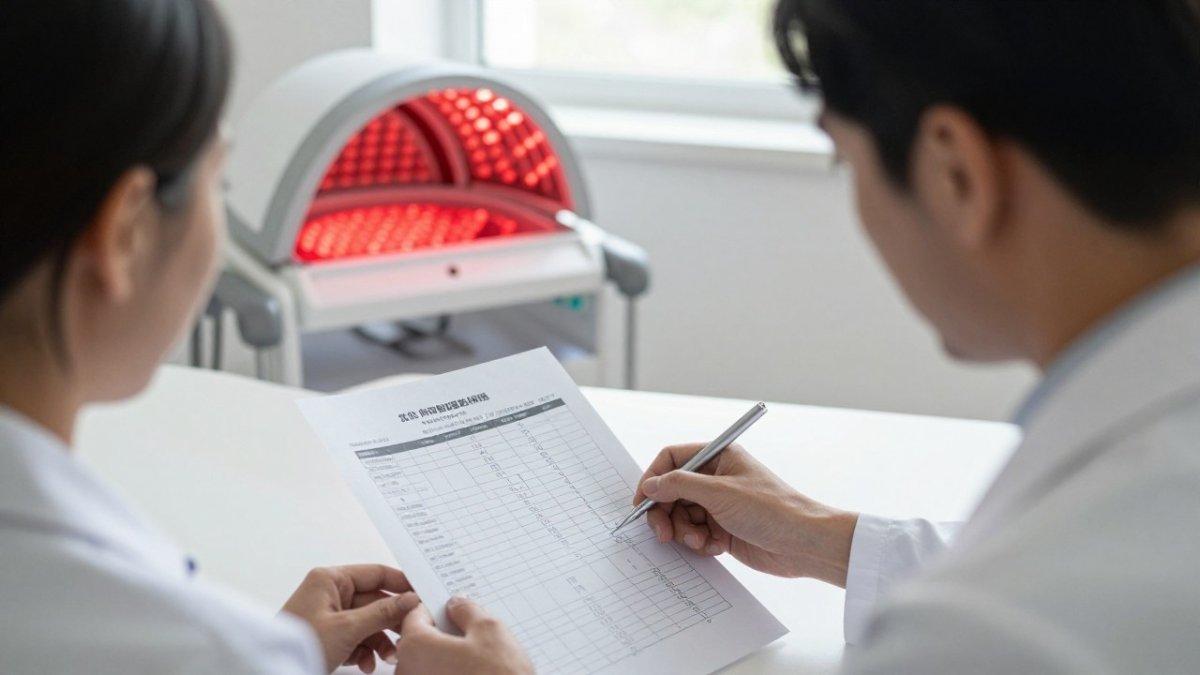
A medical spa equipment supplier checklist should confirm four things before you sign: legal identity, device documentation, service capability, and financial stability. Run every candidate through the same list so you compare like with like.
Business Credentials and Legal Identity
- Business license and physical address verified against the state's business registry, not just the supplier's website
- Legal entity name on the license matches the name on the quote, invoice, and warranty
- Manufacturer authorization letter on file, naming the exact device models the supplier may resell
Watch out: a supplier that operates under a different legal name than the one on its license is a collections and warranty problem waiting to happen, because the entity you can sue may not be the entity that sold you the device.
Device Documentation and Regulatory Status
- FDA clearance or registration documents provided for each model, with the 510(k) or product code visible
- Intended-use statement matches the treatments you plan to offer
- Labeling and user manual in English, with the same model and revision number as the unit being delivered
Service, Parts, and Uptime Commitments
- Named service contact, not a general support inbox
- Response-time commitment in writing, separated into initial response and on-site arrival
- Loaner-device policy stated, including whether a loaner is free, discounted, or unavailable
Training and Onboarding
- Training plan with hours, format (on-site, remote, or both), and number of staff covered
- Competency sign-off criteria, not just attendance
- Refresher training included or priced
Financial and Reference Verification
- Two or three professional references from facilities of similar size and treatment mix
- Reference calls completed by you, not summarized by the salesperson
- Warranty terms in writing, including exclusions, transferability, and who pays return shipping
Documents to Request Before You Sign
Request the device's FDA clearance letter or 510(k) number, the manufacturer's authorization for the seller, a written warranty, and a service agreement where available. Keep copies. If a supplier hesitates on any of these, that hesitation is your answer. Build a single folder per candidate and file each document as it arrives; a supplier who cannot produce a complete folder before the deposit is a supplier who will be slow to produce parts after the sale.
How to Score the Checklist
Treat the checklist as pass or fail on the mandatory items (legal identity, device documentation, written warranty, named service contact) and as a scored comparison on the rest. A candidate that fails a mandatory item should be removed from consideration regardless of price. For the scored items, note the specific commitment the supplier made so you can hold them to it later; "good service" is not a commitment, but a four-hour initial response with a named technician is.
Questions to Ask Medical Spa Equipment Suppliers
The right questions separate a salesperson from a partner. Ask how long the company has sold this specific device, who performs repairs, and how quickly replacement parts ship. Then ask for references from facilities your size. Go beyond the first answer: ask each question twice, once to the salesperson and once to the service manager, and compare the answers. Inconsistency between the two is one of the most reliable warning signs in equipment buying.
Questions About the Device and Its Regulatory Status
- Which FDA clearance or registration covers this exact model, and can you send the document today?
- What is the intended use as cleared, and which of my planned treatments fall outside it?
- Has the model been discontinued or is a replacement model scheduled? If so, how long will parts and software support continue?
Questions About Service and Repair Logistics
- Who performs repairs: your own technicians, the manufacturer, or a third-party contractor?
- What is your initial response time and your on-site arrival target, and are both in the service agreement?
- Do you stock parts, or are they ordered per ticket? What is the typical lead time for the consumables I will use most?
- Is a loaner device available, and at what cost, while mine is out for repair?
Questions About Warranty and Contract Terms
- What voids the warranty, and are there exclusions for consumables, cosmetic damage, or use by untrained staff?
- Is the warranty transferable if I sell the device or the practice?
- Who pays shipping both ways on a warranty repair?
- What happens if the device arrives damaged or fails within the first thirty days?
Questions About Training and Ongoing Support
- How many training hours are included, on-site or remote, and for how many staff?
- What competency sign-off do you provide, and can I get refresher training later?
- Who do my staff call for clinical questions versus technical questions?
- For connected devices, how is patient data handled, where is it stored, and what happens to it if I change suppliers?
Questions About References and Track Record
- Can you provide two or three references from facilities of similar size and treatment mix?
- How long have you sold this specific device, and how many units have you placed in facilities like mine?
- What is your process when a device is down on a Friday afternoon, and who is on call over the weekend?
Our advice: ask what happens when the device breaks on a Friday afternoon. A supplier with a real service plan answers in specifics, naming the on-call technician and the loaner process. One without a plan changes the subject. Record the answers in writing and attach them to the contract; a commitment that is not in the agreement is a hope, not a term.
Contract and Warranty Red Flags
Watch out: broad warranty exclusions for "improper use," service agreements that auto-renew without notice, return windows measured in days rather than weeks, and verbal promises about response times that never appear in the signed document are the four patterns most often cited by buyers who later regret a purchase. If any of these appear, ask for a redline before you sign, and walk away if the supplier refuses.
Verifying FDA Clearance and Intended Use Claims
FDA clearance is not a blanket approval, and it is tied to a specific intended use. A device cleared for one treatment category may not be cleared for another. Ask for the clearance documentation and read the intended-use statement yourself.
Cross-check the clearance number against the FDA's public device database. A supplier who welcomes that check is confident in the paperwork. One who discourages it is telling you something important.
Used Med Spa Equipment for Sale: Worth the Savings?
Used med spa equipment can cut the entry cost, but the risk sits in the unknowns: service history, remaining device life, and whether the manufacturer still supports that model. Buy used only when you can verify all three.
Before buying pre-owned, confirm the serial number with the manufacturer, ask for the service log, and check that consumables and parts are still available. For a deeper side-by-side, see our guide on comparing new vs refurbished med spa devices.
Medical Spa Equipment Warranty and Training: What to Expect
Warranty coverage and training are where cheap deals quietly cost the most. A standard warranty should state the covered period, what voids it, and who pays for shipping on repairs.
Ask how many training hours are included, whether it happens on-site or remotely, and what ongoing support looks like after week one. For a structured rollout, our step-by-step staff training plan walks through scheduling and competency checks.
Total Cost of Ownership and ROI Before You Commit
Total cost of ownership is the purchase price plus installation, training, consumables, maintenance, repairs, and downtime over the device's life. The number that matters is not the sticker price.
Build a simple model before you commit:
| Cost Factor | What to Estimate | Why It Matters |
|---|---|---|
| Purchase and delivery | Full landed cost | Sets your baseline |
| Installation | Site prep and setup | Often overlooked |
| Training | Staff hours | Affects ramp-up speed |
| Consumables | Per-treatment cost | Recurring expense |
| Service and parts | Annual allowance | Protects uptime |
| Downtime | Lost bookings | The hidden cost |
Estimate revenue from realistic use, not best-case bookings. Our financing qualification guide explains what lenders look for, and our med spa equipment launch checklist helps you pressure-test demand, revenue assumptions, and supplier verification before you commit.
Compare Suppliers With a Scorecard Before You Buy
Score every finalist on the same criteria and let the numbers decide. Weight the factors that matter most to your facility, then compare totals side by side.
| Criterion | Weight | What to Verify |
|---|---|---|
| Reputation and references | 20 | Similar-size facilities |
| Documentation and compliance | 20 | FDA clearance, intended use |
| Device quality and range | 15 | Manufacturer standards |
| Warranty and service | 20 | Response times, parts |
| Training and onboarding | 15 | Hours and format |
| Total cost of ownership | 10 | Full lifecycle cost |
Weight
A supplier who scores well across the board is worth a premium. When you are ready to compare systems for your facility, you can explore commercial wellness equipment and sourcing with our team.
The hardest part of supplier selection is not finding options. It is verifying the ones that will still support you years from now.
Frequently Asked Questions
How can I verify that a medical spa equipment supplier is reliable?
Ask for verifiable documentation rather than verbal assurances: business licenses, manufacturer authorization letters, FDA clearance records for each device, and professional references from facilities similar in size to yours. Check customer reviews and testimonials against named clinics, and confirm how long the company has operated. A reliable supplier will answer warranty, training, and repair-logistics questions in writing before you sign anything.
What should I ask a medical spa equipment supplier before buying?
Ask about the device's intended use and FDA clearance status, what installation and staff training are included, warranty length and what it excludes, response times for repair service, and where replacement parts and consumables come from. Also ask for a total cost of ownership estimate covering service, consumables, and downtime, plus financing terms if you plan to preserve capital.
Is it safe to buy used med spa equipment for sale?
Used equipment can cut upfront cost, but only when you can verify service history, remaining warranty transferability, and that the device still meets its intended-use specifications. Request maintenance records, confirm replacement parts are still available, and have a technician inspect before purchase. Skip any listing without documentation, since unverifiable regulatory status is a compliance risk you carry, not the seller.
What warranty and training should medical spa equipment suppliers provide?
Look for a written warranty that states coverage length, what parts and labor are included, and exclusions. Training should cover hands-on operation, safety protocols, and routine maintenance for every staff member who will run the device, . Confirm installation, shipping and delivery timelines, and technical support channels in the contract so post-sale service standards are clear.