 how-to
How to Add Recovery Services to Your Gym
Table of Contents
- Assess Your Facility and Member Demand
- Select the Best Recovery Equipment for Gyms
- Plan Your Recovery Zone Layout and Integration
- Develop Recovery Service Pricing Models
- Train Staff and Establish Operational Protocols
- How to Market Gym Recovery Services to Members
- Address Liability, Insurance, and Compliance
- Track Usage and Optimize for ROI
Last Updated: August 21, 2026
Assess Your Facility and Member Demand
Adding recovery services requires honest evaluation of available space and genuine member interest. Many gym owners assume recovery is universally desired, but usage data tells a different story.
Survey your current membership directly: which recovery modalities interest you most? Compression therapy, infrared therapy, hydro-massage, massage guns, or red light therapy each appeal to different segments. A gym with 150 strength-focused members may see stronger demand for compression therapy than a cardio-heavy facility (peer-reviewed research).
Audit your physical space honestly. Recovery services require dedicated zones, not equipment squeezed into corners. A true recovery zone needs climate control, electrical infrastructure, and member privacy, typically 200-400 square feet without cannibalizing your main floor (the CDC). If your facility is already at capacity during peak hours, recovery integration becomes a space-planning challenge.
Talk to your staff about which members ask about recovery most frequently. These conversations reveal real demand versus theoretical interest. Finally, benchmark your current member retention. If churn is already low, recovery services become a revenue-generation play. If you're losing members, recovery can be a retention tool, but only if it addresses why people are actually leaving.
Select the Best Recovery Equipment for Gyms
Core modalities to consider
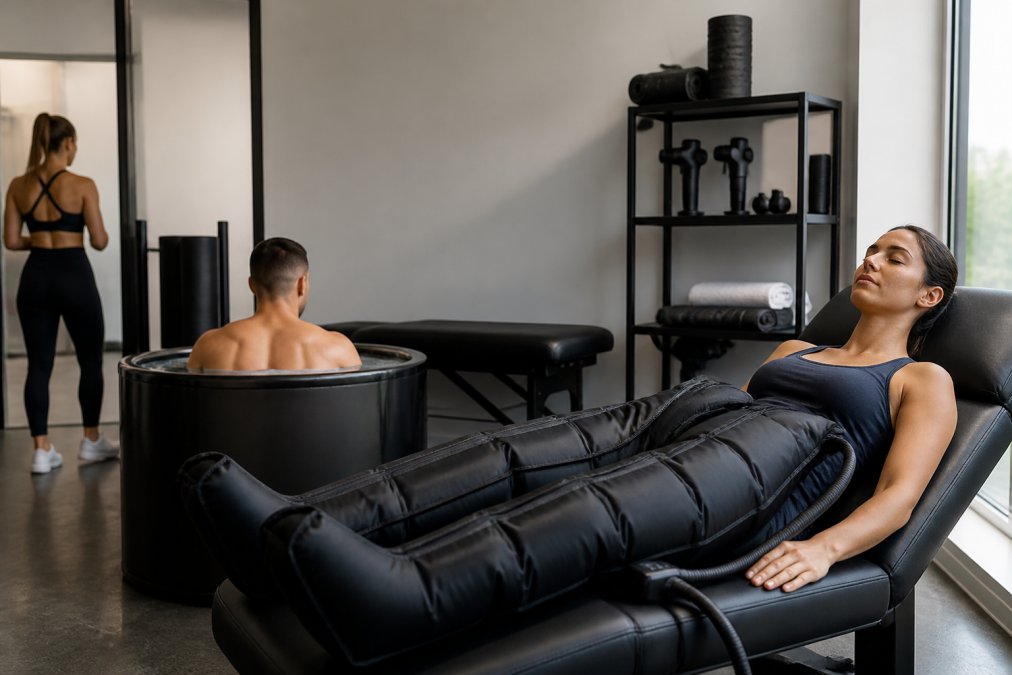
Compression therapy systems rank among the most accessible entry points. Members understand sequential air compression immediately, these systems require minimal staff training, and they generate steady revenue through membership add-ons or per-session pricing.
Red light therapy systems use specific wavelengths to stimulate cellular recovery. They're low-maintenance, require no consumables, and appeal to members interested in both fitness and aesthetic benefits.
Hyperbaric chambers represent the premium end of recovery modalities, delivering pressurized oxygen to accelerate recovery. They require dedicated space, specialized ventilation, electrical infrastructure, and staff certification. They command higher per-session pricing but demand more operational sophistication.
Thermal recovery equipment, including infrared saunas and contrast therapy systems, appeals to members seeking relaxation alongside recovery. These generate consistent usage because they address both fitness and wellness needs.
Massage chairs and massage guns serve as self-service recovery options. Massage chairs require floor space and electrical access with minimal staff involvement.
The best choice depends on your member profile, available space, and capital constraints. A CrossFit-focused gym might prioritize compression therapy and red light systems. A luxury wellness facility could lead with hyperbaric chambers and thermal recovery. Smaller gyms often start with massage chairs and massage guns to test member demand before larger infrastructure investments.
Space and infrastructure requirements
Each recovery modality demands specific spatial and infrastructure considerations. Compression therapy systems need 50-100 square feet per unit and standard electrical outlets. Red light therapy requires dedicated wall or ceiling space. Hyperbaric chambers demand 200+ square feet, specialized electrical infrastructure (often 220V), dedicated ventilation, and climate control. Thermal equipment needs proper ventilation, water access for some systems, and adequate spacing for safety.
Before selecting equipment, conduct a facility walk-through with a facilities manager to identify electrical capacity, HVAC limitations, plumbing access, and structural considerations. A hyperbaric chamber installation might require electrical upgrades costing thousands.
Plan Your Recovery Zone Layout and Integration
Your recovery zone layout determines member experience and operational efficiency. The zone should feel separate from the gym floor, a dedicated wellness space where members transition from intensity to recovery.
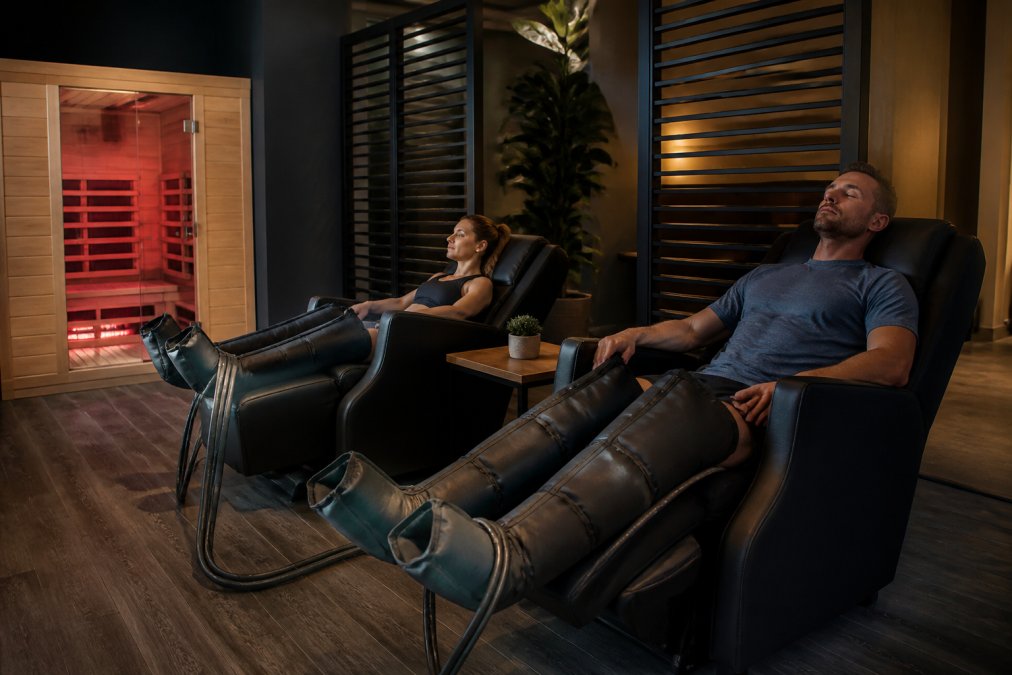
Position self-service modalities (massage chairs, massage guns) near the entry to your recovery zone. Place higher-touch services (compression therapy, hyperbaric chambers) deeper in the space where members feel more privacy. Thermal recovery equipment benefits from positioning near changing areas or showers, creating natural member flow.
Members shouldn't walk through active recovery sessions to access other gym areas. Position your recovery zone as a destination, not a thoroughfare. This reduces distractions and creates a more premium experience.
Lighting and ambiance transform perception. Recovery spaces benefit from warm, dimmable lighting rather than bright overhead fluorescents. Subtle background music, plants, comfortable seating, and temperature control signal that this space serves a different purpose than the main gym floor.
Consider member flow during peak hours. Can your recovery zone absorb additional traffic without bottlenecking? Plan for adequate space so members don't queue for premium services.
Develop Recovery Service Pricing Models
Membership tier structures
Most successful gym recovery integration uses tiered membership pricing. Your base membership includes gym access. Premium tiers add recovery service access, either unlimited or limited sessions per month.
A common structure offers three tiers: standard (gym only), premium (gym plus 4 recovery sessions monthly), and elite (gym plus unlimited recovery). This creates natural upsells as members experience recovery through trial sessions, then upgrade for ongoing access.
The psychology of tiering matters. Members perceive unlimited recovery access as premium, even if actual usage averages 2-3 sessions monthly. Offering unlimited access at a meaningful price point often generates more revenue than per-session pricing because it removes friction and encourages trial.
Standalone service options
Beyond membership tiers, consider standalone service options. Day passes that include recovery access attract non-members to your facility. Package pricing, "buy 10 compression sessions, get 2 free", encourages commitment. Corporate wellness partnerships can drive bulk recovery service purchases.
Personal training clients often add recovery services, especially when trainers recommend them for specific needs. Creating bundled packages (training plus recovery) simplifies purchasing and increases perceived value.
The key principle: multiple pricing paths capture different member segments. Facilities that offer only one pricing model leave revenue on the table.
Train Staff and Establish Operational Protocols
Staff training directly determines recovery service success. Equipment sophistication doesn't matter if your team can't operate it safely or explain its benefits to members.
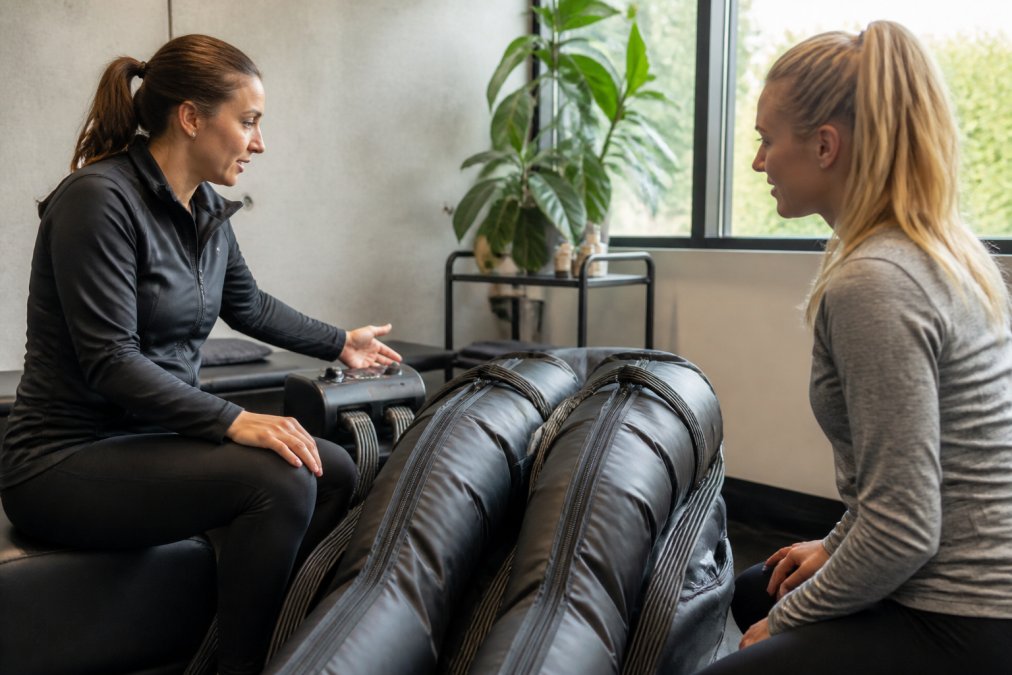
Start with comprehensive equipment training. Manufacturers typically provide initial training, but you need internal certification systems. Document standard operating procedures for each modality and create checklists for daily equipment checks, cleaning protocols, and troubleshooting.
Member education matters equally. Your staff should confidently explain recovery benefits, guide members through proper equipment use, and answer questions about timing and frequency. A member who doesn't understand why they'd use compression therapy won't use it.
Establish cleaning and maintenance protocols. Recovery equipment requires regular sanitization, especially items with direct skin contact. Create daily checklists for cleaning, weekly maintenance tasks, and monthly deep-cleaning schedules. Inconsistent maintenance leads to equipment failure and member frustration.
Develop incident response procedures. Document protocols for equipment malfunctions, emergency situations, and member complaints. This protects both members and your facility.
How to Market Gym Recovery Services to Members
Marketing recovery services requires different messaging than gym membership promotion. Lead with member benefits, not equipment specs. Don't say "We installed a hyperbaric chamber." Say "Recover faster between workouts and feel less soreness tomorrow."
Use member testimonials strategically. Authentic member experiences drive adoption far more effectively than vendor marketing materials. Create trial experiences by offering first-time recovery sessions free or heavily discounted. Many members won't commit without experiencing them first.
Segment your messaging by member type. Strength athletes respond to performance-recovery messaging. Endurance athletes focus on lactate clearance and muscle repair. Older members prioritize joint health and mobility. Wellness-focused members care about stress reduction and sleep quality.
Train staff to recommend recovery services during interactions. A trainer noticing tight shoulders might suggest massage therapy. A front desk associate could recommend compression therapy after an intense class. Organic, staff-driven recommendations outperform broad marketing campaigns.
Use email and in-app messaging for member education. Share recovery science, success stories, and special offers. Educational content that genuinely helps members makes your recovery services feel like a natural gym evolution, not a revenue grab.
Address Liability, Insurance, and Compliance
Recovery equipment introduces liability considerations that differ from standard gym operations. Verify that your general liability insurance covers recovery services. Many standard gym policies exclude specialized equipment. Contact your insurance provider and discuss your recovery modalities specifically. You may need additional coverage or equipment-specific riders.
Research equipment-specific regulations. Hyperbaric chambers fall under FDA oversight and require specific operational protocols (the FDA). Some states regulate hyperbaric chamber operation more strictly than others. Thermal systems and compression therapy have fewer regulatory restrictions, but safety standards still apply.
Develop informed consent procedures. Members should understand potential risks and contraindications before using recovery services. Create clear consent forms that members sign before first use.
Establish member screening protocols. Ask about relevant health conditions, medications, and contraindications. Train staff to recognize when members shouldn't use specific services and to recommend medical consultation when appropriate.
Document everything related to safety and operations. Maintain equipment maintenance logs, incident reports, staff training records, and member consent forms. This documentation protects your facility and demonstrates due diligence to insurance providers and regulators.
Track Usage and Optimize for ROI
Recovery service success hinges on usage tracking and continuous optimization. Equipment sitting idle generates no revenue and becomes a capital loss.
Implement member usage tracking from day one. Most recovery equipment can log session frequency, duration, and member identification. Track which modalities attract consistent usage and which underperform. A compression therapy system averaging 3-4 sessions daily generates strong ROI. One averaging 1 session weekly signals a problem.
Monitor member feedback systematically. Create simple post-session surveys: "How did this recovery service make you feel?" Track Net Promoter Score for recovery services separately from gym membership.
Analyze revenue per modality. Calculate monthly revenue for each recovery service after accounting for equipment costs, maintenance, and staff time. Track retention impact. Do members who use recovery services show lower churn rates? Higher lifetime value?
Establish quarterly review cycles. Every three months, analyze usage data, member feedback, revenue, and retention metrics. Identify underperforming services and successful ones. Plan adjustments: pricing changes, staff training improvements, marketing shifts, or equipment additions.
Recovery service integration isn't a one-time decision. It's an ongoing business optimization. Facilities that succeed treat recovery services like any other business function, measuring performance, gathering feedback, and continuously improving.
Adding recovery services to your gym represents a significant opportunity to increase member retention, attract new clients, and generate additional revenue streams. The process demands careful planning around space, equipment selection, staff training, and member marketing, but the potential returns justify the effort.
At Eternall Wellness, we help facilities evaluate recovery integration holistically. We don't just sell equipment. We help you assess member demand, plan your recovery zone layout, develop sustainable pricing models, and establish operational protocols that drive consistent use and ROI.
If you're ready to explore how recovery services could strengthen your gym's competitive positioning and member loyalty, contact Eternall Wellness to discuss your facility's specific opportunities and constraints.
=== FAQ ANSWERS (audit these too, same rules) ===
[1] Q: Are recovery rooms worth it for smaller gyms with 150 members or fewer? A: Yes. Recovery services generate revenue through membership add-ons and premium tiers without requiring significant floor space. A small gym can start with 2-3 high-demand modalities like compression therapy or massage chairs, monetize through monthly add-ons, and scale based on usage data. Many facilities recover their initial investment within a reasonable timeframe through incremental member spending and improved retention.
[2] Q: What recovery modalities are most popular for commercial gyms? A: Compression therapy, massage guns, infrared therapy, red light therapy, and hydro-massage are popular recovery modalities. Compression therapy and massage solutions typically see high utilization rates. Hyperbaric chambers and thermal recovery equipment appeal to premium-tier members willing to pay more. Start with 2-3 modalities based on your member demographics and available space, then expand based on usage metrics.
[3] Q: How quickly do recovery systems pay for themselves? A: ROI depends on utilization, pricing strategy, and member base size. With financing available to preserve capital, many facilities see break-even within a reasonable timeframe. Success requires active member education, proper staff training, and tracking usage data to optimize pricing and service mix.
[4] Q: What liability and insurance considerations should I address before adding recovery services? A: Recovery services carry liability exposure similar to other gym equipment. Consult with your insurance provider to ensure coverage for new modalities, especially hyperbaric chambers or thermal equipment. Establish clear operational protocols, staff certification requirements, and member consent forms. Document all maintenance and sanitization procedures. Work with your business attorney to review liability waivers specific to each recovery modality you offer.
Frequently Asked Questions
Q: Are recovery rooms worth it for smaller gyms with 150 members or fewer?
A: Yes. Recovery services generate revenue through membership add-ons and premium tiers without requiring significant floor space. A small gym can start with 2-3 high-demand modalities like compression therapy or massage chairs, monetize through monthly add-ons, and scale based on usage data. Many facilities recover their initial investment within a reasonable timeframe through incremental member spending and improved retention.
Q: What recovery modalities are most popular for commercial gyms?
A: Compression therapy, massage guns, infrared therapy, red light therapy, and hydro-massage are popular recovery modalities. Compression therapy and massage solutions typically see high utilization rates. Hyperbaric chambers and thermal recovery equipment appeal to premium-tier members willing to pay more. Start with 2-3 modalities based on your member demographics and available space, then expand based on usage metrics.
Q: How quickly do recovery systems pay for themselves?
A: ROI depends on utilization, pricing strategy, and member base size. With financing available to preserve capital, many facilities see break-even within a reasonable timeframe. Success requires active member education, proper staff training, and tracking usage data to optimize pricing and service mix.
Q: What liability and insurance considerations should I address before adding recovery services?
A: Recovery services carry liability exposure similar to other gym equipment. Consult with your insurance provider to ensure coverage for new modalities, especially hyperbaric chambers or thermal equipment. Establish clear operational protocols, staff certification requirements, and member consent forms. Document all maintenance and sanitization procedures. Work with your business attorney to review liability waivers specific to each recovery modality you offer.
This article was written using GrandRanker