 ultimate-guide
Recovery Equipment ROI for Small Gyms: 2026 Guide
Table of Contents
- Does Recovery Equipment ROI Make Sense for Small Gyms?
- Recovery Equipment Categories and Cost Structure
- Calculating Payback Period and Break-Even Analysis
- Gym Member Retention Strategies Through Recovery Services
- Pricing Recovery Services for Gym Members
- Wellness Equipment Tax Deductions and Section 179 Depreciation
- Space Planning, Staffing, and Operational Reality
- Conclusion
Last Updated: August 25, 2026
Does Recovery Equipment ROI Make Sense for Small Gyms?
Recovery equipment ROI for small gyms depends on three factors: member willingness to pay for recovery services, available floor space, and your ability to staff and maintain equipment properly. The real calculation isn't "Will this equipment pay for itself?" but rather "What's the fastest path to profitability?"
Small gyms have a competitive advantage: member relationships. You know your members by name and understand what they value. A 150-member gym that converts just 15-20% of members to regular recovery service users generates meaningful recurring revenue. That intimacy is your edge when introducing recovery services.
Recovery Equipment Categories and Cost Structure
Recovery equipment spans three main categories, each with different capital requirements, operational complexity, and revenue potential.
Red Light Therapy Systems
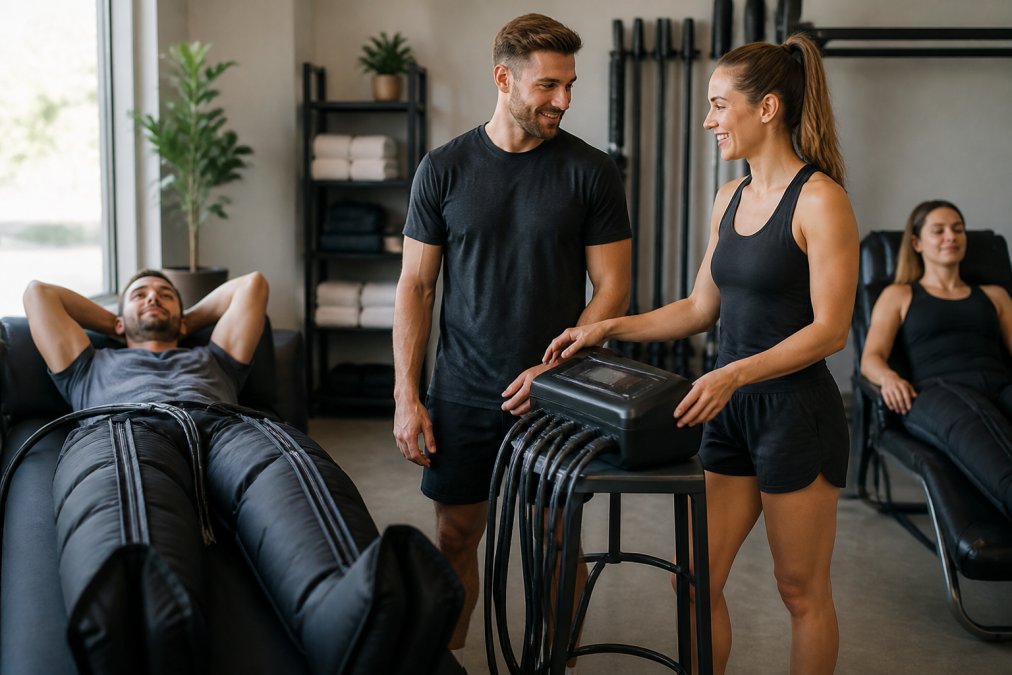
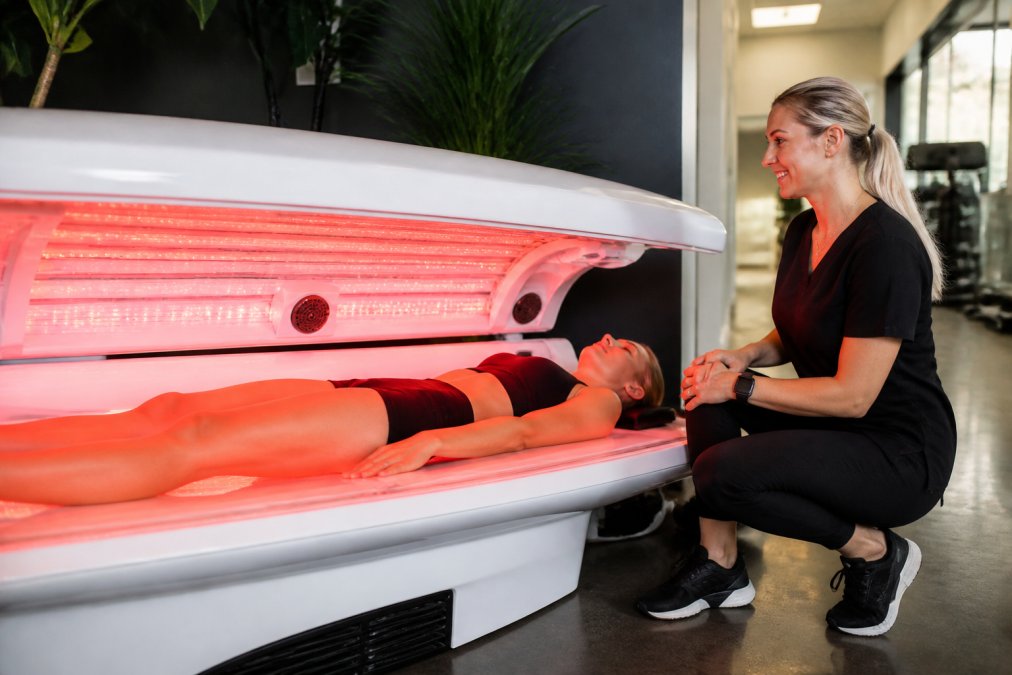
Red light therapy systems represent the most accessible entry point into recovery services. These devices use specific wavelengths of light to support muscle recovery and tissue repair. A commercial red light therapy bed or panel requires 50-100 square feet and can be operated with minimal training. Sessions run 15-20 minutes, allowing a single device to serve multiple members daily.
Operational overhead is low: basic cleaning between uses and occasional maintenance. No specialized technical expertise required. Revenue potential depends on pricing strategy and use rate. A device used 6-8 times daily at typical pricing generates consistent add-on revenue. Many small gyms position this as a premium service, charging per session or bundling into membership tiers.
Thermal Recovery Equipment
Thermal recovery modalities, saunas, infrared chambers, and temperature-contrast systems, appeal to members seeking stress relief and recovery. These create a more immersive experience than red light therapy, justifying higher pricing.
Installation requires 80-150 square feet and proper ventilation. Thermal systems need electrical upgrades and sometimes plumbing, increasing upfront capital expenditure. Operational overhead is moderate: regular cleaning, maintenance, and possible compliance with local health codes. Staff training is more involved than red light therapy but manageable for small teams.
Thermal sessions typically run 20-45 minutes, so a single device serves fewer daily users but at higher per-session revenue. Members perceive thermal recovery as a legitimate wellness investment.
Hyperbaric Chambers and Compression Therapy
Hyperbaric oxygen chambers and advanced compression systems represent the premium tier. These command the highest per-session pricing and attract members committed to serious recovery outcomes.
Hyperbaric chambers require significant space (150-250 square feet), specialized electrical infrastructure, medical-grade installation, and ongoing maintenance contracts with certified technicians. Operational complexity is substantially higher: staff must complete formal training, and many facilities require a medical director on-site during operation.
Revenue potential justifies the complexity. Hyperbaric sessions command 2-3 times higher pricing than red light or thermal services. Use tends to be lower but per-session margins are significantly higher. For small gyms, hyperbaric equipment is a strategic decision suited to member bases including serious athletes or wellness-focused demographics willing to pay premium rates.
Calculating Payback Period and Break-Even Analysis
Payback period depends on pricing strategy, use rate, and equipment category. Start with capital expenditure, then establish realistic daily use: 4-6 sessions for red light therapy, 3-5 for thermal systems, and 1-3 for hyperbaric chambers in a 150-member gym.
Calculate daily revenue per device by multiplying sessions per day by per-session price, then by 30 for monthly revenue. Subtract operational costs, staff time, maintenance, utilities, supplies, to estimate monthly net contribution. Divide capital expenditure by monthly net contribution to estimate payback in months.
Payback improves dramatically when you bundle recovery services into premium membership tiers. Instead of selling sessions à la carte, offer a "Premium" tier including 4 red light sessions monthly plus unlimited thermal access for a 20-30% increase to base membership fees. This spreads equipment cost across more members and increases member lifetime value.
Break-even analysis reveals when monthly revenue exceeds operating costs. For most small gyms, this happens 6-12 months into operation. Payback period extends further because you're recovering the initial capital investment.
Gym Member Retention Strategies Through Recovery Services
Member churn is the silent profit killer in small gyms. Recovery services directly address why members quit: they stop seeing progress or get injured without tools to recover.
Recovery equipment ROI improves dramatically when positioned as part of member retention strategy, not just a revenue add-on. Members who use recovery services stay longer and upgrade to higher-tier memberships more frequently.
A member hits a plateau or sustains minor injury. Without recovery tools, they quit in frustration. With access to recovery services, especially if included in a premium tier, they see faster recovery and better performance. Your gym shifts from "a place to work out" to "a complete fitness solution."
Premium tier bundling is the most effective retention strategy. Create a membership tier including base gym access plus 4-8 recovery sessions monthly, priced 25-35% above standard membership. Members who upgrade see immediate value and feel they're investing in better outcomes. You get higher revenue per member and stronger retention.
The retention impact compounds. A member who stays 6 months longer generates 6 additional months of revenue. If 10% of your 150-member gym upgrades to a premium tier, that's 15 additional members paying higher rates and staying longer. Retention revenue often exceeds direct recovery service revenue.
Pricing Recovery Services for Gym Members
Pricing requires balancing cost structure, member willingness to pay, and competitive positioning. The simplest approach is per-session pricing at fixed rates for each modality. Red light therapy typically commands lower rates than thermal systems, which command lower rates than hyperbaric chambers.
The more profitable approach is membership tier bundling. Include a set number of recovery sessions in premium tiers. This increases average revenue per member, improves retention, and simplifies member decision-making.
A third approach combines both: offer membership tiers with included sessions, plus additional sessions available à la carte for engaged members.
Members perceive recovery services as legitimate wellness investments. Price them accordingly. Underpricing signals low value; overpricing creates friction. Research local market pricing to avoid pricing yourself out or leaving money on the table.
Wellness Equipment Tax Deductions and Section 179 Depreciation
Recovery equipment qualifies for accelerated depreciation under Section 179 of the Internal Revenue Code, allowing businesses to deduct the full purchase price in the year of purchase rather than depreciating over multiple years (irs.gov).
Section 179 applies to equipment purchased and placed in service during the tax year. Red light therapy systems, thermal devices, hyperbaric chambers, and compression therapy systems typically qualify as business equipment eligible for Section 179 deduction.
The annual Section 179 deduction limit changes yearly. Consult the IRS website for current Section 179 limits to confirm the maximum deduction available for your tax year. The deduction reduces taxable business income dollar-for-dollar, resulting in significant tax savings depending on your overall business income.
You can deduct the full equipment cost immediately while the equipment generates revenue over years. This improves cash flow in the year of purchase by reducing tax liability. For small gym owners financing recovery equipment, this tax benefit can effectively reduce net equipment cost by 20-35% depending on tax bracket (irs.gov).
Bonus depreciation is another option. If Section 179 limits are exceeded, you can claim bonus depreciation on additional equipment, allowing 100% deduction in the year of purchase. Work with a tax professional to structure your recovery equipment purchase to maximize available deductions.
Space Planning, Staffing, and Operational Reality
Capital expenditure and pricing strategy are straightforward. Space planning and staffing determine whether your equipment generates projected revenue.
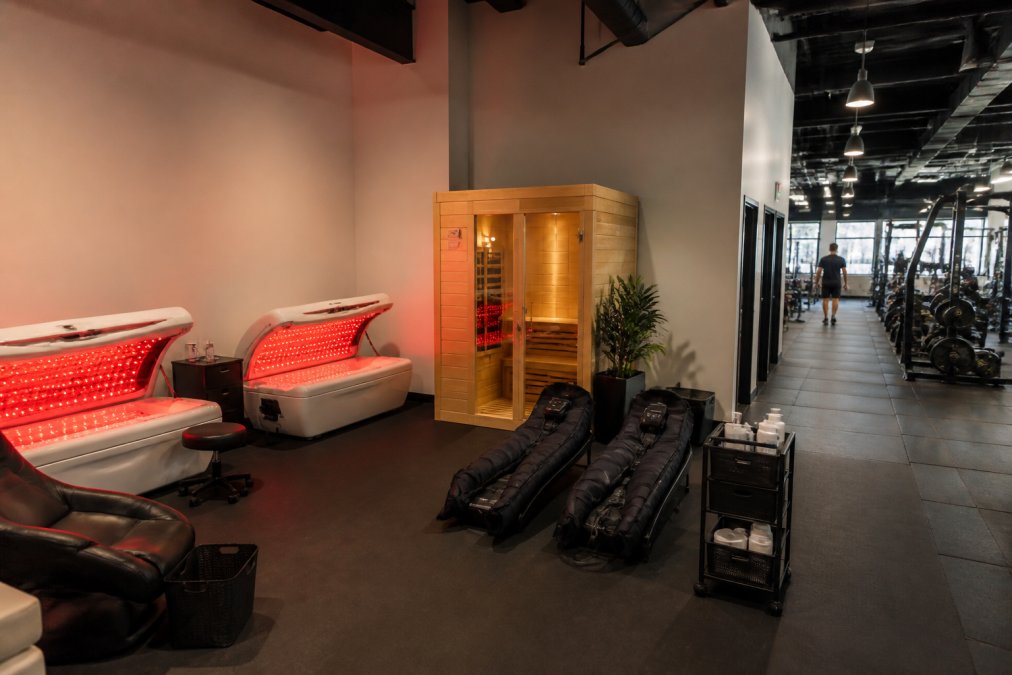
Space is your constraint. Adding recovery equipment means removing something else or expanding into unused space. Create a dedicated recovery zone rather than scattering equipment throughout the facility. A 200-300 square foot recovery area can accommodate red light therapy, a thermal system, and basic compression therapy. Members perceive this as premium, supporting higher pricing. One staff member can monitor the entire recovery area during peak hours.
Traffic flow affects use significantly. If members must navigate through the strength training area to reach recovery equipment, use drops. If the recovery zone is visible from the main entrance or near cardio, use increases.
Staffing requirements depend on equipment complexity. Red light therapy and basic thermal systems can be managed by standard gym staff with minimal training. Hyperbaric chambers require more specialized knowledge. Budget 20-40 hours of staff training time per modality. Red light therapy is straightforward; hyperbaric systems require more rigorous training.
Maintenance creates ongoing overhead. Red light therapy systems need basic cleaning between uses. Thermal equipment requires more frequent maintenance: checking seals, monitoring temperature accuracy, and ensuring ventilation systems function properly. Hyperbaric chambers need regular pressure testing and oxygen system checks. Budget 2-4 hours weekly for preventative maintenance.
Track how many sessions each device actually serves weekly. Compare actual use against projections. If red light therapy is booked 8 times daily but thermal systems average 3 times daily, that data informs your next investment decision. Underutilized equipment is dead capital. Understanding why, pricing too high, poor visibility, inconvenient scheduling, lets you fix the problem.
Conclusion
Recovery equipment ROI for small gyms is achievable when approached as a business decision, not an equipment purchase. Realistic use rates, appropriate pricing, and strategic bundling into premium membership tiers generate meaningful revenue and improve member retention.
The challenge is building operational infrastructure to support consistent use and member satisfaction. Space planning, staff training, and maintenance protocols determine whether your equipment becomes a profit center or an expensive decoration.
Eternall Wellness specializes in helping small gyms evaluate recovery equipment as a complete business solution. We analyze your member demographics, available space, and financial capacity to recommend equipment categories and pricing strategies tailored to your facility. Our financing options preserve your capital while you build revenue from recovery services. We provide ongoing support and training to ensure your staff operates equipment confidently and members experience genuine value.
Get started with Eternall Wellness and transform recovery equipment from a capital expense into a sustainable revenue stream that keeps members engaged and strengthens your competitive position.
Frequently Asked Questions
How do you calculate the ROI of gym recovery equipment?
Start with total capital expenditure (equipment purchase plus installation). Divide monthly revenue from recovery services by the equipment cost to find your payback period. For example, if equipment costs $50,000 and generates $3,000 monthly revenue, payback is approximately 17 months. Factor in membership tier upgrades, add-on revenue from non-members, and reduced churn. Members who use recovery services can show higher retention rates, which adds value beyond direct service revenue. Include operational costs (maintenance, staff training) in your calculation for accurate total cost of ownership.
What are the most profitable recovery modalities for small gyms?
Red light therapy and compression therapy typically offer a good ROI for small facilities because they require minimal space, lower capital expenditure, and simple staff training. Thermal recovery equipment (saunas, steam rooms) builds perceived value and attracts premium tier members willing to pay membership upgrades. Hyperbaric chambers command higher per-session pricing but require significant space, specialized training, and higher operational overhead. Start with modalities that complement your existing member base and facility layout. Many successful small gyms use a combination approach: entry-level red light therapy to drive volume, plus one premium modality to justify membership tier upgrades and attract new clientele seeking advanced wellness options.
How does adding recovery services impact member retention rates?
Recovery services can influence membership churn reduction by increasing perceived value and giving members more reasons to renew. Members with access to recovery modalities may report higher satisfaction and engagement. Premium recovery services can justify membership tier upgrades, allowing existing members to increase their monthly spend without switching facilities. Recovery zones also improve facility traffic flow and member experience by creating distinct wellness areas that feel premium and differentiated. The retention impact varies by facility, but members using recovery services may maintain longer membership tenure and are more likely to recommend the gym to others, creating organic growth.
Can I claim wellness equipment as a tax deduction under Section 179?
Section 179 of the Internal Revenue Code allows qualifying business property to be expensed in the year it is placed in service, rather than depreciated over several years. Recovery equipment typically qualifies as depreciable business property. This means you may be able to deduct the full equipment cost from your current year's taxable income, significantly improving your ROI calculation. However, Section 179 has annual limits and specific eligibility requirements that change year to year. Consult a qualified tax professional or accountant familiar with fitness facility operations to confirm eligibility, calculate your deduction, and ensure compliance with current IRS rules. The tax benefit can substantially accelerate your break-even timeline.
This article was written using GrandRanker