 blog
blog
Top 5 Hyperbaric Oxygen Therapy Benefits for Athletes
Table of Contents
- What Is Hyperbaric Oxygen Therapy and How Does It Work?
- The Top 5 Hyperbaric Oxygen Therapy Benefits for Athletes
- FDA-Approved Uses for Hyperbaric Oxygen Therapy
- Hyperbaric Chamber Session Duration for Athletes
- Safety, Contraindications, and What Athletes Should Know
- How to Add Recovery Services to Your Gym
- Conclusion
- Frequently Asked Questions
Last Updated: September 18, 2026
What Is Hyperbaric Oxygen Therapy and How Does It Work?
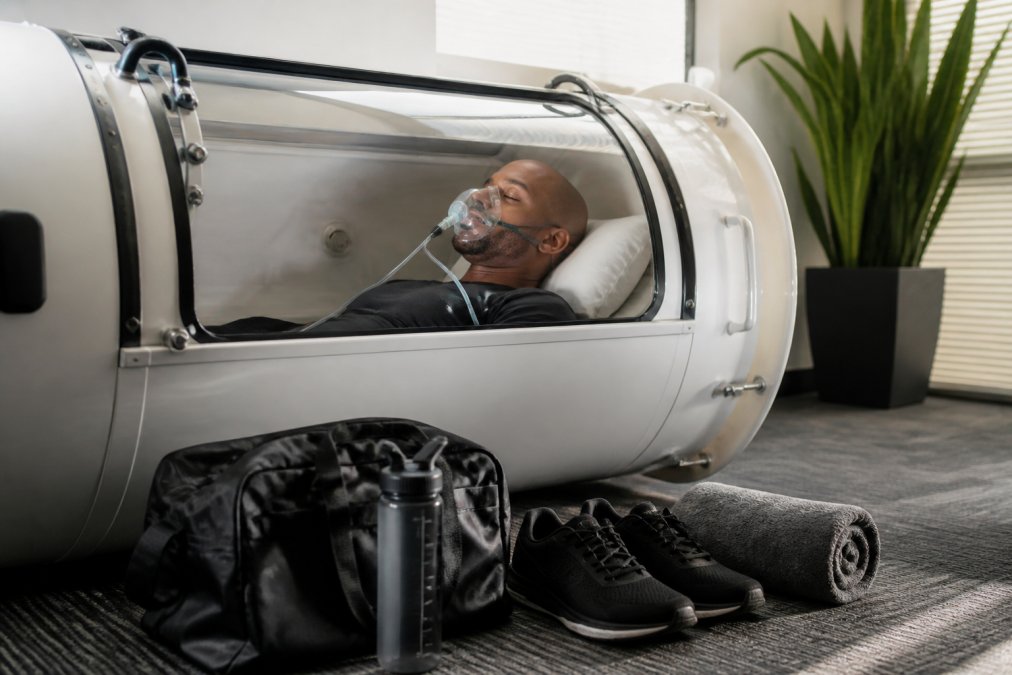
Hyperbaric oxygen therapy (HBOT) is a treatment that delivers 100% oxygen inside a pressurized chamber, raising the oxygen concentration in your blood and tissues far above normal levels. For athletes, that surge in oxygen availability is the starting point for faster repair, less swelling, and better recovery between training sessions. (Source: a 2023 review published in the National Institutes of Health's PubMed database)
This guide from Eternall Wellness breaks down the five benefits that matter most for athletes and gym owners evaluating recovery services.
Here's the mechanism in plain terms. At normal atmospheric pressure, oxygen mostly rides on red blood cells, and hemoglobin carries close to its limit.
The Science Behind HBOT for Athletic Recovery
Three processes drive most of the athletic benefit. First, angiogenesis: pressurized oxygen stimulates the growth of new capillaries, improving blood flow to tissue that has been starved of it. Second, inflammation reduction: HBOT helps calm oxidative stress and swelling after hard efforts. Third, mitochondrial function: more oxygen supports ATP production, the energy currency your muscles burn during repeated efforts.
The Top 5 Hyperbaric Oxygen Therapy Benefits for Athletes
The five benefits below are the ones athletes and facility operators ask about most. Each one maps to a measurable outcome: soreness, injury timelines, swelling, endurance, and mental sharpness.
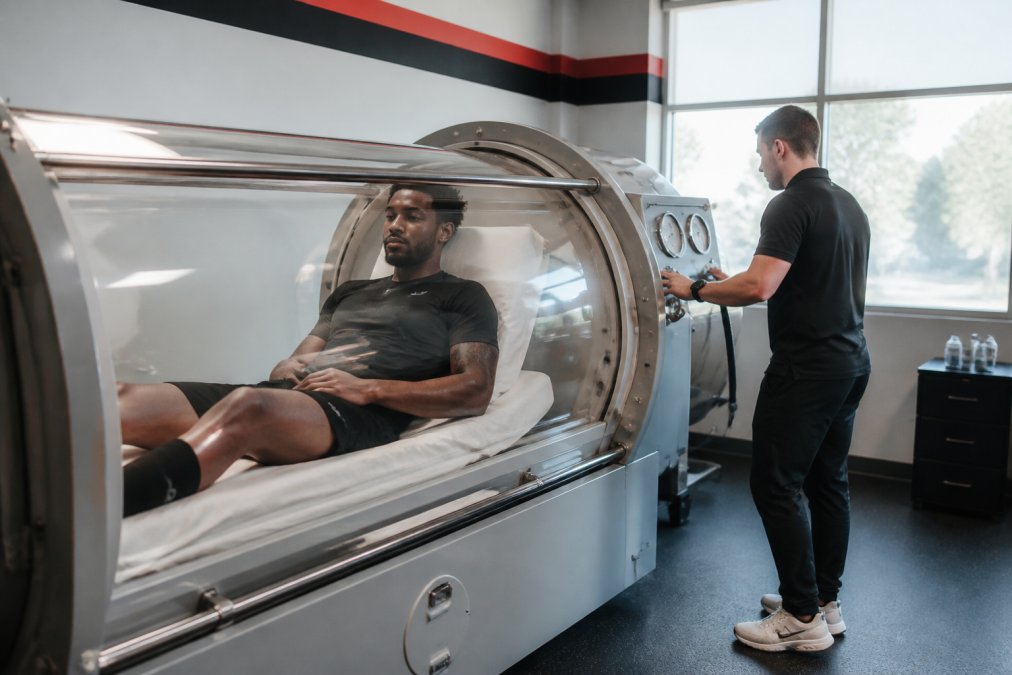
1. Faster Recovery and Reduced Muscle Soreness
Delayed onset muscle soreness, or DOMS, typically peaks a day or two after intense training. Many athletes find that HBOT sessions shorten that window. The proposed reason is faster metabolic waste removal, including lactate clearance, plus improved oxygen delivery to fatigued muscle.
2. Accelerated Healing of Sports Injuries
Soft tissue repair is where HBOT gets the most attention in sports medicine. Ligament strain, muscle tears, and even fracture healing all depend on oxygen reaching the injured area. A pressure chamber raises tissue oxygenation, which supports the healing kinetics of damaged tissue.
3. Reduced Inflammation and Swelling
Swelling limits range of motion and slows return to play. HBOT supports inflammation reduction by moderating oxidative stress and improving circulation. The vascular effect matters here: vasoconstriction during pressurization reduces edema, while vasodilation afterward brings fresh blood and nutrients into the area.
4. Enhanced Endurance and Stamina
Endurance capacity depends on how efficiently your body moves oxygen. HBOT increases blood oxygen saturation and plasma oxygen content, which can support physiological adaptation over a training block. More oxygen available at the cellular level means better ATP production and slower onset of fatigue.
5. Improved Cognitive Function and Focus
Recovery isn't just physical. Cognitive function, reaction time, and focus all decline with fatigue and minor head impacts. HBOT has been studied in the context of brain recovery, and athletes often report sharper focus after a session.
| Benefit | Primary Mechanism | Best Timing |
|---|---|---|
| Faster recovery | Lactate clearance, tissue oxygenation | Within hours post-workout |
| Injury healing | Angiogenesis, soft tissue repair | During rehabilitation phase |
| Reduced swelling | Vasoconstriction, inflammation reduction | 24-48 hours after injury |
| Endurance support | ATP production, blood oxygen saturation | During training blocks |
| Cognitive focus | Oxygen delivery to brain tissue | After high-contact sessions |
FDA-Approved Uses for Hyperbaric Oxygen Therapy
The U.S. Food and Drug Administration has cleared hyperbaric oxygen therapy for a defined set of medical conditions. That cleared list is narrower than most people assume, and understanding the line between cleared medical use and wellness use is what keeps an athlete informed and a facility out of trouble.
What 'cleared' actually means
FDA clearance for HBOT applies to specific indications, not to the therapy as a general wellness tool. Commonly cited cleared uses include decompression sickness, carbon monoxide poisoning, certain non-healing diabetic wounds, and selected problem wounds and infections where tissue oxygen is critically low. The current list is maintained by the agency, and you can review it through the FDA's hyperbaric oxygen therapy information.
Where athletic recovery sits
Faster recovery, reduced soreness, endurance support, and sharper focus are not on the cleared list. That does not make them false, it means they are not established medical indications, and the evidence behind them is still developing. An honest facility says so out loud rather than implying a cleared status it does not have. (Source: research on the role of oxygen in wound healing)
How to describe HBOT accurately
- Say "supports recovery" rather than "treats injury."
- Say "wellness service" rather than "therapy" when the use is not cleared.
- Keep any condition-specific claim in the hands of a licensed clinician.
- Make the cleared-versus-wellness distinction visible in your materials, not buried in fine print.
For athletes, the practical takeaway is simple: HBOT can be a legitimate part of a recovery routine, but it is not a substitute for medical care, and the facilities worth using are the ones that draw that line clearly.
Hyperbaric Chamber Session Duration for Athletes
Hyperbaric chamber session duration for athletes typically runs 60 to 90 minutes at pressures between 1.3 and 2.0 atmospheres, depending on the protocol and the chamber type. Soft-sided chambers used in wellness settings usually operate at the lower end; hard-sided medical chambers reach higher pressures.
Safety, Contraindications, and What Athletes Should Know
Most articles about HBOT for athletes skip this section entirely, which is a mistake. A chamber is a medical-grade pressure vessel, and the difference between a good outcome and a bad one is screening. Here is what actually matters before an athlete gets in.
Absolute and relative contraindications
An untreated pneumothorax (collapsed lung) is an absolute contraindication, pressurization can worsen it (Hyperbaric Oxygen Therapy Contraindications). So is anything that traps air in a space that cannot equalize. Relative contraindications require a clinician's sign-off rather than an automatic no:
- Eustachian tube dysfunction, active ear infection, or sinus congestion. These make it hard to equalize middle-ear pressure, which is the most common reason a session gets cut short.
- Certain lung conditions, including severe COPD with bullous disease, where trapped gas is a risk.
- Implanted devices. Most modern pacemakers and defibrillators are rated for hyperbaric exposure, but the specific model has to be verified, never assume.
- Recent ear, sinus, or eye surgery, and some optic conditions, where pressure changes are a concern.
- Pregnancy, where the risk-benefit calculation belongs to an obstetric provider.
- Claustrophobia or anxiety, which is not a medical contraindication but is a real reason sessions fail. A soft-sided chamber with a wide, clear viewing panel usually solves it.
The screening process a reputable facility runs
Before a first session, expect a health history questionnaire, a review of current medications, and a physical exam focused on ears, lungs, and sinuses. A qualified clinician, not front-desk staff, should clear the athlete. If a facility hands you a waiver and a chamber key with no screening step, that is the signal to walk away.
Side effects: what is normal and what is not
Ear pressure discomfort is the most common complaint, and it feels like the descent on a flight. Trained staff coach equalization techniques, swallowing, yawning, the Valsalva maneuver, and most athletes adapt within the first session or two. Temporary vision changes from oxygen exposure and mild fatigue after a session are also reported and typically resolve.
Questions to ask before booking
- Who supervises the session, and what are their credentials?
- What is the maximum pressure the chamber reaches, and what protocol will be used?
- Is there a written screening and clearance process?
- What is the plan if an athlete has trouble equalizing mid-session?
A facility that can answer all four without hesitation is one worth trusting with an athlete's recovery time.
How to Add Recovery Services to Your Gym
Adding recovery services to a gym works best when you treat it as a revenue line, not an amenity. That means choosing equipment that fits your space and members, pricing it as a service, and tracking use from day one.
Conclusion
Athletes are already paying for recovery, and the facilities that offer it well are the ones that keep them. The question for gym and clinic owners is whether HBOT belongs in your service mix, and how to launch it without tying up capital you need elsewhere.
Frequently Asked Questions
Is a hyperbaric chamber effective for athletic recovery?
Research suggests hyperbaric oxygen therapy benefits athletic recovery by increasing tissue oxygenation and reducing inflammation. A 2020 meta-analysis found HBOT may reduce muscle damage markers after exercise. However, results vary by protocol and individual. Many professional athletes use HBOT as part of a broader recovery routine alongside sleep, nutrition, and other modalities.
Is hyperbaric oxygen therapy FDA-cleared for sports performance enhancement?
No. The FDA has cleared hyperbaric oxygen therapy for specific medical conditions like decompression sickness and non-healing wounds, not for general sports performance enhancement. Using HBOT for athletic recovery is considered an off-label application. Facilities offering HBOT should consult with a qualified medical professional to ensure appropriate use and compliance with state regulations.
How long does a typical hyperbaric chamber session last for athletes?
Hyperbaric chamber session duration for athletes typically ranges from 60 to 90 minutes at pressures between 1.5 and 2.0 ATA. Some protocols use lower pressures for recovery-focused sessions. The optimal duration depends on the athlete's goals, the condition being addressed, and the specific protocol recommended by a supervising healthcare provider.
What should gym owners know before adding HBOT as a recovery service?
Adding HBOT requires careful planning. You will need proper space, ventilation, and compliance with state health regulations. Staff must be trained in chamber operation and safety protocols. Partnering with a medical director is often recommended. For gym owners exploring how to add recovery services to gym operations, starting with a needs assessment and consulting equipment providers about training and support is essential.