 blog
Best Recovery Equipment Bundles for Small Wellness Clinics
Last Updated: November 14, 2026
Quick Summary
The best recovery equipment bundles for small wellness clinics pair one passive, one active, and one thermal modality, such as a percussive massager, foam rollers, compression boots, and a red light panel. Buy in phases, starting with a starter bundle, so capital stays free until demand is proven.
- A starter bundle needs about 20 to 30 square feet and a standard 120V outlet.
- The growth bundle costs roughly $6,000 to $15,000 plus $500 to $1,500 for chair, screen, and storage.
- The premium bundle runs roughly $20,000 to $60,000 or more and needs 120 to 200 square feet.
- One staff member can run four to six 30-minute active sessions per hour in a small room.
- Ask each vendor for the duty cycle and compare it to your projected daily schedule.
Table of Contents
- Why Small Wellness Clinics Need a Recovery Equipment Bundle
- Your Recovery Room Equipment List: What Belongs in a Small Clinic
- Best Recovery Equipment for Athletes: Matching Tools to Client Demand
- Commercial Recovery Equipment for Gyms: Durability and Workflow Requirements
- Hyperbaric Oxygen Chamber for Sale: What Small Clinics Should Verify Before Buying
- Bundle Recommendations by Startup Budget and Clinic Size
- Sanitation, Safety, and Service Support for Your Recovery Equipment
- Request a Recovery Equipment Bundle Quote from Eternall Wellness
- Frequently Asked Questions
Why Small Wellness Clinics Need a Recovery Equipment Bundle
A recovery equipment bundle is a curated set of recovery tools bought together to serve one client base in one room.
Bundles spread risk. A percussive massager, a foam roller station, and compression boots cover different clients on different days, so when one modality has a slow week, another fills the schedule.
Below, we break down exactly what belongs in a compact recovery room, how to match tools to your clients, and how to buy in phases so capital stays free.
Your Recovery Room Equipment List: What Belongs in a Small Clinic
Start with the recovery room equipment list most small clinics actually need: one passive modality, one active modality, and one thermal option. Passive means the client relaxes while the device works, such as compression therapy or red light therapy.
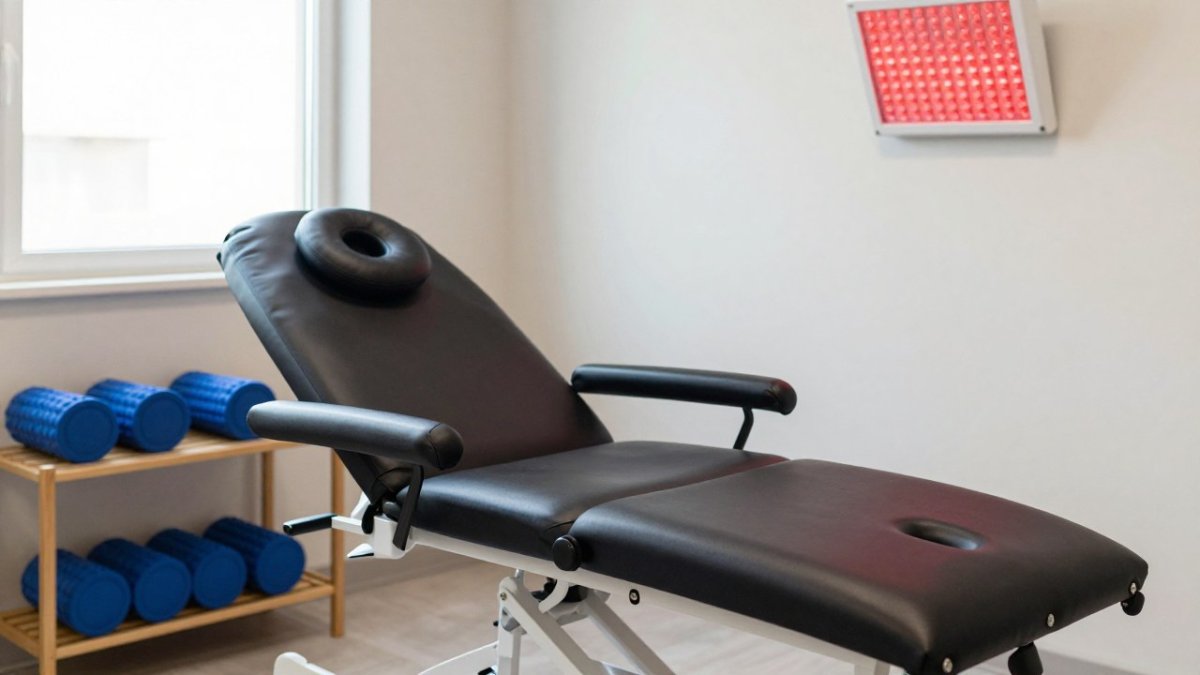
Core Modalities for a Compact Recovery Room
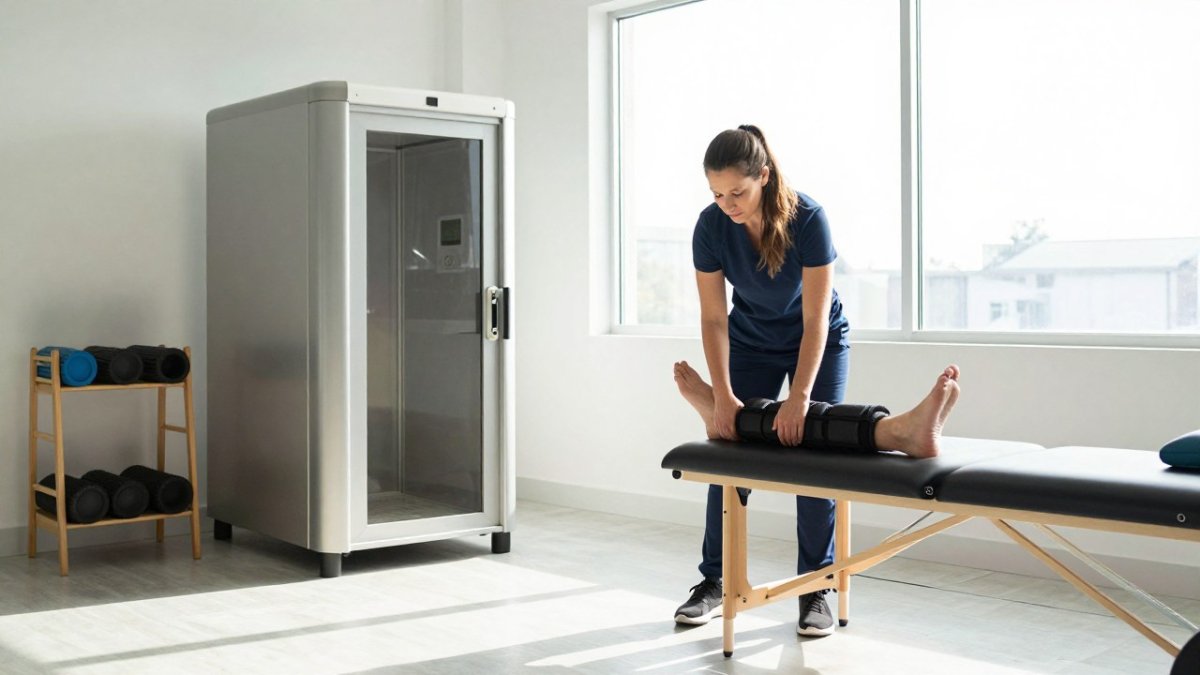
The core of any compact setup is a percussive massager, a set of foam rollers and massage sticks, compression boots, and a red light therapy panel. Those four cover muscle soreness, circulation, and mobility for most clients.
For a specific product reference on the passive side, view our Premium PEMF unit, a compact modality that fits a small footprint. Our hyperbaric oxygen chamber shows what a premium hard-shell unit looks like in a clinic setting.
Best Recovery Equipment for Athletes: Matching Tools to Client Demand
Match tools to the clients you actually have, not the clients you hope to attract. Athletes often look for percussive massagers, compression boots, and cold therapy for post-training recovery. General wellness clients often lean toward red light therapy, heat therapy, and guided mobility work.
Before you buy, forecast demand for each service. Our guide on how to forecast demand for a new spa recovery service walks through the questions to ask before committing capital to a modality.
Commercial Recovery Equipment for Gyms: Durability and Workflow Requirements
Commercial recovery equipment for gyms has to survive daily use, and in a small clinic it also has to fit a tighter room and schedule. Consumer roundups rarely explain whether a device withstands repeated daily use, how much floor and power it needs, or how repairs and warranties affect ownership cost. This section covers those clinic-ready requirements.
Space, Power, and Storage Requirements
Before you compare devices, measure the room. A clinic-ready comparison looks at four numbers for each piece of equipment: footprint in square feet, clearance needed for client entry and exit, power draw and circuit requirements, and storage space for accessories.
- Percussive massagers: small footprint, standard 120V outlet, but each unit needs a charging dock and storage for heads and attachments. Budget a shelf or cabinet near the treatment chair.
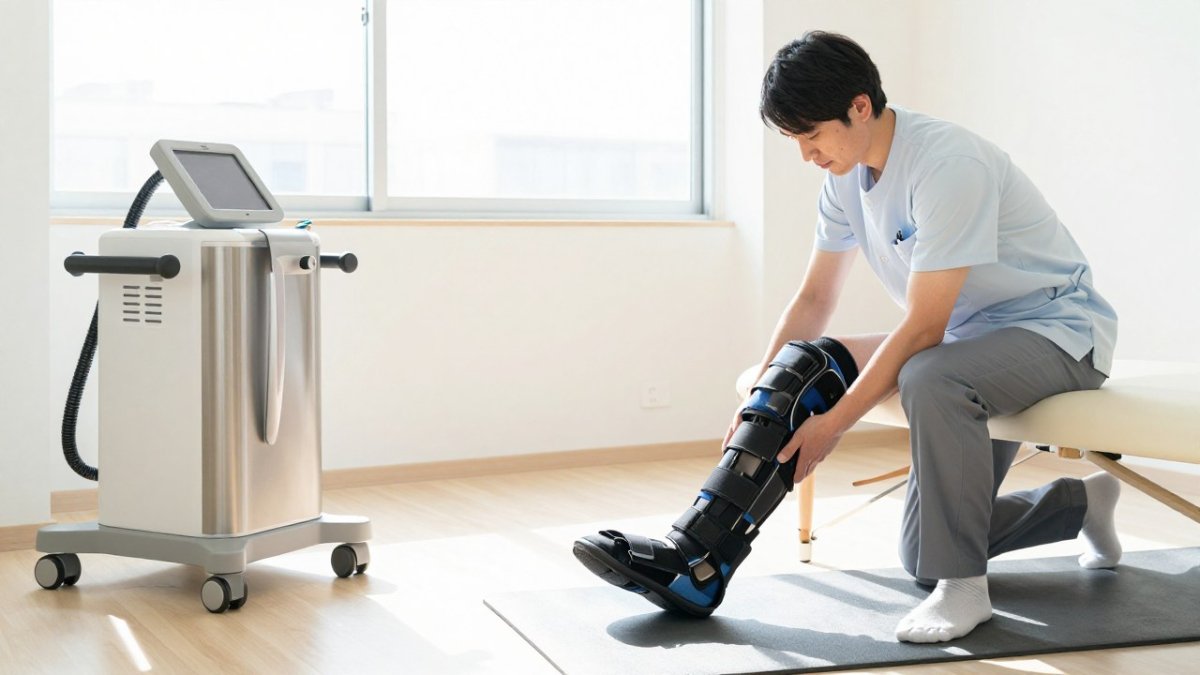
- Compression boots: the boots fold flat, but the pump needs a stable surface and a nearby outlet. Plan a cart or low shelf so the pump does not sit on the floor where clients trip.
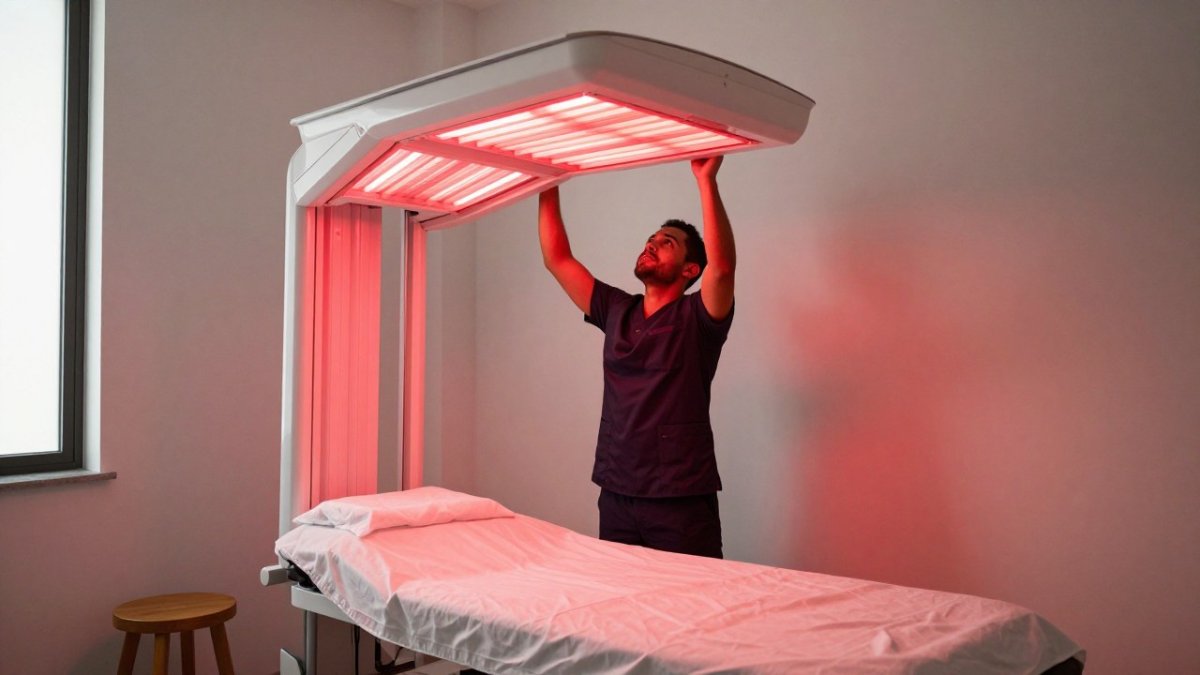
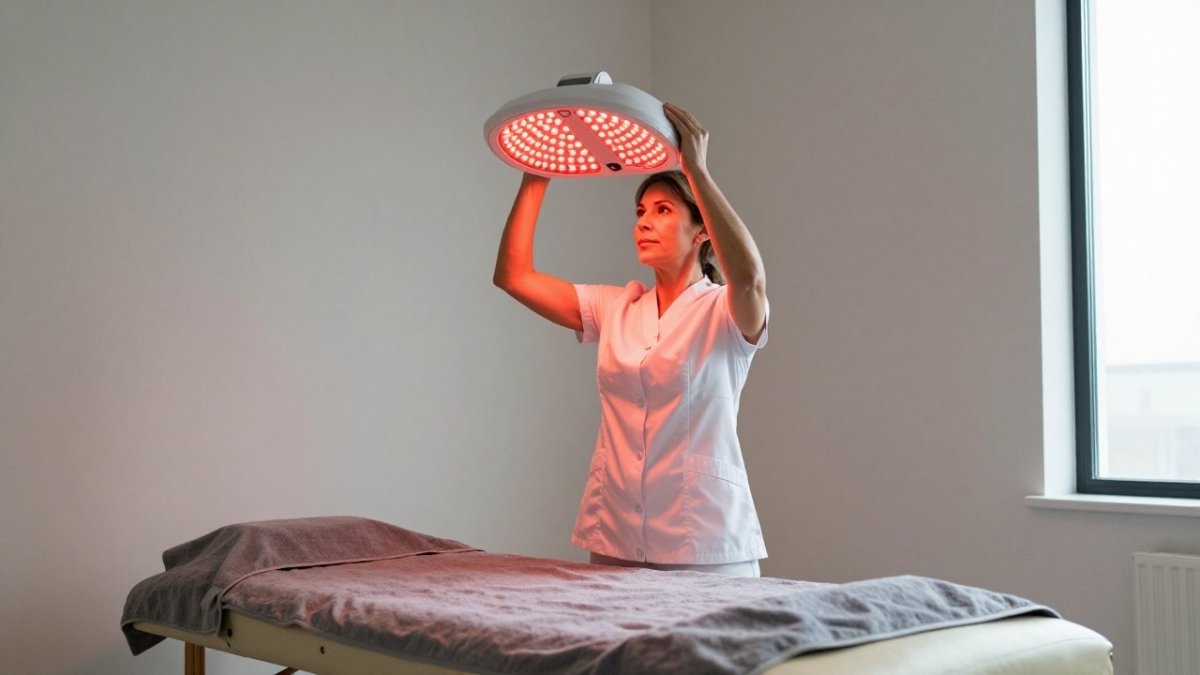
- Red light therapy panels: thin, but needs a stand or wall mount and clear space in front for the client. Larger panels may need a dedicated circuit; confirm amperage with the vendor.
- Thermal units: heating pads and cold therapy units need counter space and, for cold therapy, a plan for ice or refrigerant replenishment.
- Hyperbaric chambers and PEMF units: the space and power drivers. A chamber needs a clear entry path, ventilation, and often a dedicated circuit. Measure door width and ceiling height before you buy.
A common pattern is to plan the room around the largest device and then discover the smaller tools have nowhere to live. Lay out storage first, then place the devices.
Workflow: Session Capacity and Client Flow
Workflow decides whether a bundle earns its space. Map the client path from check-in to device to exit, and keep clients from crossing paths in a small room.
Estimate session capacity before you buy. If a compression session takes 30 minutes plus 5 minutes of cleaning, one staff member can run roughly two sessions per hour per device.
Ask who services the unit, how fast parts arrive, and whether loaner equipment is available during repairs.
Commercial Durability, Warranties, and Service Support
Consumer gear is not built for clinic volume. Ask each vendor for the duty cycle, how many hours per day the device can run before it needs a rest, and compare that to your projected schedule.
Get the warranty in writing, including what it covers and what voids it. Confirm the warranty length and repair response time with the vendor.
Ownership cost is more than the purchase price. Add up consumables, replacement pads, proprietary accessories, and service visits over three years, then compare that total across vendors.
Sanitation and Client Safety in a Shared Room
Sanitation and client safety protocols matter more in a shared clinical setting than in a home gym.
Screen clients before thermal or pressure-based sessions. Ask about pregnancy, recent surgery, cardiovascular conditions, and implanted devices. Keep a printed contraindication sheet at the front desk and train every staff member on it.
Staff supervision is part of the workflow. Passive modalities still need a staff member within sight or sound of the client.
Hyperbaric Oxygen Chamber for Sale: What Small Clinics Should Verify Before Buying
A hyperbaric oxygen chamber is a pressurized enclosure that delivers oxygen at higher-than-normal pressure (the FDA). If you are shopping for a hyperbaric oxygen chamber for sale, verify the pressure rating, the chamber's footprint and power draw, the training your staff receives, and the warranty and service terms.
Sanitation and client screening matter here more than with any other modality. Ask how the chamber is cleaned between sessions and what screening questions your team asks before entry. For a deeper walkthrough, read our hyperbaric oxygen chamber buyer's guide.
Bundle Recommendations by Startup Budget and Clinic Size
Most recovery equipment roundups are written for athletes, home users, or large gyms. A small wellness clinic has different constraints: one to three treatment rooms, one or two staff members, a limited capital budget, and a landlord who cares about power draw and floor loading. The bundles below are built around those constraints, with realistic total costs and space needs.
Pricing depends on quantity, delivery, and configuration. Request a current quote from Eternall Wellness before planning your budget.
Starter Bundle: Solo Practitioner, One Room
Planning cost: request a current quote for this configuration.
Space and power: about 20 to 30 square feet of floor and wall space. The percussive massager charges on a standard 120V outlet; no dedicated circuit is needed.
What it proves: whether clients will book recovery at all. A starter bundle tests demand with low capital at risk.
Session capacity: a single staff member can run four to six 30-minute active sessions per hour in a small room, depending on setup and cleanup time.
Growth Bundle: Clinic With Two to Three Treatment Rooms
Planning cost: roughly $6,000 to $15,000 for the equipment, plus $500 to $1,500 for the chair, screen, and storage.
Space and power: about 60 to 100 square feet. The compression pump and red light panel each draw modest power, but check the panel's requirements, larger panels may need a dedicated circuit.
What it proves: whether sessions fill a schedule.
Session capacity: two to four passive sessions per hour per staff member, plus active sessions in the same room if the schedule allows.
Premium Bundle: Established Clinic With Steady Demand
Planning cost: roughly $20,000 to $60,000 or more, depending on whether you add a chamber.
Space and power: 120 to 200 square feet, with a dedicated circuit for the chamber or PEMF unit and a clear path for client entry and exit.
What it proves: whether premium pricing holds. A premium bundle only makes sense when your schedule is already full and clients are asking for the next modality.
How to Phase the Purchase
Buy in the order above, and do not skip a phase.
Financing changes the math on phases two and three. Our guide to financing options for wellness equipment explains how to preserve capital while you expand.
Ask for a first-year consumables estimate in writing before you compare totals.
The three bundles scale from a single room to an established clinic, each with its own cost range and space needs.
| Bundle | What's in it | Planning cost | Space and power |
|---|---|---|---|
| Starter | Foam rollers, massage sticks, one percussive massager, cart, cleaning station | Request a current quote | About 20 to 30 square feet; standard 120V outlet |
| Growth | Starter plus compression boots, red light panel, chair, privacy screen | Roughly $6,000 to $15,000 plus $500 to $1,500 | About 60 to 100 square feet |
| Premium | Growth plus thermal option, second percussive device, chamber or PEMF unit | Roughly $20,000 to $60,000 or more | 120 to 200 square feet, dedicated circuit |
Sanitation, Safety, and Service Support for Your Recovery Equipment
Sanitation and service support decide whether a bundle lasts. Set a written cleaning protocol for every device, with a log your staff signs after each session. Client safety starts with screening: ask about pregnancy, recent surgery, and cardiovascular conditions before thermal or pressure-based sessions.
Service support is the part buyers underestimate. Ask for the warranty length in writing, the repair response time, and whether training is included at delivery.
Request a Recovery Equipment Bundle Quote from Eternall Wellness
The hardest part of building a recovery room is not choosing devices. It is choosing the right combination for your space, your clients, and your budget, then getting support after the sale.
Eternall Wellness offers multi-modality recovery systems for gyms, med spas, and wellness clinics, and helps businesses evaluate technologies as potential revenue-generating services. Financing options are available to help preserve capital.
Get started with Eternall Wellness and build a recovery room that pays for itself.
Frequently Asked Questions
What is the best recovery equipment for a small wellness clinic?
A practical small-clinic bundle usually combines a percussive massager, compression therapy system, and a red light therapy panel, with foam rollers and massage sticks as low-cost add-ons. If space and budget allow, add thermal options or a hyperbaric chamber. The right mix depends on your client base, room size, and power capacity. Eternall Wellness can help you match recovery equipment to your facility and revenue goals rather than selling a one-size-fits-all package.
Can wellness clinics bundle recovery equipment to save space or money?
Yes. Bundling lets you coordinate equipment footprints, share power and storage requirements, and often secure better terms than buying piece by piece. A phased bundle, starting with the highest-demand modalities and adding equipment as utilization grows, keeps capital outlay lower. Before you commit, check the full equipment list against your room dimensions and electrical capacity, so each addition fits the space you actually have.
How do I choose recovery equipment for a small clinic?
Start with client demand: survey your members or patients about soreness, mobility, and recovery goals. Then check practical constraints, including room size, power supply, ventilation, and staff time per session. Prioritize commercial-grade units with clear warranties and service support, because home-grade tools wear out quickly under daily clinic use. Finally, model the numbers: estimate sessions per week, per-session pricing, and how long the bundle takes to pay for itself before adding more modalities.
What should a clinic verify before buying a hyperbaric oxygen chamber for sale?
Confirm the chamber is designed for commercial use, check the manufacturer's warranty and service network, and ask about staff training and operating protocols. Verify the unit's power and space requirements, plus any local fire and building code considerations for pressurized or oxygen-equipped equipment. Ask the supplier to document safety features and maintenance intervals in writing.