 blog
How to Choose Red Light Therapy Devices for Your Facility
Last Updated: November 13, 2026
Quick Summary
Choose red light therapy devices for a facility by verifying measured irradiance at treatment distance, coverage, cooling, duty cycle and commercial warranty terms, not marketing labels. Ask suppliers for irradiance testing, wavelength verification, safety documentation and flicker data, then model cost per session rather than purchase price.
- Commercial devices are built for continuous multi-user operation; home units suit occasional single-person use.
- Irradiance falls off sharply with distance, so ask at what distance output was measured.
- Medical-grade has no single legal definition, so request test reports instead of adjectives.
- Require a written contraindication screen, including medication questions, before every client's first appointment.
- Model cost per session by dividing total annual ownership cost by realistic session volume.
Table of Contents
- What Separates Commercial Red Light Therapy Devices From Home Units
- How We Compare the Best Red Light Therapy Devices
- Red Light Therapy Devices Reviews: What the Spec Sheet Will Not Tell You
- Red Light Therapy Devices for Face: Masks, Panels and Wands Compared
- Medical-Grade Red Light Therapy Devices: What the Label Actually Means
- Safety, Eye Protection and Contraindications Before You Buy
- Total Cost of Ownership: What the Purchase Price Leaves Out
- Matching a Red Light System to Your Facility and Revenue Plan
- Frequently Asked Questions
What Separates Commercial Red Light Therapy Devices From Home Units
Commercial red light therapy devices are built for continuous, multi-user operation, while home units are built for occasional single-person use. That difference shows up in LED density, cooling, duty cycles and warranty terms. A device that overheats after twenty minutes is a liability in a facility with back-to-back appointments.
A home panel may list impressive-sounding specs, but those numbers are sometimes measured at the diode rather than at the skin.
Here is the comparison that matters most when you are buying for a business:
| Factor | Home Unit | Commercial Device |
|---|---|---|
| Duty cycle | Short sessions, cool-down gaps | Continuous operation |
| Coverage | Face or small zone | Full body or large zones |
| Cooling | Passive | Active fans or heat sinks |
| Warranty | Consumer terms | Commercial terms |
| Support | Retail returns | Service and training |
How We Compare the Best Red Light Therapy Devices
We compare the best red light therapy devices on five criteria: measured irradiance, treatment distance, coverage, construction and total ownership cost. Spec sheets are marketing documents. Our method treats them as a starting point, not a verdict.
Irradiance, Treatment Distance and Dose
Irradiance is the power delivered per unit area at the skin, and it falls off sharply as distance increases. A panel rated at a high output at the lens may deliver a fraction of that at the distance a client actually sits. Dose is irradiance multiplied by session time, so a weaker device held close can match a stronger one held far away.
Ask every supplier three questions: at what distance was the irradiance measured, what is the coverage area at that distance, and what session time produces a therapeutic dose. If a vendor cannot answer, that tells you something. For a deeper walkthrough of these criteria, see our guide on how to choose the right red light therapy equipment.
Red Light Therapy Devices Reviews: What the Spec Sheet Will Not Tell You
The number a spec sheet rarely shows is flicker. Cheap drivers pulse the LEDs faster than the eye tracks, and some users notice headaches or eye strain over repeated sessions. Ask whether a device is zero-flicker and lab-tested. Electromagnetic field output is another line item that rarely appears in consumer marketing but matters in a clinical room with other sensitive equipment.
Warranty language is the third blind spot. Consumer warranties often void on commercial use. Read the terms before you sign, not after a panel fails in month eight.
What most buyers miss is that wavelength accuracy varies between production runs. A device marketed at 660 nm and 850 nm should be verified, not assumed. Reputable suppliers publish test data; others publish adjectives.
Red Light Therapy Devices for Face: Masks, Panels and Wands Compared
Face-focused buyers usually choose between LED masks, small panels and wands. Masks fit the face closely and suit relaxation-driven sessions. Panels cover the face and neck with more power and no contact. Wands offer spot treatment for targeted areas but demand a trained hand and steady timing.
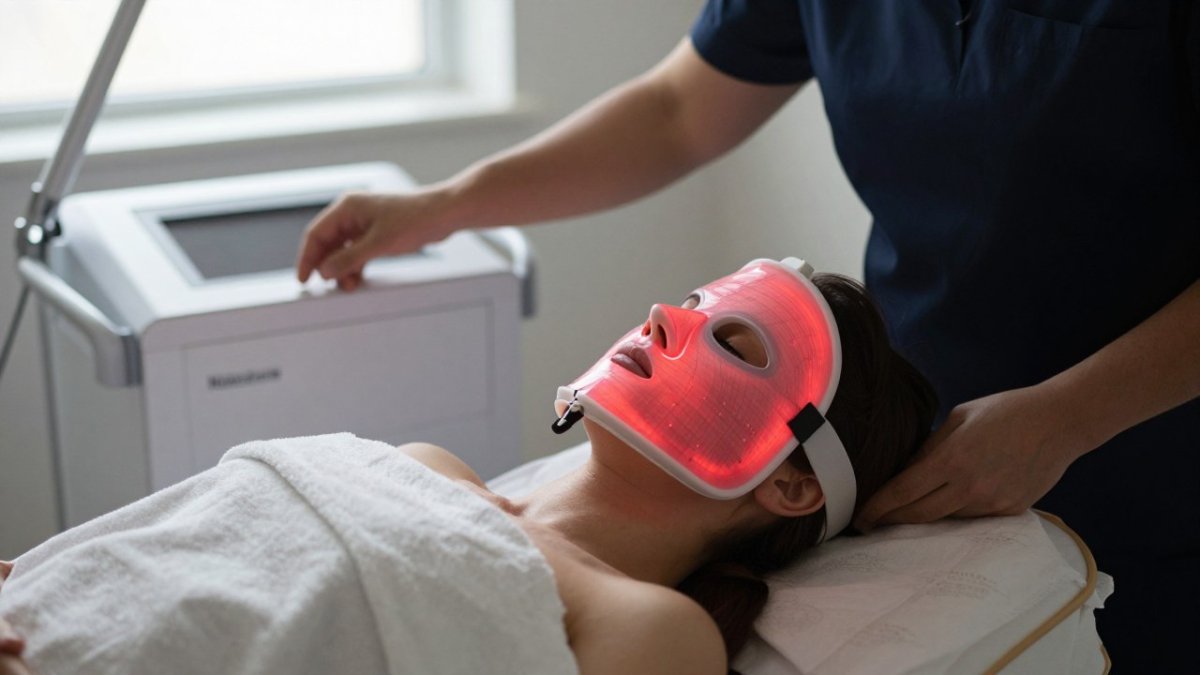
Masks vs Panels for Facial Treatments
Masks win on client comfort and quiet sessions. Panels win on output, coverage and hygiene, since nothing touches the skin. For a med spa running facials alongside other services, a panel integrates more easily into an existing room and cleans between clients in seconds.
If you want a concrete face-and-body reference point, our VersaDome Pro 2-in-1 face and body device shows how a single unit can cover both treatment zones.
Medical-Grade Red Light Therapy Devices: What the Label Actually Means
"Medical-grade" has no single legal definition in the red light therapy device market, so treat it as a marketing claim to verify rather than a guarantee of performance. The term gets applied to devices across a wide range of price points, and no regulator polices it as a category label. What separates a genuinely clinical device from a consumer unit dressed up in clinical language is documentation, and most buyers never ask for it.
The more useful question for a facility buyer is not "is this medical-grade?" but "what can the manufacturer prove?" A credible supplier should be able to produce four categories of evidence on request:
- Irradiance testing at a stated distance. The report should name the measurement distance, the meter used, and the coverage area at that distance. A number measured at the lens face tells you almost nothing about what a client receives at 6 or 12 inches.
- Wavelength verification. A device marketed at 660 nm and 850 nm should have third-party or in-house spectroradiometer data confirming the peak and the full-width half-maximum of each channel. Production runs drift, so ask whether the data reflects the current build.
- Safety documentation. Look for electrical safety testing to a recognized standard and a declaration of conformity.
- Flicker and EMF data. Neither appears on a typical spec sheet, but both affect how a device performs in a treatment room. Ask for measured flicker frequency and whether the driver is zero-flicker, plus electromagnetic field readings at the client position.
A common pattern is that consumer-facing brands publish adjectives ("clinical-strength," "hospital-grade," "patented technology") while clinical suppliers publish test reports. That difference is a better filter than any label.
For clinical buyers, the practical next step is to map the device's documentation against the standards your practitioners are held to. Our red light therapy safety standards for practitioners covers what to check against before you sign a purchase order.
Safety, Eye Protection and Contraindications Before You Buy
Red light therapy is generally well tolerated, but the safety details that matter in a facility are the ones product pages skip. Three areas deserve a written protocol before your first client sits down: eye exposure, photosensitizing medications, and skin conditions that change how a client responds to light.
Eye protection. The eyes are the most light-sensitive tissue in the treatment field, and near-infrared wavelengths in particular penetrate deeper than visible red. Clients should wear opaque, wavelength-appropriate eye shields, not just closed eyelids, during any session where light reaches the face. Staff positioning matters too: a panel aimed at a client's back can still spill into a practitioner's line of sight across the room. Set devices so the beam is directed away from walkways and doorways, and keep a pair of shields at every station.
Photosensitizing medications. A range of common prescriptions increase skin sensitivity to light, including certain antibiotics (notably tetracyclines and fluoroquinolones), isotretinoin and other retinoids, some diuretics, and certain antidepressants and antipsychotics. The practical rule is not to memorize the list but to ask every client, every time, whether they have started a new medication since their last session. A one-line intake question catches what a static handout misses.
Skin conditions and other contraindications. Active eczema, psoriasis flares, open wounds, and recent chemical peels or laser treatments all change the risk profile of a session. Pregnancy is commonly listed as a precaution, and clients with a history of photosensitivity disorders or skin cancer should be cleared by their clinician first. None of these are reasons to refuse service outright, they are reasons to document a screening decision.
Build the screen into booking. The cheapest liability control is a written contraindication screen completed before the first appointment, reviewed by staff, and stored with the client record. A verbal "any medications?" at the door is not a screen. Our red light therapy safety standards for practitioners walks through the intake fields most facilities should capture.
Watch out: skipping a written contraindication screen exposes your facility to liability far beyond the cost of the equipment, and a client who reacts badly to a session they were never screened for is a problem no warranty will cover.
Total Cost of Ownership: What the Purchase Price Leaves Out
The purchase price is the smallest part of the number. Add installation, room prep, staff training, consumables, service contracts and downtime. A device that needs repair twice a year costs more than a sturdier unit that never does.
Facility buyers should model cost per session, not cost per device. Divide total annual ownership cost by realistic session volume, and compare that against what you plan to charge. Our red light therapy bed cost guide for facility buyers breaks down the budgeting side in more detail.
Matching a Red Light System to Your Facility and Revenue Plan
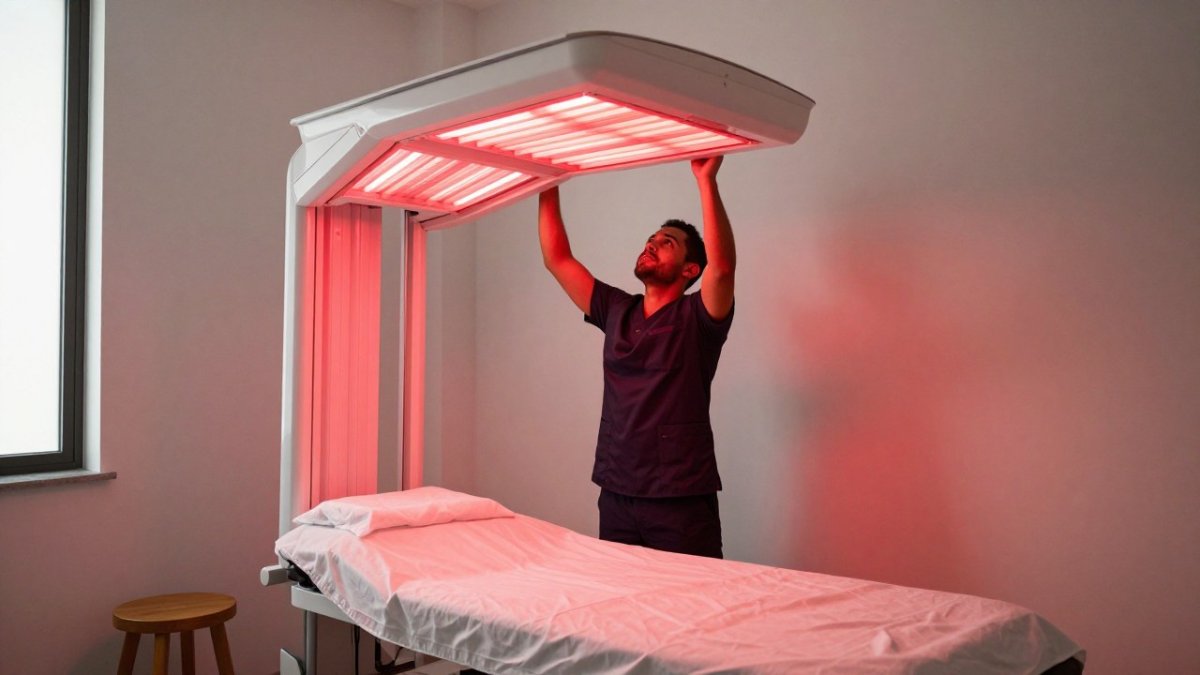
The right system depends on your room count, your client flow and your pricing model. A gym with steady member traffic may favor a full-body setup with quick sessions. A med spa with longer appointments may prefer targeted devices that slot into existing treatments.
Start with demand, not equipment. Estimate how many sessions per week you can realistically fill, then choose coverage and throughput to match. Our guide on pricing red light therapy packages that sell walks through the revenue side of that decision.
Eternall Wellness helps businesses evaluate wellness technologies as potential revenue-generating services, with financing options available. For current pricing or a quote, visit the Eternall Wellness website.
Choosing recovery equipment is a revenue decision disguised as a purchase. Eternall Wellness supplies commercial red light therapy systems, thermal recovery equipment and hyperbaric chambers, and we help you model utilization and pricing before you commit. Financing options are available to preserve capital while you expand. Get started with Eternall Wellness and turn idle treatment space into a recurring revenue line.
Frequently Asked Questions
Do at-home red light therapy devices really work?
They can, but output matters more than the label. A device that delivers a meaningful dose of 660 nm and 850 nm light at the distance you actually sit from it is doing real work. One that lists wavelengths but no irradiance figure is a guess. Ask for lab-tested output data before you buy, and
What is the difference between a red light therapy panel and a mask?
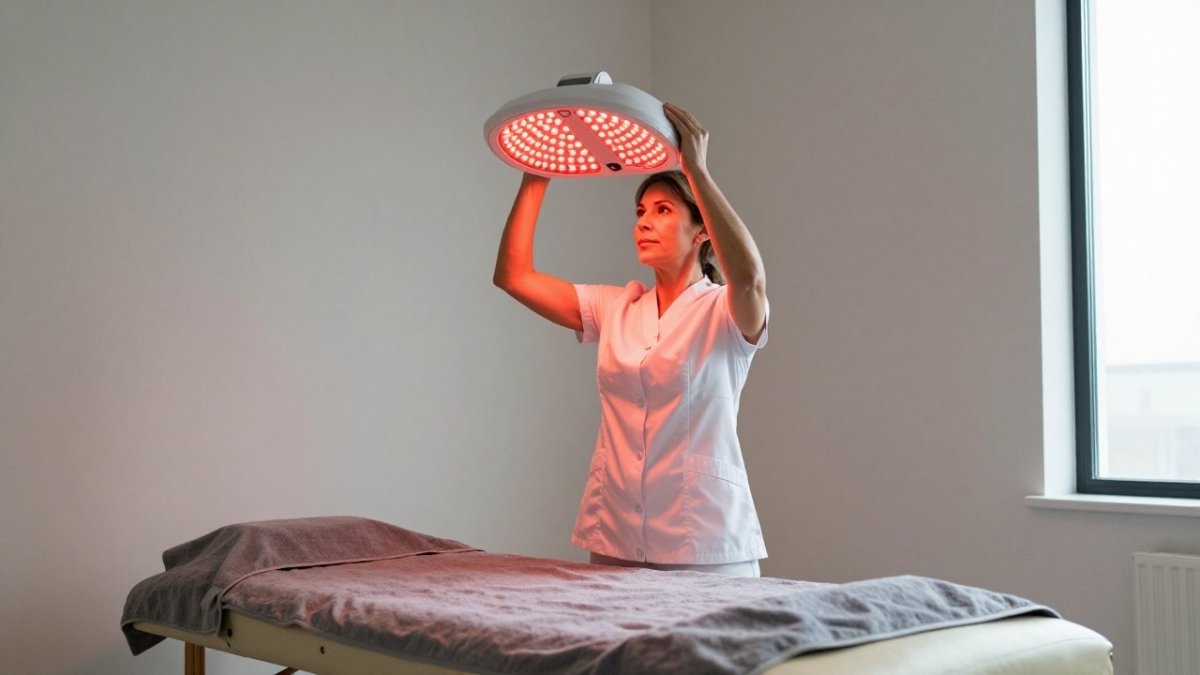
A panel treats a larger area from a set distance and works for the face, back, shoulders, knees and other body zones. A mask sits directly on the face, so it covers facial skin only but is simple to use and easy to store. Panels generally deliver higher irradiance and cover more square inches per session. Masks suit a single-zone facial routine. For a commercial facility serving varied clients, a panel covers more use cases per dollar.
Are any red light therapy devices FDA-cleared?
That means a device cleared for one use is not automatically cleared for another. Ask the supplier for the clearance number and the indications it covers, then confirm it matches how you plan to position the service. Clearance is not the same as a guarantee of results.
How often should you use a red light therapy device?
A high-irradiance panel may need only a few minutes per zone; a low-output unit may need fifteen or more to reach the same dose. For a facility, that difference sets your throughput: shorter sessions mean more appointments per room per day. Build your schedule around measured dose and client demand, not a generic timer.