 Ultimate guide
Red Light Therapy Safety Standards for Practitioners
Last Updated: October 27, 2026
Quick Summary
Red light therapy safety for practitioners means verifying each device's FDA status, screening every client for photosensitivity and medications, and documenting dose, hygiene, and staff competency. Most Class II panels are 510(k) cleared, not FDA approved, so build a device file with the 510(k) number and cleared indication before you buy.
- Establishment registration only means the manufacturer filed its facility with the FDA and says nothing about device review.
- 510(k) clearance does not mean the FDA independently tested the device or endorsed its marketing claims.
- Capture a full current medication list and update it at each visit, since photosensitivity is not visible.
- Log staff member name, device used, dose, and duration for every session.
- Wipe panels, handles, and control surfaces with a facility-appropriate disinfectant between clients.
Table of Contents
- Why Red Light Therapy Safety Standards Matter in a Commercial Setting
- How the FDA Regulates Red Light Therapy Devices
- Red Light Therapy Contraindications and Client Screening
- What a Red Light Therapy Client Intake Form Should Capture
- Red Light Therapy Session Duration and Dose Selection
- Eye Protection, Hygiene, and Shared-Equipment Protocols
- Red Light Therapy Staff Training and Scope of Practice
- Building Your Clinic's Red Light Therapy Safety Protocol
- Frequently Asked Questions
Why Red Light Therapy Safety Standards Matter in a Commercial Setting
Red light therapy safety for practitioners starts with a simple reality: the equipment you place in a treatment room carries obligations that a home device never does. Photobiomodulation, the clinical term for light-based therapy using red and near-infrared wavelengths, is generally well tolerated, but "generally well tolerated" is not the same as "no protocol required." At Eternall Wellness, we work with gyms, med spas, and wellness clinics.
A commercial setting raises the stakes in three ways.
Below, we discuss considerations for device marketing, screening, dosing, hygiene, and staff authority.
How the FDA Regulates Red Light Therapy Devices
The FDA regulates red light therapy devices as medical devices when the manufacturer makes medical claims. That distinction drives everything else in this section, because the regulatory pathway a device took determines what its paperwork actually proves.
Registration, Clearance, and Approval Are Not the Same Thing
Three distinct statuses are:
- Establishment registration means the manufacturer filed its facility with the FDA. It says nothing about whether the device was reviewed or cleared. A "FDA registered" badge on a product page is the weakest possible claim.
- 510(k) clearance means the manufacturer submitted a premarket notification and demonstrated substantial equivalence to a legally marketed predicate device (the FDA). Most red light therapy panels marketed for pain relief, muscle recovery, or skin treatment fall into Class II and take this pathway. Clearance does not mean the FDA independently tested the device or endorsed its marketing claims.
- Premarket approval (PMA) is the most stringent pathway, reserved for higher-risk devices (the FDA). Most wellness red light panels are not PMA-approved, and a supplier claiming "FDA approved" for a Class II panel is misstating its status.
Verifying Device Documentation Before You Buy
If you are weighing multiple systems, our guide on how to choose the right red light therapy equipment walks through the documentation checklist in detail. You can also explore red light therapy systems built for commercial environments.
Red Light Therapy Contraindications and Client Screening
Watch out: skipping the medication review because a client "looks fine" is the most common screening failure we see. Photosensitivity is not visible.
What a Red Light Therapy Client Intake Form Should Capture
At minimum, capture:
- Diagnosed light-sensitive conditions and any family history
- Full current medication list, updated at each visit
- Prior laser, IPL, or light therapy treatments and any adverse reactions
- Current skin condition in the treatment area
- Signed acknowledgment of risks and consent to treat
- Staff member name, device used, dose, and duration for each session
The session log matters as much as the intake form. If a client reports a reaction, you need to know exactly what was delivered.
Red Light Therapy Session Duration and Dose Selection
For clinics structuring full treatment menus around these parameters, our guide on setting up red light therapy protocols in med spas covers how dose selection fits into a broader service schedule.
Book a 30-Minute Facility Review →
Eye Protection, Hygiene, and Shared-Equipment Protocols
Shared-equipment hygiene deserves the same attention. Between clients:
- Wipe down panels, handles, and control surfaces with a facility-appropriate disinfectant
- Replace or launder any linens or eye coverings that touch the client
- Inspect device surfaces for damage that could harbor contamination
- Document cleaning in the same log used for session records
These steps are unglamorous and they are exactly what a compliance reviewer will ask about. Infection prevention on shared equipment is one of the most frequently overlooked parts of a light therapy program.
Red Light Therapy Staff Training and Scope of Practice
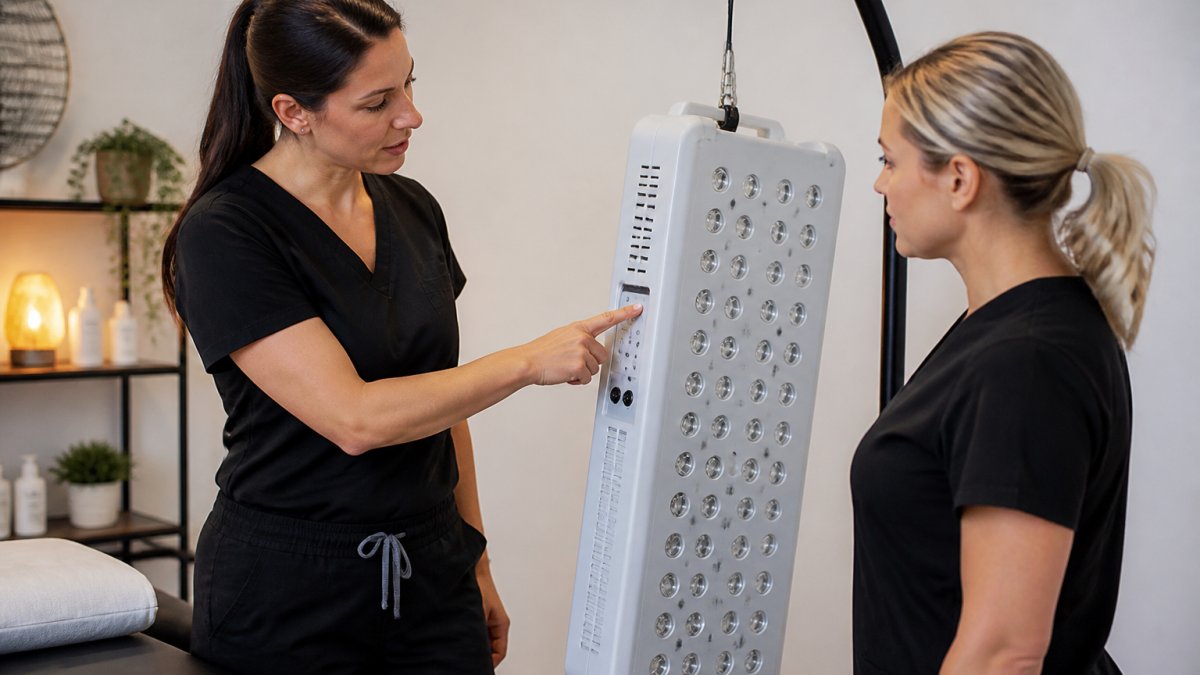
A workable training structure includes:
- Documented initial training on each device before independent operation
- A written competency sign-off for screening and dose calculation
- Clear escalation rules for any client with a flagged condition or medication
- Annual refresher training with a record of completion
What most guides miss is that training documentation is your defense. If a staff member operates a device without a signed competency record, you have no way to show the training happened.
Building Your Clinic's Red Light Therapy Safety Protocol
For the broader compliance picture, our wellness clinic equipment compliance guide shows how light therapy fits alongside your other equipment obligations, and our wellness facility liability and compliance guide addresses insurance and legal exposure.
| Protocol Element | Owner | Review Frequency |
|---|---|---|
| Device documentation | Clinic manager | At purchase and annually |
| Intake and consent forms | Front desk lead | Annually |
| Dose and duration table | Clinical director | At each device change |
| Hygiene procedures | Operations lead | Quarterly |
| Staff training records | Clinic manager | Annually |
| Incident response plan | Owner | Annually |
Eternall Wellness supplies red light therapy systems alongside thermal recovery and hyperbaric equipment, with financing available to preserve capital and support that helps you evaluate use, pricing, and integration before you commit.
Frequently Asked Questions
What safety precautions should practitioners take when providing red light therapy?
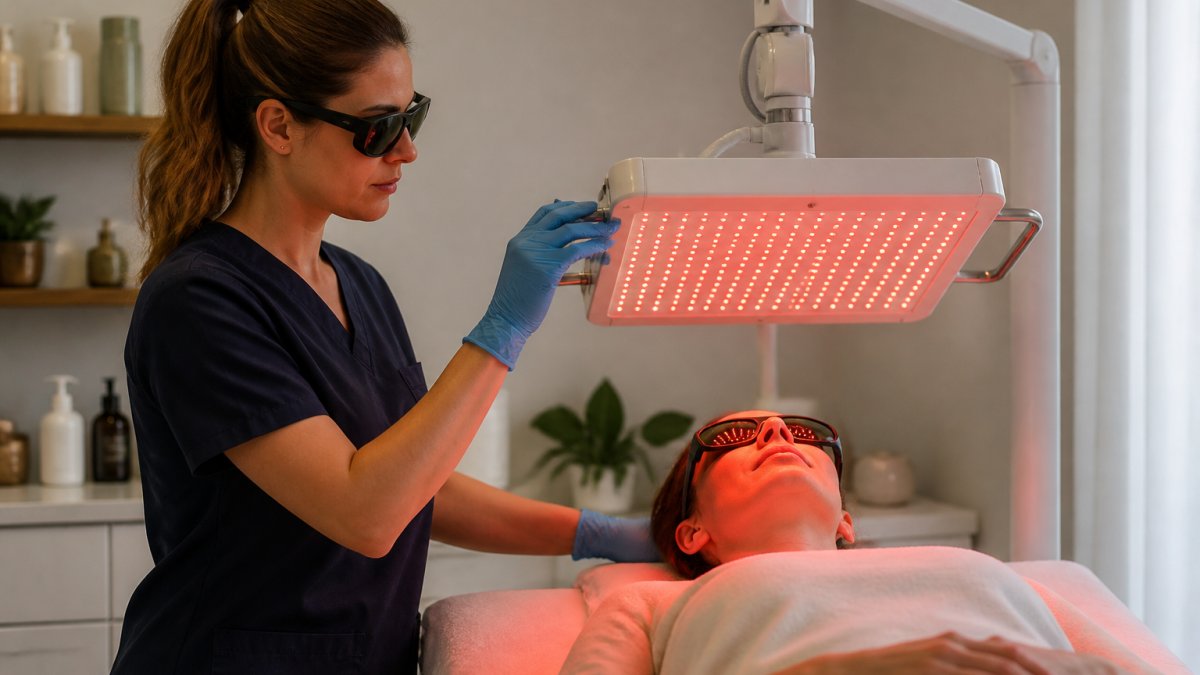
Start with a documented intake and screening process that flags photosensitivity conditions, photosensitizing medications, and pregnancy. Provide protective eyewear for every client and staff member in the treatment area. Set session duration and distance according to the device manufacturer's instructions rather than improvising. Keep a written protocol covering contraindications, incident response, and equipment cleaning, and train every operator on it before they run a session. These steps form the core of a defensible red light therapy safety program.
Do clients need protective eyewear during red light therapy?
Yes. Most device manufacturers specify protective eyewear for anyone in the treatment room, and many practitioners extend that to staff standing nearby. Intense light exposure near the eyes can cause discomfort or temporary visual disturbance, and the long-term effects of repeated exposure are not well established. Provide opaque or manufacturer-supplied goggles, not just sunglasses, and keep a supply of sanitized eyewear on hand for each session.
Who should avoid red light therapy or consult a healthcare professional first?
Clients with light-sensitive conditions such as lupus or porphyria, anyone taking photosensitizing medications like certain antibiotics or retinoids, and pregnant clients should consult a physician before treatment. The same applies to people with active skin infections, open wounds in the treatment area, or a history of skin cancer. Build these red light therapy contraindications into your intake form so the screening happens before the client reaches the treatment room, not after.
What should a red light therapy client screening form include?
A red light therapy client intake form should capture medical history, current medications, known photosensitivity or light-sensitive conditions, pregnancy status, skin conditions, and prior reactions to light-based treatments. Add consent language explaining what the treatment involves, expected sensations, and how to report discomfort. Include a signature and date field, and review the form with the client before their first session. Update it periodically rather than treating it as a one-time document.
How should staff be trained to operate red light therapy equipment safely?
Red light therapy staff training should cover device operation, session setup, dose and duration settings, eyewear distribution, contraindication screening, cleaning between clients, and incident reporting. Pair a written manual with hands-on demonstration and a competency check before staff run sessions independently. Retrain when you add a new device or change protocols. Document every training session, since regulators and insurers may ask for those records.
How do practitioners determine appropriate session duration and distance from a device?
Follow the manufacturer's specified dose and distance for each device, then adjust only within the range the documentation supports. Session duration typically depends on the device's irradiance and the treatment area, so a panel and a targeted wand will not share the same protocol. Record the settings used for each client so you can track responses and adjust over time. Never extend sessions beyond manufacturer guidance to chase faster results.