 Ultimate guide
The Med Spa Expansion Guide for Owners
Last Updated: November 19, 2026
Quick Summary
A med spa expansion should start with a readiness audit of four metrics: capacity use, client retention rate, revenue per treatment room, and break-even volume. If you cannot sketch your break-even volume on one page, you are not ready to expand.
- Model a downside case where revenue comes in 30% below plan and costs run 10% over.
- Conservatively, 20-40% of your existing client base will use a new location at least once.
- Adding a service line is the lowest-risk form of expansion because it tests demand before you sign a lease.
- Do not open location three until location two hits break-even and holds it for a quarter.
- Model equipment financing as a fixed cost from month one, not from the month the location turns profitable.
Table of Contents
- Expansion Readiness: The Benchmarks That Tell You It's Time
- Building a Med Spa Business Plan for Growth
- Med Spa Revenue Streams That Fund Expansion
- Med Spa Service Expansion: Adding Treatments and Equipment
- Opening a Med Spa Second Location Without Cannibalizing the First
- Legal Structure, Medical Director Oversight, and Compliance
- Unit Economics and Location-Level Financial Modeling
- Phased Rollout Timeline and Multi-Location Operations
- Frequently Asked Questions
Expansion Readiness: The Benchmarks That Tell You It's Time
Most owners decide to expand on a feeling, a waitlist, a packed Saturday. That instinct is worth listening to, but it is not a plan. A med spa expansion guide should start with numbers that show whether a second location or new service line will carry its own weight. Facilities that add equipment and square footage before filling what they already have often see fixed costs climb while use drops.
The fix is a short readiness audit built on four metrics.
The Four Readiness Metrics to Track First
Capacity use is the percentage of available treatment hours that are actually booked and paid for.
Client retention rate is the share of clients who return within a defined window, typically 90 days.
Revenue per treatment room tells you how hard each square foot is working. Compare rooms against each other, not against industry averages you cannot verify.
Break-even volume is the number of monthly treatments needed to cover the new location or service's fixed costs.
Building a Med Spa Business Plan for Growth
Your expansion business plan is not a bank document. The med spa ROI and equipment launch checklist we use with clients covers demand, gross revenue assumptions, costs, staffing, and supplier verification in one working document.
What most guides miss is that a med spa business plan for expansion is really a location-level financial model, a spreadsheet showing, month by month, how much cash the new site or service line consumes before it produces. That model has five layers, each with its own assumptions.
The Five Layers of an Expansion Financial Model
Layer 1: Demand evidence from your own data. Map your current client list by ZIP code, service history, and visit frequency.
Layer 2: Revenue assumptions by service and by month. Break revenue into three buckets: existing clients who will follow you (conservatively, 20-40% of your base will use the new location at least once), new clients acquired through marketing, and incremental services added to existing visits. Model each separately, they have different acquisition costs and ramp curves.
Layer 3: Startup costs itemized. Build-out and equipment costs vary widely with plumbing, electrical, medical-gas requirements, and modality, so obtain current quotes for your specific site.
Layer 5: Break-even month and downside scenario. Break-even is the month when cumulative contribution margin turns positive.
What the Plan Must Include
Watch out: building the plan around full-capacity revenue is the most common modeling error. If your plan only works when every room is booked solid from week one, you have modeled a fantasy, not a business.
Med Spa Revenue Streams That Fund Expansion
Expansion rarely pays for itself from day one, so fund it from revenue you already control. Existing streams, tightened and repriced, often cover a meaningful share of the new location's early costs, layer non-invasive, high-margin services that use idle rooms and staff hours you already pay for.
Three streams tend to carry expansion:
- Recurring memberships for maintenance treatments, which smooth cash flow
- Add-on modalities in existing rooms, which lift revenue per visit without new square footage
- Retail and post-treatment care, which adds margin with minimal labor
For a deeper look at structuring these, our breakdown of med spa revenue diversification strategies walks through the options by effort and payback. The throughline is simple: fund growth from recurring revenue, not from one-off spikes.
Med Spa Service Expansion: Adding Treatments and Equipment
Adding a service line is the lowest-risk form of med spa expansion, because it tests demand before you sign a lease. But the sequence matters more than the equipment list: prove demand, model the unit economics, then buy. Most owners do this backward, they see a new modality at a trade show and buy the machine before a single client is booked for it.
The Demand-Validation Sequence
- Survey your current clients on what they would book and at what price. Test a few service options and price points to build a demand signal you can model.
- Run a soft launch in one room with a waitlist. Block a few hours per week in an underused room and offer the new service at an introductory price to existing clients. Track how many book, rebook, and convert to a package.
- Measure use and rebooking over 60 to 90 days. The key metric is rebooking rate, the share of first-time users who book a second session.
- Model the unit economics before committing to equipment. Calculate revenue per treatment hour, consumable cost per treatment, provider labor cost per treatment, and treatments per month needed to cover the equipment financing payment. Calculate how many treatments per month you need to cover the equipment financing payment after consumables and labor, before rent, marketing, or overhead.
- Only then commit to equipment and staffing. Negotiate service terms, training, and a warranty that covers the ramp period. Ask for a demo unit or short-term rental before you buy.

The woman is American. The man is American.
Equipment Trade-Offs That Decide Whether a Service Line Works
The trade-off is not just capital cost, it is revenue per square foot and revenue per labor hour.
Eternall Wellness builds these systems for commercial facilities. If you want a structured way to evaluate which services fit, our guide on what services a med spa can add is a useful starting point.
Watch out: buying equipment before you have a waitlist is the single most common expansion mistake.
Opening a Med Spa Second Location Without Cannibalizing the First
A second location fails most often not from weak demand but from stealing clients and staff from the first. Before you sign, map your current client base by distance. If a meaningful share lives closer to the proposed site than to your existing spa, you are likely to move revenue rather than add it.
Location Selection and Facility Requirements
Choose a site where your existing clients are not, but where your target client is. Then verify the boring things: zoning for medical use, plumbing and electrical capacity, ADA access, parking, and lease terms that survive a slow ramp.
Staffing is the other cannibalization risk. Do not strip your flagship team to open location two. Hire and train ahead of opening, and keep your best providers where your best clients are.
Legal Structure, Medical Director Oversight, and Compliance
Compliance is where expansion gets expensive if you treat it as paperwork. Medical spa ownership structures, corporate practice of medicine rules, and the required relationship with a licensed physician vary by state, so confirm requirements with healthcare counsel licensed in your state.
Physician oversight is not a signature on a form. It covers protocol approval, chart review, and supervision of delegated treatments within each provider's scope of practice. Our overview of legal considerations for adding medical wellness services covers the questions to bring to counsel.
Unit Economics and Location-Level Financial Modeling
The number that decides whether expansion works is not total revenue. It is contribution margin per location, per month, after direct costs. Model each site as its own profit center: revenue by service, variable costs per treatment, fixed costs for rent, staff, and equipment financing, then the contribution left over.
| Metric | What It Tells You | Healthy Signal |
|---|---|---|
| Use rate | Share of bookable hours sold | Rising quarter over quarter |
| Revenue per room | Productivity of each treatment space | Stable or climbing after ramp |
| Contribution margin | Cash each location throws off | Positive by the ramp target |
| Break-even month | When fixed costs are covered | Within your plan's timeline |
| Client acquisition cost | Cost to fill the new site | Recovered within a few visits |
If financing is part of the plan, model the payment as a fixed cost from month one, not from the month the location turns profitable. That single discipline prevents most cash-flow surprises.
Phased Rollout Timeline and Multi-Location Operations
Roll out in phases so each stage proves the next. A workable sequence runs roughly like this:
- Months 0-2: readiness audit, business plan, legal and licensing review
- Months 2-4: site selection, lease, build-out design, equipment selection
- Months 4-7: build-out, hiring, training, systems setup
- Months 7-9: soft launch with a waitlist, tight KPI tracking
- Months 9-12: stabilize use, then plan the next phase
Multi-location operations live or die on systems: one practice management platform, shared protocols, centralized training, and a weekly KPI review across sites. Our step-by-step framework for scaling med spa operations with new tech covers the systems layer in detail.
Expansion rewards owners who measure before they commit. If you are weighing a new service line or a second site, start with the equipment decision, because it sets your capacity, your costs, and your revenue ceiling.
Frequently Asked Questions
How do you know when your med spa is ready to expand?
Look at utilization before anything else. If treatment rooms run at high utilization and you are turning away bookings, demand may be outpacing capacity. Pair that with stable or rising revenue per client, a waitlist that persists for more than a month, and adequate cash reserves to cover operating costs. Those four signals together justify expansion planning. One strong month is not a signal; a pattern across two to three quarters is.
Should a med spa add new services or open another location first?
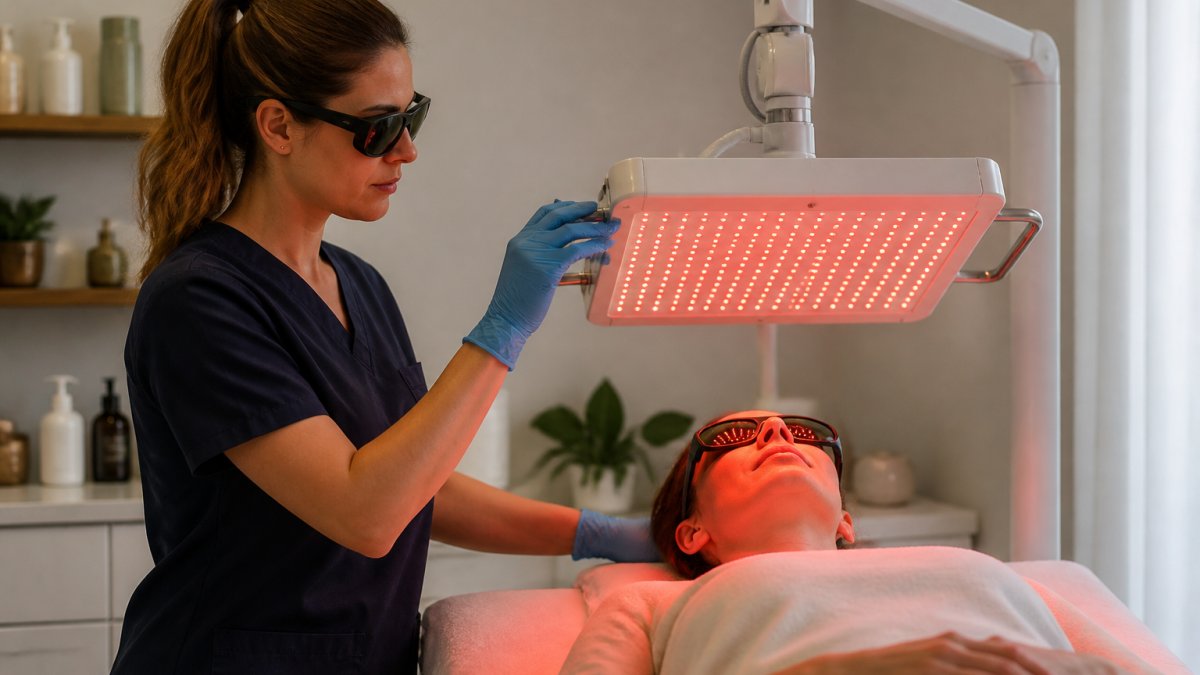
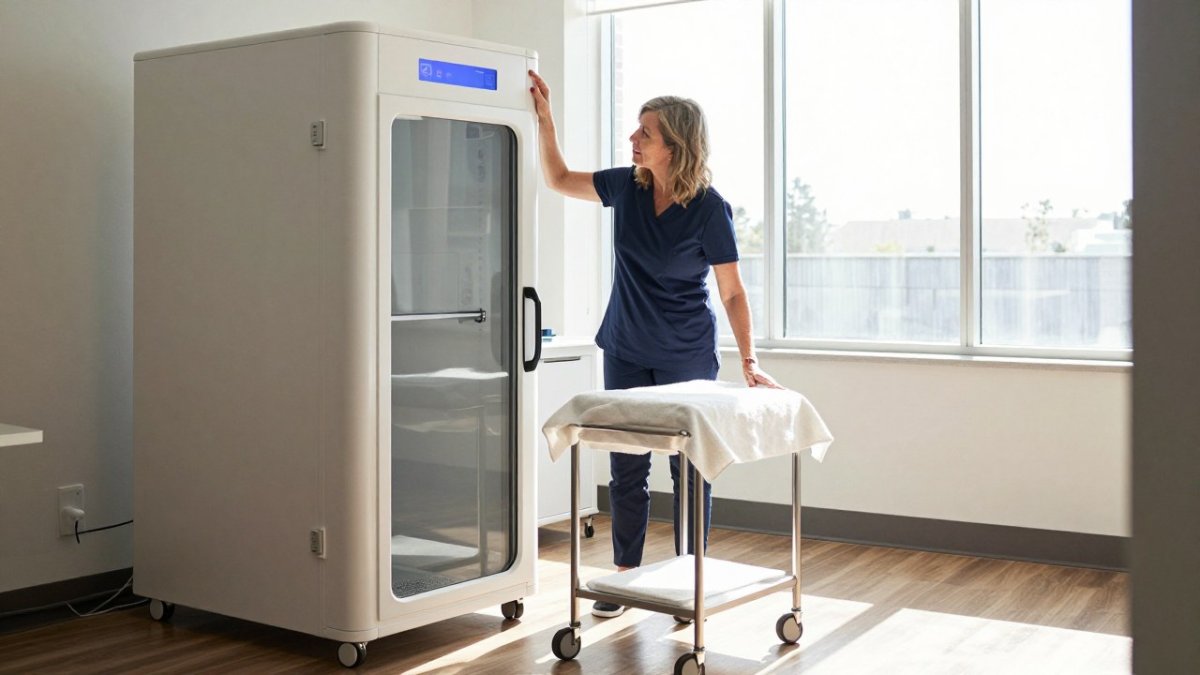
Service expansion usually comes first because it costs less, reuses your existing staff and client base, and tests demand before you commit to a lease. Adding a modality such as red light therapy or thermal recovery to idle treatment rooms can lift revenue per square foot without new hiring. A second location makes sense once your first site is consistently capacity-constrained and you have documented operating systems that someone else can run.
How can a med spa increase revenue without adding another location?
Start with the rooms you already pay for. Measure utilization rate per treatment room and identify the hours that sit empty, then fill them with complementary services or extended hours. Review your med spa revenue streams for gaps: memberships, packages, and retail can raise revenue per client without new space. Adding a premium recovery modality to an underused room often produces faster payback than a lease, because there is no new rent, build-out, or duplicate staffing cost.
What should a med spa expansion business plan include?
A workable med spa business plan for expansion covers six things: the specific demand evidence for the new service or site, a startup and operating cost breakdown, a location-level profit and loss projection with a break-even point, staffing and training requirements, licensing and medical director oversight, and a phased timeline with go/no-go checkpoints. Include a downside scenario too, showing what happens if utilization lands 20% below forecast and how you would respond.
How much does it cost to expand a med spa?
Costs depend heavily on whether you are adding a service or a location. Service expansion costs center on equipment, training, and any room modifications. A second location adds lease deposits, build-out, duplicate equipment, licensing fees, and staffing before revenue starts. Because equipment pricing depends on quantity, dates, and delivery, request a current quote from Eternall Wellness rather than budgeting from a general figure. Build the projection around your own utilization assumptions, not industry averages.
What compliance issues come with med spa expansion?
Every new service or site must fit your state's regulations on scope of practice, supervision, and facility requirements. Adding a modality can trigger new equipment standards or training obligations, and a second location may need its own licensing and a named medical director with physician oversight in place before opening. Confirm requirements with your state medical board and legal counsel early, since approvals often set the pace of the rollout timeline.