 ultimate-guide
Wellness Clinic Equipment Compliance Guide
Table of Contents
- Understanding Wellness Clinic Equipment Compliance Requirements
- FDA Regulation of General Wellness Devices
- OSHA Medical Equipment Safety Standards
- Wellness Clinic Equipment Maintenance Checklist
- Documentation, Audits, and Compliance Monitoring
- Risk Assessment and Liability Management
- Staff Training and Operational Competency
- Conclusion
- Frequently Asked Questions
Last Updated: September 3, 2026
Understanding Wellness Clinic Equipment Compliance Requirements
Wellness clinic equipment compliance ensures all medical devices, recovery systems, and therapeutic equipment meet regulatory standards, safety protocols, and operational requirements set by federal and state authorities. This framework protects patient safety, reduces liability exposure, and ensures your facility operates legally within the healthcare and wellness sector.
The compliance landscape is complex. Your equipment is subject to oversight from multiple agencies, each with different requirements depending on device type, claims made, and operational practices. At Eternall Wellness, we work with gym owners, med spa directors, and wellness clinic managers navigating these challenges. Operating non-compliant equipment can result in regulatory enforcement action, liability claims, and reputational damage. But compliance is systematic and manageable once you understand the framework.
FDA Regulation of General Wellness Devices
The FDA divides medical devices into three classes based on risk level. Most wellness recovery equipment, including hyperbaric chambers, red light therapy systems, and thermal recovery devices, falls under FDA's general wellness device category or Class II medical device classification, requiring premarket notification (510(k) submissions) before legal marketing in the United States.
Before purchasing any device, verify that the manufacturer has completed FDA clearance or approval. Ask for documentation of their 510(k) clearance number or approval letter. The moment you make health-related claims, whether on your website, in marketing materials, or verbally to clients, your equipment may be reclassified as a medical device requiring full regulatory compliance. Saying "our hyperbaric chamber helps with recovery" differs from "our hyperbaric chamber treats decompression sickness." One is a general wellness claim; the other triggers stricter FDA oversight.
Practical compliance step: Work with your equipment supplier to understand exactly what claims can legally be made about each device. Document those approved claims and train your staff to use only those statements when discussing equipment with clients.
The FDA also requires that devices remain in their cleared or approved state throughout their operational life. Modifications, unapproved uses, or disrepair may result in loss of compliance status.
OSHA Medical Equipment Safety Standards
While the FDA regulates whether a device can be sold and marketed, OSHA regulates the safety conditions under which your staff operates that equipment. OSHA requires that all machinery and devices be maintained in safe operating condition and that staff be trained on proper use.
The key OSHA principle is that employers must provide a workplace free from recognized hazards likely to cause death or serious physical harm. If your equipment poses a hazard through improper maintenance, operator error, or design defect, and you haven't mitigated that hazard through training, maintenance, or engineering controls, you're in violation.
Critical compliance requirement: OSHA mandates that all equipment operators receive documented training on safe operation before using equipment independently. For specialized equipment like hyperbaric chambers, this training is non-negotiable. Your staff must understand pre-dive safety checks, emergency procedures, client screening protocols, and equipment shutdown procedures.
Manufacturer training may cover basic operation but not your facility's specific protocols, emergency procedures, or client population considerations. You're responsible for ensuring your staff is competent to operate equipment safely in your specific environment.
Wellness Clinic Equipment Maintenance Checklist
A preventive maintenance schedule is the operational backbone of wellness clinic equipment compliance. Regular, documented maintenance prevents equipment failure, extends device lifespan, demonstrates due diligence to regulators, and keeps clients safe.
Your maintenance program should include three tiers: daily pre-use checks, routine maintenance (weekly or monthly depending on equipment), and comprehensive annual inspections.
Daily Pre-Use Checks should be performed by the staff member operating the equipment before each client session. For a hyperbaric chamber, this includes checking seals, verifying pressure gauges are functioning, confirming emergency communication systems work, and visually inspecting for damage or wear. Document these checks on a simple form posted next to the equipment.
Routine Maintenance occurs on a schedule determined by manufacturer recommendations and usage volume. This should include cleaning and sanitization, lubrication of moving parts, seal and gasket inspection and replacement, pressure gauge calibration, electrical system inspection, and documentation of all work performed. This maintenance should be performed by qualified technicians, either your trained staff or external service providers.
Annual Comprehensive Inspections should be performed by manufacturer-authorized service technicians or qualified third-party inspectors. The inspection report becomes part of your compliance documentation.
Create a maintenance log for each piece of equipment including the date of service, type of maintenance performed, parts replaced, technician name and credentials, and any issues identified.
| Maintenance Level | Frequency | Performed By | Documentation |
|---|---|---|---|
| Daily pre-use checks | Before each use | Equipment operator | Daily checklist form |
| Routine maintenance | Weekly or monthly | Trained staff or vendor | Service log with date and details |
| Annual inspection | Yearly | Manufacturer or certified technician | Inspection report with certification |
Documentation, Audits, and Compliance Monitoring
Documentation is where compliance becomes real. Regulatory agencies, insurers, and plaintiffs' attorneys evaluate your records. If you didn't document it, from a compliance perspective, it didn't happen.
Your compliance documentation system should include: equipment records, maintenance logs, staff training records, client screening and intake documentation, incident reports, and regulatory correspondence.
Equipment Records include purchase documentation, FDA clearance verification (510(k) number or approval letter), manufacturer specifications, operating manuals, and any modifications or repairs. Store these in a centralized, easily retrievable location.
Maintenance Logs document every maintenance action, repair, and daily check with date, description of work, technician identification, and results. These logs are your primary defense against allegations of negligence.
Staff Training Records must document that every person operating equipment has received appropriate training, including date, trainer credentials, topics covered, and trainee acknowledgment. For specialized equipment, consider annual refresher training.
Client Screening and Intake Documentation protects both clients and your facility. Before clients use any equipment, document screening to identify contraindications. For hyperbaric oxygen therapy, this includes screening for seizure disorders, claustrophobia, uncontrolled fever, and other conditions that make the therapy inappropriate or risky.
Incident Reports document any equipment malfunction, client injury, near-miss, or adverse event. These reports identify patterns, trigger corrective action, and demonstrate that you investigate and respond to problems.
An internal compliance audit, conducted annually or when significant changes occur, reviews all documentation categories to identify gaps and ensure equipment remains in compliance status.
Risk Assessment and Liability Management
Risk assessment identifies potential hazards associated with your equipment and operations, evaluates likelihood and severity of harm, and implements controls to reduce risk to acceptable levels.
For wellness clinic equipment, risk assessment should address equipment design and manufacturing defects, operator error, client contraindications, inadequate maintenance, and environmental factors. Your mitigation strategies include verifying FDA clearance before purchase, conducting preventive maintenance, maintaining equipment within manufacturer specifications, comprehensive staff training, thorough intake screening, and facility inspection.
Documentation of your risk assessment becomes part of your compliance file. You should be able to articulate what risks you've identified, what controls you've implemented, and why those controls are appropriate.
Liability insurance is critical. Wellness facilities offering recovery services should carry professional liability insurance (errors and omissions insurance) that specifically covers the equipment and services offered. Standard general liability policies may not cover equipment-related injuries. Verify that your insurance covers the specific equipment you operate and that coverage limits are appropriate for your facility size and client volume.
Staff Training and Operational Competency
Staff competency is where wellness clinic equipment compliance becomes operational reality. Your documentation, maintenance schedules, and risk assessments only matter if your staff can execute them correctly.
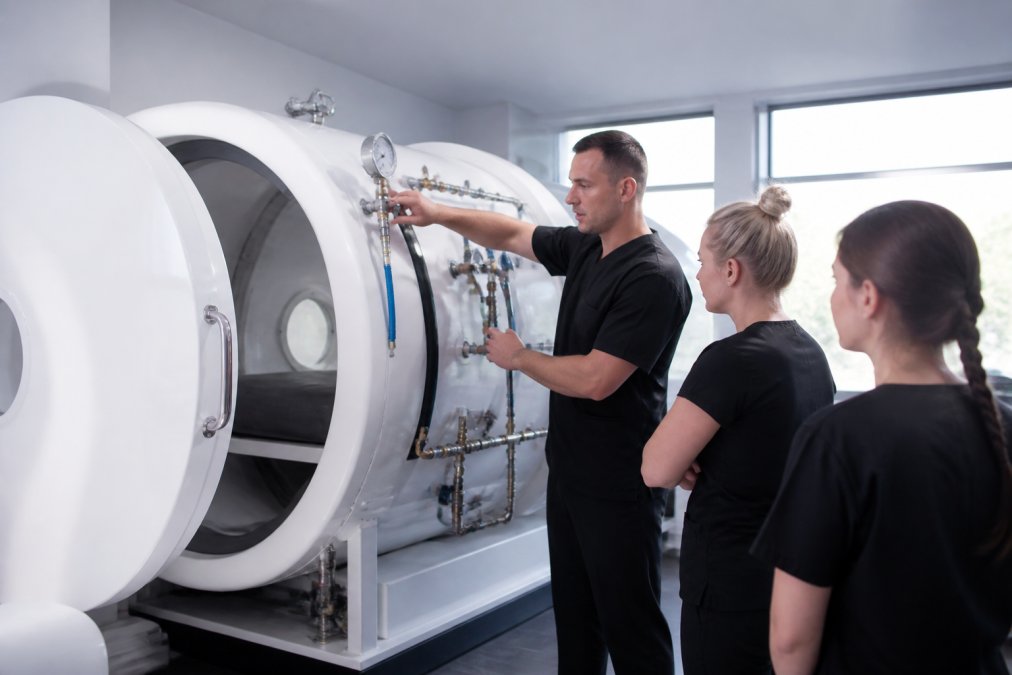
Your staff training program should address three competency areas: equipment operation, safety protocols, and client communication.
Equipment Operation Training covers the specific steps required to safely operate each piece of equipment. For hyperbaric chambers, this includes understanding pressure controls, oxygen concentration settings, emergency communication systems, and client comfort and safety during pressurization and depressurization.
Safety Protocols Training covers emergency procedures, how to recognize equipment malfunction, and when to shut down equipment and contact technical support.
Client Communication Training covers how to explain the equipment and its benefits to clients, how to screen for contraindications, how to obtain informed consent, and how to respond if a client reports adverse effects.
All training should be documented with dates, topics covered, trainer credentials, and trainee acknowledgment. For specialized equipment, annual refresher training is recommended. Competency verification can be conducted through observation checklists or practical demonstrations. Document all competency verification.
Conclusion
Wellness clinic equipment compliance protects your clients, protects your business, and ensures you operate within regulatory frameworks governing healthcare and wellness services. The framework covers FDA device clearance, OSHA safety standards, preventive maintenance, documentation, risk assessment, and staff training.
Compliance failures create regulatory enforcement action, liability exposure, reputational damage, and operational disruption. When you implement strong compliance practices, you build client trust, protect your staff, and create operational systems that support sustainable growth. Eternall Wellness supports facilities in evaluating wellness and recovery technologies as integrated business solutions that include appropriate compliance, training, and operational protocols.
Start with the fundamentals: verify FDA clearance for all equipment, establish a preventive maintenance schedule with documentation, train your staff comprehensively, and conduct regular internal audits to ensure protocols are being followed. These foundational practices address the vast majority of compliance requirements and protect your facility against the most common regulatory and liability risks.
FDA guidance on medical device classification
OSHA standards for workplace safety and equipment operation
Healthcare compliance best practices from the American Hospital Association
Frequently Asked Questions
What equipment in a wellness clinic requires FDA oversight?
Wellness equipment classified as medical devices, such as hyperbaric chambers and certain therapeutic devices making health-related claims, fall under FDA oversight. Devices marketed for general wellness purposes without medical claims may have lighter regulatory requirements. Equipment like red light therapy systems or thermal devices must be evaluated based on their intended use and claims. Consult the FDA's guidance on general wellness devices or speak with a regulatory consultant to determine which of your equipment requires premarket notification or approval.
How do I maintain compliance for hyperbaric chambers in a commercial setting?
Hyperbaric chambers require strict preventive maintenance schedules documented in maintenance logs. Follow manufacturer guidelines for pressure testing, seal inspections, and oxygen system checks. Maintain an audit trail of all inspections and repairs. Many chambers require annual third-party certification. OSHA regulations apply if staff operate the equipment, requiring documented training and competency verification. Keep all calibration records and device certification documentation on file. Establish a regular maintenance calendar and assign responsibility to trained personnel.
What are the OSHA requirements for wellness clinic equipment maintenance?
OSHA requires that equipment be maintained in safe operating condition. This includes establishing preventive maintenance schedules, documenting all maintenance activities, and ensuring staff who operate equipment receive proper training and competency verification. Equipment must be inspected before use and after any repair. Hazard mitigation procedures must be documented in standard operating procedures. For equipment with potential electrical or pressure hazards, additional safety protocols apply. OSHA also requires that any incidents or equipment failures be recorded and investigated.
Is my wellness equipment considered a medical device?
Equipment classification depends on its intended use and claims. If marketed to diagnose, treat, cure, mitigate, or prevent disease, it's a medical device requiring FDA oversight. General wellness devices making only general health maintenance claims may face lighter regulation. Red light therapy systems, thermal equipment, and hyperbaric chambers may fall into either category depending on marketing claims and intended use. Review FDA guidance on general wellness devices or consult a regulatory specialist to determine your equipment's classification and applicable compliance requirements.
What documentation is required for wellness clinic equipment audits?
Maintain an audit trail including maintenance logs, calibration certificates, device certification documents, staff training records, and incident reports. Documentation should show when equipment was inspected, by whom, what was found, and what corrective actions were taken. Keep records of all preventive maintenance performed and any repairs or replacements. Retain performance benchmark data and quality assurance test results. These records demonstrate compliance during regulatory inspections and help identify patterns requiring equipment lifecycle management decisions.
How often should wellness clinic equipment be inspected for safety?
Inspection frequency depends on equipment type and manufacturer specifications. Most commercial wellness equipment requires daily pre-use checks by operators, monthly detailed inspections, and annual professional certification. Hyperbaric chambers often require quarterly pressure testing. Thermal and electrical equipment may need semi-annual calibration. Document all inspections in maintenance logs. Establish a preventive maintenance schedule based on manufacturer guidelines and regulatory requirements. More frequent inspection intervals reduce risk and demonstrate commitment to operational safety and regulatory compliance.
Can smaller wellness facilities operate the same equipment as larger luxury clinics?
Yes, smaller facilities can operate advanced wellness equipment, but compliance requirements don't change based on facility size. A 150-member gym must meet the same FDA, OSHA, and safety standards as a large luxury clinic. The difference is operational scale and utilization strategy. Smaller facilities may optimize equipment use through member pricing tiers, staff scheduling, or strategic marketing to justify the investment. Compliance and safety protocols remain identical regardless of facility size, regulatory standards apply uniformly.
What happens if equipment fails or becomes non-compliant after purchase?
Establish a contingency plan before equipment failure occurs. Maintain relationships with certified service providers and manufacturers for rapid repairs. Equipment downtime affects revenue, so preventive maintenance reduces failure risk. Document all repairs in maintenance logs. If equipment cannot be repaired, work with your provider on replacement or warranty options. Ensure your financing agreement and equipment purchase contract address liability and remedies for equipment failure. Some providers offer extended support contracts, clarify what support and response times are included before purchase.
This article was written using GrandRanker