 How-to
Are Essential Maintenance Tips for Med Spa Devices Enough?
Last Updated: October 25, 2026
Quick Summary
Essential maintenance tips for med spa devices include a between-client routine of powering down, cleaning, disinfecting, inspecting, and logging each check, plus a schedule built around usage frequency. Match cleaners to each device type, keep a maintenance log with five fields, and escalate repeated errors or output drift to a qualified technician.
- If a client can see or touch it, clean it daily; if it keeps the device running, check it weekly.
- Every log entry needs date and time, device name and serial number, task, staff initials, and notes.
- Calibrate at least annually and after any repair touching the energy delivery path.
- Never open a device housing or attempt internal repairs unless trained and authorized.
- Ask about service intervals, parts availability, technician access, and warranty terms before buying.
Table of Contents
- Why Med Spa Devices Fail Without a Real Maintenance Plan
- The Med Spa Equipment Cleaning Checklist for Between Clients
- Building a Med Spa Equipment Maintenance Schedule That Fits Your Usage
- How to Use a Medical Device Maintenance Log Template
- Medical Device Maintenance Best Practices for Busy Treatment Rooms
- Troubleshooting, Escalation, and When to Call a Qualified Technician
- Plan Your Equipment Service Before Your Next Device Purchase
- Frequently Asked Questions
Why Med Spa Devices Fail Without a Real Maintenance Plan
Most med spa devices don't break because of bad engineering. They break because nobody wrote down what to do with them each week. This guide from Eternall Wellness covers the essential maintenance tips for med spa devices that keep expensive equipment running, and it starts with an uncomfortable truth: a device that costs more than a car often gets less attention than the coffee machine.
Med spa devices are commercial-grade aesthetic and recovery systems, including red light therapy units, thermal equipment, and hyperbaric chambers. They fail for predictable reasons:
- Skipped cleaning between clients
- No preventive maintenance calendar
- Untrained staff guessing at settings
- Zero service records when a technician arrives
The FDA guidance on medical device maintenance and servicing treats servicing as part of safe device use, not an optional extra. That framing matters. Maintenance isn't housekeeping. It's risk management.
Below, we'll show you exactly how to build a schedule, a log, and an escalation path that fit a working treatment room.
The Med Spa Equipment Cleaning Checklist for Between Clients
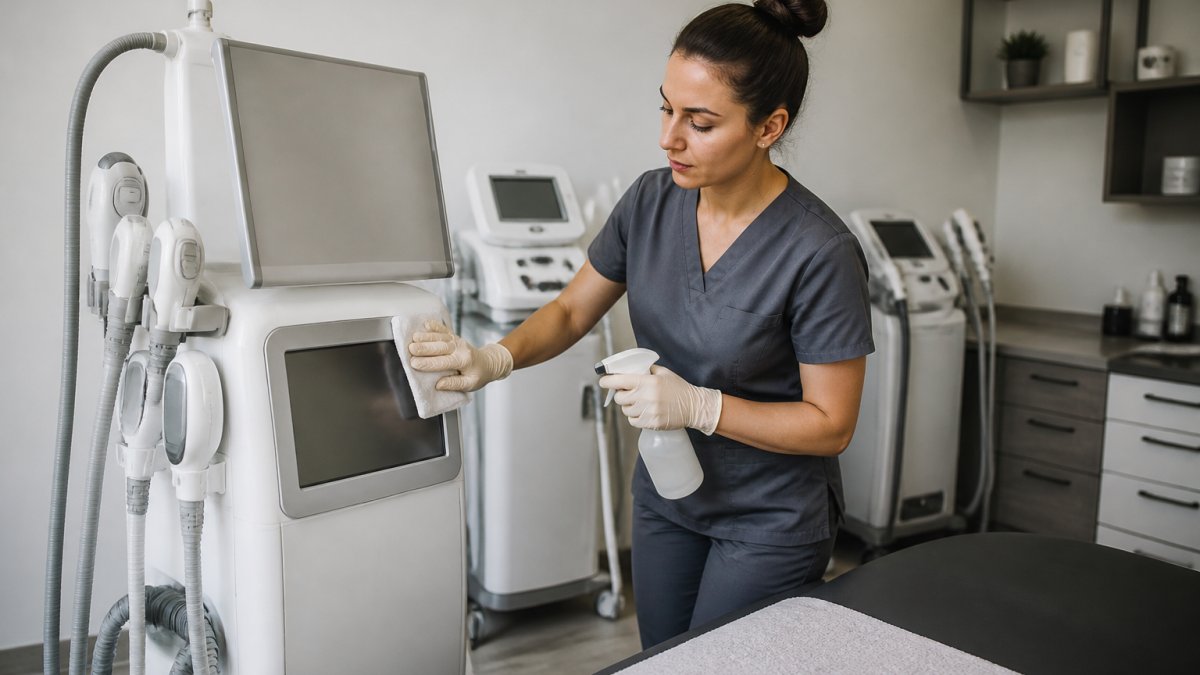
Every device needs a between-client routine, and it should take minutes, not an hour. The core steps are the same across most equipment: power down safely, clean surfaces, disinfect, inspect, log it. The difference between a routine that protects equipment and one that quietly damages it is whether the cleaner is compatible with the specific materials on that device.
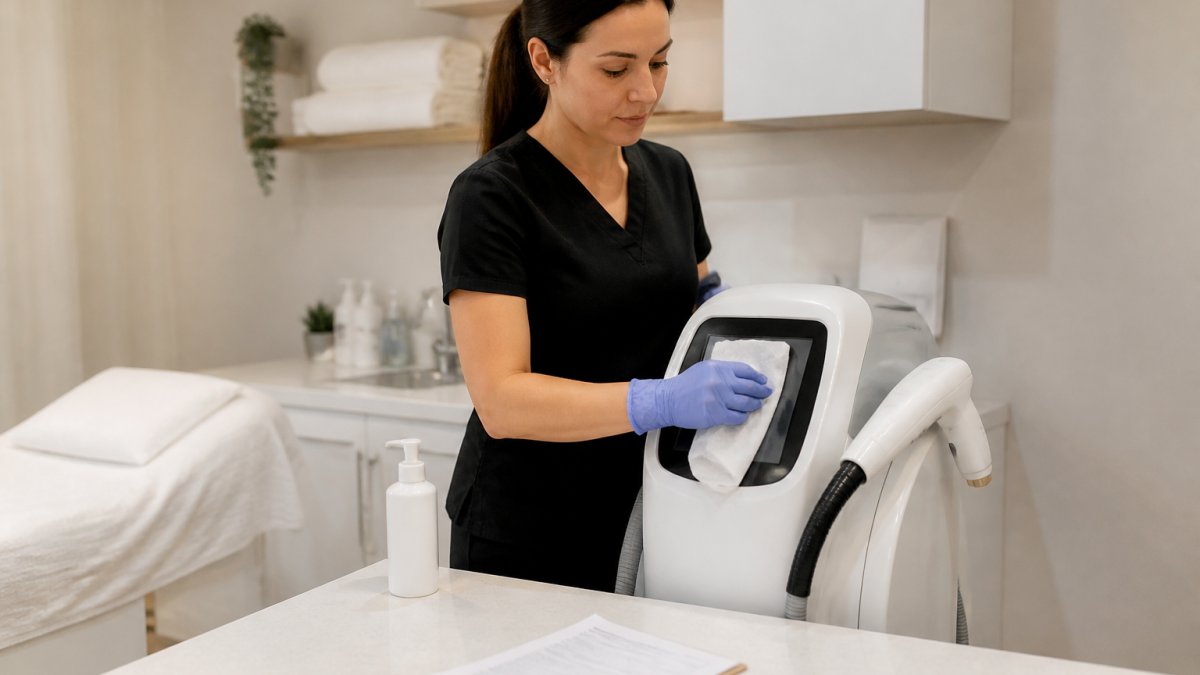
Here's a checklist you can print and post:
- Power down the device per manufacturer instructions
- Remove and dispose of single-use covers
- Wipe treatment surfaces with a device-approved cleaner
- Disinfect contact points with a compatible product
- Inspect cords, lenses, and housings for damage
- Check that displays and controls respond correctly
- Note the clean-and-check in the maintenance log
- Reset the room for the next client
Cleaning Products That Match Each Device Type
The biggest mistake we see is one cleaner for everything. Harsh disinfectants can cloud lenses, crack housings, degrade seals, and void warranties. Match the product to the device, and when in doubt, confirm compatibility with the manufacturer before switching products.
| Device Type | Compatible Cleaner | Avoid | Why It Matters |
|---|---|---|---|
| Red light therapy panels | Soft, non-abrasive wipes; mild detergent dampened microfiber | Solvent-based sprays, acetone, ammonia | Solvents cloud optical windows and degrade panel coatings |
| IPL and laser handpieces | Manufacturer-approved disinfectant wipes; lint-free cloths | Alcohol on optics, abrasive pads | Residue on optics scatters energy and reduces output consistency |
| Radiofrequency handpieces and tips | Compatible disinfectant per manufacturer; gentle wipe on contacts | Immersion of handpieces, harsh quats on plastics | Moisture intrusion and plastic crazing shorten handpiece life |
| Cryotherapy units and applicators | Manufacturer-approved surface disinfectant; dry thoroughly | Bleach on seals, soaking electrical connectors | Seal degradation leads to refrigerant loss and costly service |
| Hyperbaric chambers | Chamber-safe disinfectant; approved wipes for acrylic | Bleach on seals, abrasive scrubs on acrylic | Acrylic scratches and seal damage compromise chamber integrity |
| Control panels and screens | Dry or lightly damp microfiber | Liquid sprays directly on screens | Liquid ingress shorts electronics and voids warranties |
Always check manufacturer recommendations before switching products. A device-friendly cleaner costs less than a replacement panel. Keep the manufacturer's approved-cleaner list taped inside the treatment room cabinet so staff do not substitute on a busy day.
What to Clean Daily, Weekly, and Monthly
Daily cleaning covers high-touch surfaces and anything a client contacts. Weekly tasks go deeper: vents, filters, and cables that collect dust. Monthly work includes inspecting seals, checking calibration stickers, and reviewing the maintenance log for patterns.
The rule we give clients: if a client can see or touch it, clean it daily. If it keeps the device running, check it weekly. A common pattern is to assign daily cleaning to the front-line staff member who closes the room, weekly checks to a lead technician, and monthly reviews to the manager who signs the log.
Building a Med Spa Equipment Maintenance Schedule That Fits Your Usage
A maintenance schedule that ignores usage frequency will fail. A high-volume treatment room needs tighter intervals than a device used twice a week. Build the calendar around hours of operation, not the wall clock.
Daily, Weekly, Monthly, and Annual Tasks
Here's the structure we recommend to facilities planning their service calendar:
| Frequency | Tasks | Who |
|---|---|---|
| Daily | Surface cleaning, visual inspection, log entry | Front-line staff |
| Weekly | Filter checks, cable inspection, deep clean | Lead technician |
| Monthly | Calibration checks, seal inspection, log review | Manager |
| Annual | Full service, performance verification, parts review | Qualified technician |
Print this and pin it in the treatment room. Facilities that want real cost benchmarks before scheduling service can review commercial hyperbaric chamber maintenance costs to plan budgets.
How to Use a Medical Device Maintenance Log Template
A medical device maintenance log template is a simple record that captures what was done, when, and by whom for each device. It turns guesswork into a paper trail.
Every log entry needs five fields:
- Date and time
- Device name and serial number
- Task performed (clean, inspect, calibrate, repair)
- Staff initials
- Notes on anything unusual
Keep logs digital if possible, with a backup. When a technician arrives for repair, a clean log cuts diagnosis time and often the bill. The CDC guidance on environmental cleaning in healthcare settings reinforces documented cleaning as a core safety practice, not paperwork for its own sake.
Medical Device Maintenance Best Practices for Busy Treatment Rooms
Busy rooms need maintenance built into the workflow, not bolted on. The best practices that survive a packed schedule are short, visible, and assigned to a named person.
Start with staff training. Every team member should know the standard operating procedures for each device they touch. Then set clear ownership: one person checks the log each morning, one person signs off weekly.
Book a 30-Minute Facility Review →
Calibration, Performance Checks, and Service Records
Calibration confirms a device still delivers what it promises. Performance checks confirm it works as expected between calibrations. Service records prove both happened. Together, they protect client safety and equipment reliability, and they are the first thing a qualified technician asks for when a device underperforms.
Calibration intervals. Follow the manufacturer's recommended interval for each device, commonly annual for many aesthetic systems, but some high-use lasers and IPL systems call for more frequent verification.
Performance checks between calibrations. A quick performance check before a high-demand day catches drift early. Depending on the device, this can mean confirming output settings match the displayed value, checking that energy delivery feels consistent on a test surface per manufacturer instructions, or verifying that temperature and timing controls respond correctly.
What every service record should contain.
- Date, time, and staff member who performed the check
- Device name, model, and serial number
- Type of service (calibration, performance verification, repair, preventive maintenance)
- Measured result versus expected result
- Parts replaced or adjustments made
- Technician name and credentials for vendor service
- Next due date for calibration or service
Keep records for the life of the device plus the retention period your legal and compliance advisors recommend.
When to escalate from check to service. Flag any drift in output immediately. A device that passes today but measured slightly low last month is telling you something.
If turnover is eating your schedule, pair these routines with treatment room turnover strategies so cleaning and reset happen in the same pass.
Troubleshooting, Escalation, and When to Call a Qualified Technician
Not every problem needs a technician. Some need a trained eye and a checklist. The skill is knowing which is which.
Start with the basics: check power, connections, and error codes. Confirm the device is set correctly. If the issue persists, escalate.
Call a qualified technician when you see:
- Repeated error codes after reset
- Unusual noises, smells, or heat
- Physical damage to cords, lenses, or housings
- Output that no longer matches expected performance
- Any safety concern involving a client
Watch out: never open a device housing or attempt internal repairs unless you're trained and authorized. That voids warranties and creates real safety risk. When a failure happens, run a structured review so the same issue doesn't repeat. Our guide on post-incident analysis strategies for recovery clinics walks through that process.
Plan Your Equipment Service Before Your Next Device Purchase
Maintenance planning should start before the device arrives, not after the first breakdown. Ask about service intervals, parts availability, technician access, and warranty terms during the buying conversation.
Before you commit to a new system, weigh ownership costs alongside the purchase price. Facilities comparing financing structures can review professional recovery equipment leasing options to see how service costs fit into the total picture. If you're still choosing which systems to add, our breakdown of the best wellness recovery equipment for spas compares options suited to spa environments.
At Eternall Wellness, we help facilities evaluate equipment as revenue-generating services, with financing options that preserve capital and support that continues after installation. Our portfolio includes red light therapy systems, thermal recovery equipment, and hyperbaric chambers built for commercial use. We also help teams plan the training and service routines that keep those systems running.
Get started with Eternall Wellness and build a maintenance plan before your next device purchase, so your equipment earns instead of sits idle.
Frequently Asked Questions
How often should med spa devices be cleaned and inspected?
Clean treatment surfaces and contact points between every client, then do a deeper clean of vents, filters, and housings daily or weekly depending on how many treatments you run. Inspect cords, connectors, and sensors at the start of each shift so a damaged cable never reaches a client. Follow the manufacturer's stated inspection intervals for internal components, and log each check so you can prove it happened. A written schedule tied to usage frequency beats a vague reminder to check things now and then.
What should a med spa equipment maintenance checklist include?
A working checklist covers cleaning and disinfection steps, cord and connector inspection, filter and vent checks, calibration and performance verification, software updates, and storage conditions. Add a sign-off line for the staff member and the date. Split it into daily, weekly, monthly, and annual sections so nothing gets buried. Keep one copy at the device and one in your maintenance log. Review the checklist quarterly and update it whenever you add a new modality or the manufacturer changes its recommendations.
What should staff do if a med spa device is damaged or malfunctioning?
Stop using the device, unplug it if safe to do so, and tag it out of service so no one treats a client with it. Record the fault in your maintenance log with the date, time, and what happened. Escalate to your service provider or a qualified technician rather than attempting a repair in-house. For equipment like hyperbaric chambers or thermal systems, follow the manufacturer's shutdown steps and do not restart until a qualified technician clears it. Keep a loaner or alternate device available so bookings do not collapse.
When should a med spa device be professionally serviced?
Book professional service at the manufacturer's stated interval, and sooner if performance checks show drift, error codes repeat, or clients report inconsistent results. High-usage devices may need servicing more often than the calendar suggests, so track treatment counts alongside dates. Keep service records on file for compliance and warranty purposes. Before buying new equipment, ask the supplier what service intervals and support look like, since downtime costs more than the service visit itself.