 ultimate-guide
What Is Thermal Recovery for Wellness Clinics?
Table of Contents
- What Is Thermal Recovery in a Wellness Clinic?
- How Contrast Therapy Works: Alternating Heat and Cold
- Hot and Cold Therapy Benefits for Recovery and Retention
- Infrared Sauna and Cold Plunge: A Practical Pairing
- Thermal Recovery Equipment That Fits Commercial Spaces
- Safety, Screening, and Liability in a Clinic Setting
- Building a Thermal Recovery Service That Pays for Itself
- Frequently Asked Questions
Last Updated: October 12, 2026
What Is Thermal Recovery in a Wellness Clinic?
Thermal recovery is the guided use of heat, cold, or both to help the body relax and bounce back after physical stress. Eternall Wellness helps gyms, med spas, and clinics evaluate thermal recovery equipment as a revenue-generating service rather than a one-time purchase.
The category covers more ground than most owners expect.
What separates a clinic-grade thermal recovery program from a spa add-on comes down to three things:
- Screening before the first session, not after
- Documented exposure duration and temperature ranges
- A recovery routine clients can repeat and track
Get those right and thermal recovery becomes a retention tool. Skip them and it becomes a liability with a waiting room.
For a broader look at how the body responds to temperature stress, the National Center for Complementary and Integrative Health overview of sauna and heat therapies is a useful starting point.
How Contrast Therapy Works: Alternating Heat and Cold
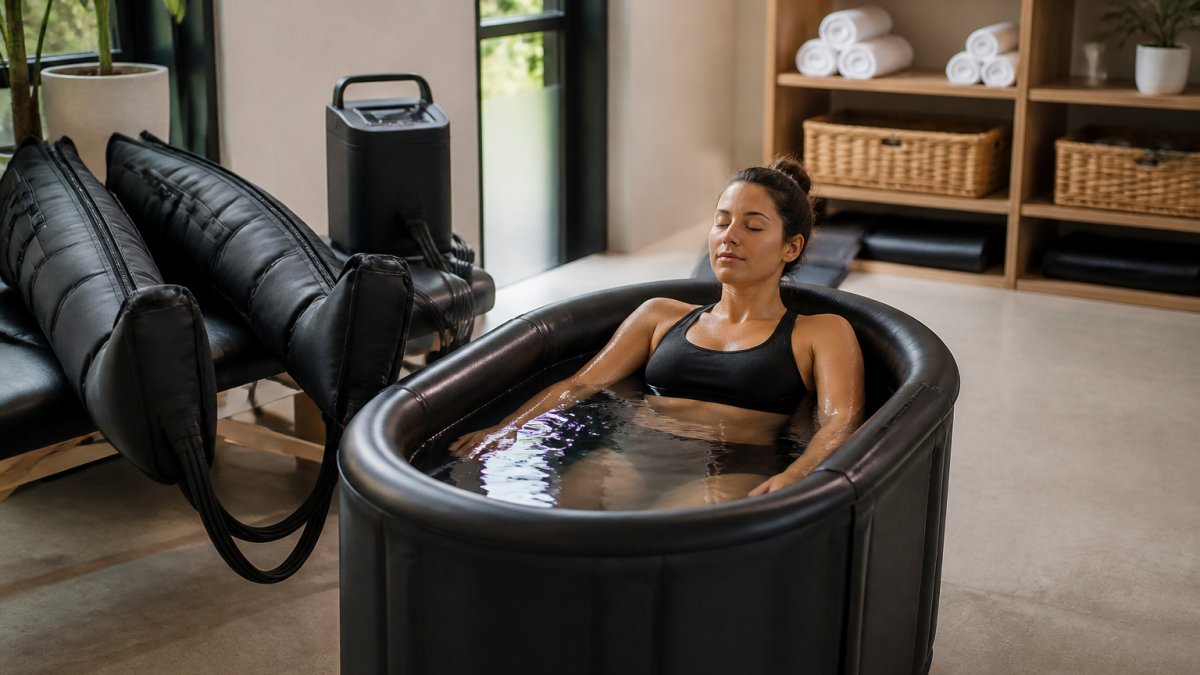
Contrast therapy alternates heat exposure and cold exposure in a defined sequence. The proposed mechanism is vascular: heat dilates peripheral blood vessels and increases blood flow to the skin and muscle, cold constricts them, and the repeated shift is thought to support circulation and blood flow.
What clinics can control is the protocol. Sequence, temperature, duration, and rest intervals are the variables that determine both the client experience and the safety margin. There is no single correct routine; the right protocol depends on the client's goal.
Session Flow and Timing Basics
A typical contrast session runs 30 to 45 minutes including rest and changing time. A common structure looks like this:
| Phase | Modality | Typical Duration | Purpose |
|---|---|---|---|
| Warm-up | Dry or infrared sauna | 10-15 min | Raise skin and core temperature, start sweating |
| Cool-down | Cold plunge or cold shower | 1-3 min | Constrict vessels, reduce heat load |
| Rest | Seated, room temperature | 3-5 min | Let heart rate and skin temperature reset |
| Repeat | Heat then cold | 2-3 rounds | Build the contrast effect |
Two rules keep this safe. First, never push a first-time client to the far end of the range; start shorter and cooler, then build across visits. Second, cold exposure duration should stay short, often one to three minutes, and clients should be able to exit on their own at any point.
How Protocols Vary by Goal
The rotation above is a default, not a universal prescription. A few common variations clinics use:
- General relaxation and stress relief. Favor the heat side. Longer sauna blocks, shorter and less intense cold, and finish warm if the client's goal is calming rather than invigorating.
- Post-exercise soreness and stiffness. Emphasize contrast rounds and finish cold. Keep total heat time moderate so the client is not depleted.
- Range of motion and tissue flexibility. Heat first to loosen tissue, then gentle movement or stretching during the rest phase, then a short cold finish.
- First visit or heat-sensitive client. Reduce heat duration, raise the cold temperature, and cut to a single round. The goal of visit one is tolerance, not intensity.
Temperature and Rest Considerations
Exact set points depend on the modality and the client, but the operating logic is consistent:
- Traditional dry saunas run hot and dry; infrared cabins run at lower air temperatures with radiant heat, which many clients tolerate better.
- Steam rooms add humidity, which changes how heat is perceived and how quickly a client fatigues.
- Cold plunges are typically held just above freezing to cool but not numbing; colder is not automatically better.
- Rest intervals exist to let heart rate and skin temperature normalize before the next exposure. Skipping rest to save time is the most common protocol shortcut and the one most likely to cause a lightheaded incident.
Document the ranges you actually use, post them at each modality, and train staff to enforce them rather than negotiate them.
Hot and Cold Therapy Benefits for Recovery and Retention
Hot and cold therapy benefits fall into two buckets: what clients feel and what your business gains.
Many clinics find that thermal recovery pairs well with existing treatment plans. A med spa can slot a contrast session next to a red light therapy appointment.
The retention angle deserves more attention than it usually gets.
What most operators miss is that the recovery routine itself becomes the product.
Infrared Sauna and Cold Plunge: A Practical Pairing
An infrared sauna and cold plunge pairing works because the two modalities solve different problems in the same session.
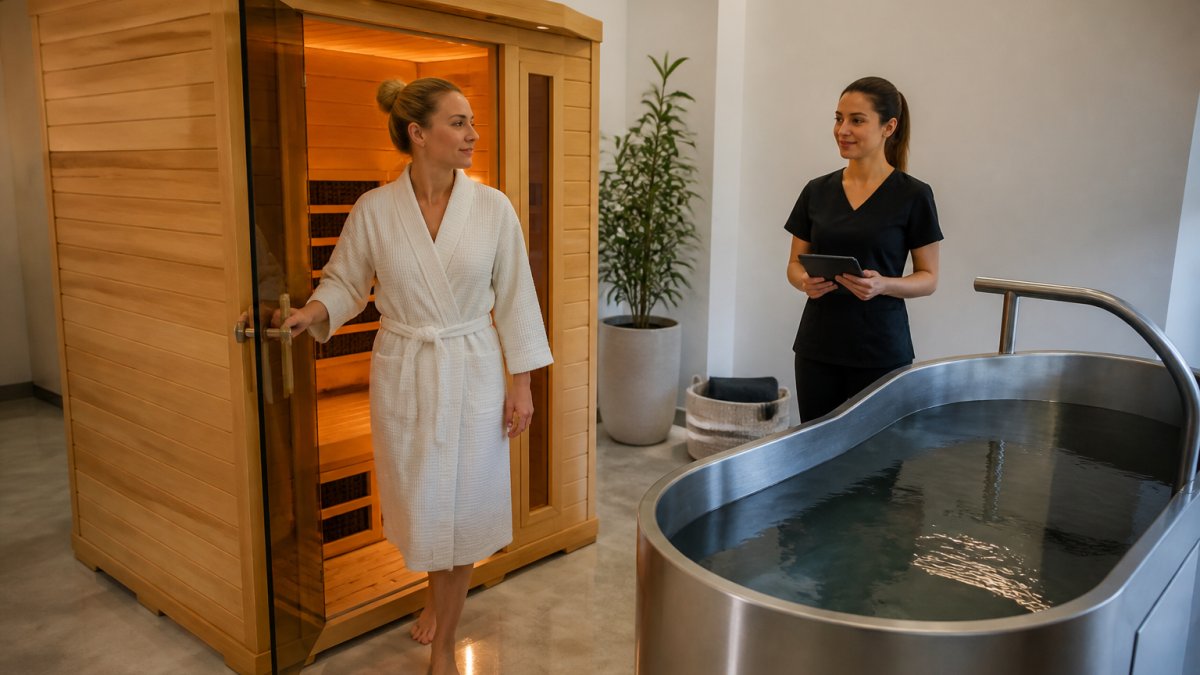
Operationally, this pairing is attractive for commercial spaces. Infrared cabins warm up faster than traditional saunas, which shortens turnover between clients.
A few practical notes from what we see in the field:
- Place the plunge within a few steps of the sauna door. Distance kills the contrast effect and increases fall risk.
- Specify non-slip flooring for the entire path, wet or dry.
- Give each modality its own posted temperature range and duration limit.
For guidance on how heat and cold affect circulation and blood pressure, the American Heart Association information on cold exposure and cardiovascular response is worth reviewing before you set your ranges.
Thermal Recovery Equipment That Fits Commercial Spaces
Thermal recovery equipment for a commercial facility is chosen on three criteria: footprint, throughput, and serviceability. A unit that fits the room but cannot handle back-to-back clients will bottleneck your schedule.
Here is how the main categories compare on the factors that decide the purchase:
| Equipment | Footprint | Typical Session | Best For |
|---|---|---|---|
| Infrared sauna cabin | Compact, 1-2 person | 20-30 min | Clinics with limited floor space |
| Traditional dry sauna | Larger, 2-6 person | 10-15 min | Higher-throughput recovery suites |
| Steam room | Room build-out | 10-15 min | Spas with existing wet areas |
| Cold plunge tub | Compact with chiller | 1-3 min | Pairing with any heat modality |
| Red light therapy panel | Minimal, wall or stand | 10-20 min | Add-on revenue in idle rooms |
Two selection rules hold up across facility sizes. Match the equipment to your peak-hour flow, not your average. And buy for service access: confirm who handles maintenance locally before you sign.
Safety, Screening, and Liability in a Clinic Setting
Safety and screening are where clinic-grade thermal recovery diverges most sharply from consumer wellness. Heat and cold exposure carry real risks, and a clinic setting raises the standard for documentation. A clear, honest safety section builds trust with both clients and operators.
Who Should Be Screened Before a First Session
A workable intake covers four areas:
- Cardiovascular conditions and blood pressure concerns
- Pregnancy status
- Medications that affect temperature regulation or circulation
- Recent injury, surgery, or open wounds
Anyone with a flagged condition should be cleared by their own physician before their first session. That is a referral, not a diagnosis, and it belongs in your intake paperwork.
When to Avoid Heat or Cold
Some situations call for a pause rather than a clearance. Common examples clinics screen for:
- Active fever, infection, or acute illness
- Uncontrolled high blood pressure or a recent cardiac event
- Open wounds, fresh burns, or acute skin conditions in the exposure area
- Impaired temperature sensation or circulation in the extremities
- Alcohol or certain sedating medications before a session
This is not an exhaustive list, and it is not medical advice. The point is that a clinic-grade program has a written rule for each of these, and staff who know when to say no.
What the Evidence Actually Supports
It is worth being precise about what is established versus what is preliminary, because overstating benefits is a liability in itself.
- Reasonably supported: heat exposure produces relaxation and a subjective sense of well-being; cold exposure produces a temporary alertness and vasoconstriction; both are generally well tolerated by healthy adults at moderate exposures.
- Mixed or preliminary: claims that contrast therapy meaningfully accelerates muscle recovery, reduces delayed-onset soreness, or improves athletic performance are not consistently supported across studies. Effects, where found, tend to be modest.
- Overstated: any claim that thermal recovery treats a medical condition, replaces physical therapy, or produces a specific measurable health outcome should be avoided in marketing and intake materials.
Language matters here. "Clients report feeling more relaxed and less stiff" is defensible. "Clinically proven to speed recovery" is not, and it invites both regulatory scrutiny and disappointed clients.
Documentation and Incident Readiness
Documentation matters as much as screening. Keep a signed acknowledgment, a logged session record with temperature and duration, and a written incident procedure. Staff should know the exit protocol and where the emergency contact list lives.
The clinics that run thermal recovery well treat screening as a service feature, not a hurdle. Clients who feel checked on, rather than checked in, trust the program more.
For workplace safety and hazard communication standards that apply to commercial facilities, the Occupational Safety and Health Administration standards and guidance publishes the baseline requirements.
Building a Thermal Recovery Service That Pays for Itself
A thermal recovery service pays for itself when use, not equipment cost, is the number you manage.
Three levers move that math fastest.
Pricing structure. Memberships beat single sessions for recovery services.
Bundling. Pair thermal recovery with services you already sell.
This is the part of the business Eternall Wellness focuses on.
The honest caveat: no equipment choice fixes a weak operating plan.
Adding thermal recovery to a clinic is a business decision before it is an equipment decision.
Frequently Asked Questions
What are the potential side effects of thermal therapy?
Heat sessions can cause lightheadedness, sweating, and a temporary drop in blood pressure, especially if you stand up quickly. Cold plunge can trigger gasping, numbness, and a short-term spike in blood pressure and heart rate. Most side effects fade within minutes. People with heart conditions, uncontrolled blood pressure, or who are pregnant should get clearance from a physician before using thermal recovery. Clinics should screen clients and have staff present during sessions.
Why do I feel weird after an infrared sauna?
That foggy or drained feeling usually comes from fluid loss, a drop in blood pressure, and your body working to cool back down. Sweating in an infrared sauna can pull out a meaningful amount of water and electrolytes. Drinking water before and after, sitting for a few minutes rather than jumping up, and keeping sessions to a reasonable length reduce the effect. If the feeling lasts more than an hour or comes with chest pain, dizziness, or nausea, seek medical attention.
How many times a week should you do hot and cold therapy?
For general recovery, two to four sessions per week works well for most healthy adults, with at least one rest day between heavier sessions. Athletes in a hard training block sometimes use contrast therapy more often, but daily use is not required to see benefits. Start with two sessions a week, watch how your body responds, and build from there. A wellness clinic can help you set a schedule based on your goals, training load, and health history.
What is contrast therapy, and how does it work?
Contrast therapy alternates heat and cold exposure in one session. A common format is 10 to 15 minutes of heat, followed by 1 to 3 minutes of cold, repeated two to three times and ending on cold. The shift between hot and cold causes blood vessels to widen and narrow, which changes blood flow to muscles and tissue. People use it after workouts for muscle soreness and stiffness. Sessions are typically shorter than a standalone sauna or cold plunge.
What equipment do wellness clinics use for thermal recovery?
Most clinics combine two or more modalities: infrared saunas, traditional dry saunas, steam rooms, hot baths, and cold plunge tubs. Some add red light therapy panels or targeted therapies for specific areas. Commercial-grade thermal recovery equipment is built for higher use, easier cleaning, and consistent temperature control compared with home units. When choosing equipment, look at room requirements, power and drainage needs, session capacity, and how the system fits your existing service menu.
How long should a heat or cold therapy session last?
Heat sessions usually run 10 to 20 minutes depending on the modality and your tolerance. Infrared saunas often sit at the lower end, while traditional saunas and steam rooms run longer. Cold plunge sessions are short: 1 to 3 minutes for most people, and beginners may start at 30 to 60 seconds. Contrast therapy stacks these into a repeated cycle. A clinic should set time limits, monitor clients, and adjust based on how each person responds.