 How-to
Integrating Wellness Services Into Med Spas: A Step-by-Step Guide
Last Updated: November 8, 2026
Quick Summary
Integrating med spa wellness services starts with validating demand from your existing patient list, then confirming legal and clinical protocols before ordering any equipment. Launch one or two services first, prove demand, and track service-level profitability monthly before expanding.
- Pull a 12-month service mix report and survey active clients to estimate demand before buying equipment.
- No equipment order until protocols, consent forms, and screening documents are signed off.
- Launch one or two services first, prove demand, then expand rather than adding five modalities at once.
- Run a 30-day pilot with a limited client group and scale marketing only if utilization, safety, and margin targets are met.
- Track contribution margin, utilization rate, and repeat rate monthly per service, and review with your medical director.
Table of Contents
- Why Med Spas Are Adding Wellness Services
- Assessing Patient Demand and Market Fit Before You Commit
- Choosing the Right Wellness Services to Add
- Your Med Spa Wellness Service Launch Checklist
- Med Spa Staff Training for New Services
- Med Spa Wellness Technology and Workflow Integration
- Med Spa Wellness Service Profitability and Performance Tracking
- Building Your Wellness Service Roadmap With Eternall Wellness
- Frequently Asked Questions
Why Med Spas Are Adding Wellness Services
Integrating wellness services into existing med spas has become the defining growth strategy for aesthetic practices in 2026. The logic is simple: your clients already trust you with their skin, their confidence, and their health goals.
The financial case is equally clear. Aesthetic treatments bring clients in a few times a year. Wellness services bring them back weekly or monthly.
There's a second driver most operators overlook. Your treatment rooms sit idle for large chunks of the week. Wellness modalities fill those hours without requiring a new lease or a second location.
The practices that treat wellness as a business line, not a side offering, are the ones that tend to see it pay off.
Assessing Patient Demand and Market Fit Before You Commit
The first question isn't "which equipment should we buy?" It's "which wellness service will our specific clients actually pay for?"
Start with your existing patient list. Look at three things:
- What services do they already buy, and how often?
- What health goals do they mention during consultations?
- What are they asking for that you currently turn away?
A common mistake is copying what a competitor added. Their client base isn't yours. A practice heavy in sports-injury recovery has different demand than one built on anti-aging aesthetics.
Run a short survey or add a few questions to intake forms. Before committing, review legal considerations for adding medical wellness services so you understand the regulatory requirements. Ask about interest in IV hydration, recovery, and stress management. Then model the numbers.
Choosing the Right Wellness Services to Add
Not every wellness service belongs in every med spa. The right mix depends on your space, your clinical team, and your client base.
Here's how we think about the main categories:
| Service Category | Best For | Space Needs | Clinical Oversight |
|---|---|---|---|
| IV therapy and hydration | High-frequency clients, event prep | Small treatment room | Medical director, licensed staff |
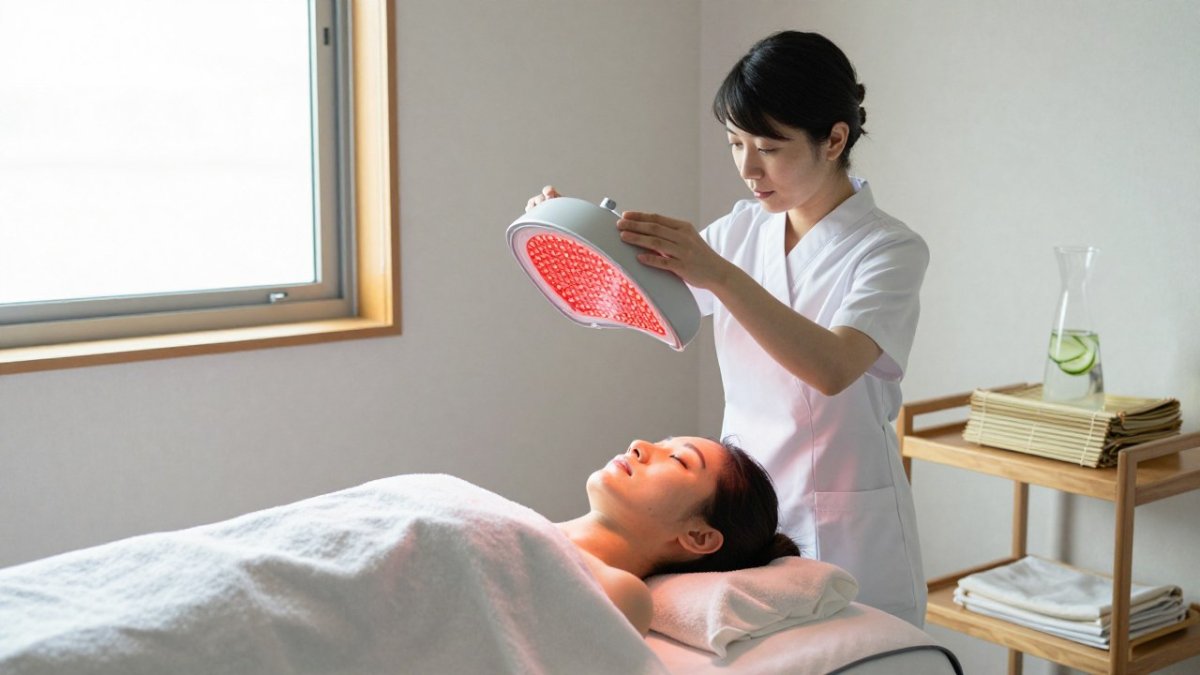
| Red light therapy | Skin health, recovery, low barrier to entry | Small room or open bay | Light-touch supervision |
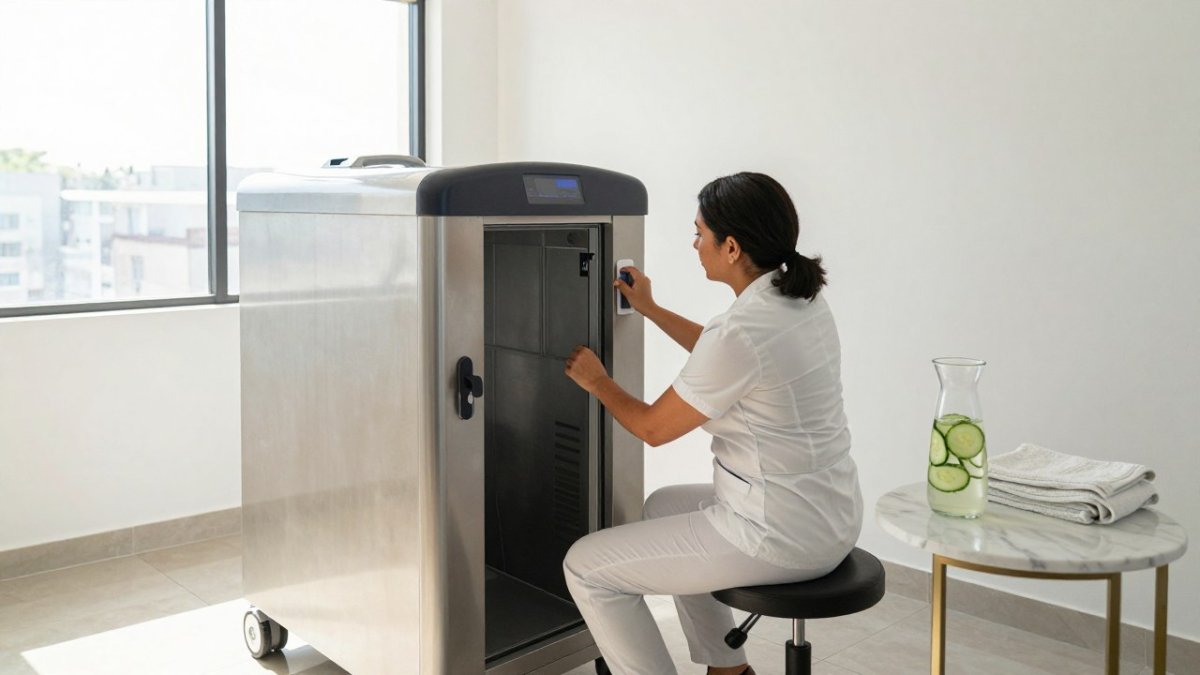
| Thermal recovery | Athletic clients, muscle recovery | Mid-size room | Standard protocols |
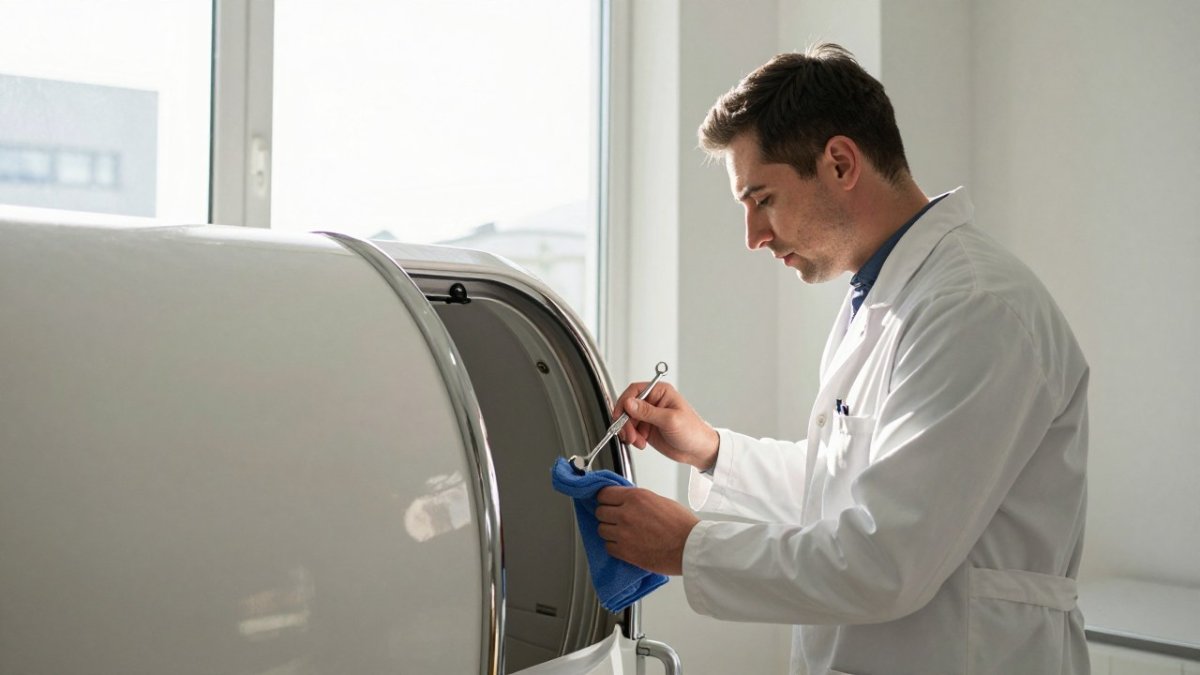
| Hyperbaric chambers | Premium recovery, longevity clients | Dedicated room | Clear clinical oversight |
| Hormone optimization | Longevity-focused clients | Consult room plus labs | Physician-led |
A practical approach is to launch one or two services first. Prove demand, learn the workflow, then expand. Trying to add five modalities at once spreads your team thin and muddies your marketing.
Your Med Spa Wellness Service Launch Checklist
A checklist is only useful if it tells you what to do first, who owns each step, and when to stop. The version below is sequenced as a phased roadmap with decision gates, so you can move from demand validation to a measured launch without guessing.
Phase 1, Validate demand (weeks 1-3).
- Pull a 12-month service mix report from your practice management system: top 10 services by revenue, visit frequency, and average ticket.
- Add three intake questions on health goals, recovery interest, and services clients currently seek elsewhere.
- Run a short email or in-clinic survey to your active list; target a response rate you can actually act on rather than a perfect sample.
- Interview your front desk and providers about what clients ask for that you turn away.
- Build a simple demand estimate: interested clients × realistic conversion × expected visits per year × price.
- Gate 1: Proceed only if the demand estimate covers equipment payback within a timeframe your ownership will accept.
Phase 2, Confirm legal and clinical footing (weeks 2-5, overlapping Phase 1).
- Confirm state licensing and scope-of-practice rules for each candidate service; requirements vary by state and by whether the service is considered medical or non-medical.
- Confirm your medical director's willingness to sign off on written protocols, standing orders where allowed, and adverse-event handling.
- Draft informed consent forms and a contraindication screening questionnaire specific to each modality.
- Set up a referral and escalation pathway for findings outside your scope.
- Gate 2: No equipment order until protocols, consent, and screening documents are signed off.
Phase 3, Model the economics (weeks 3-6).
- Get written quotes for equipment, installation, and any room build-out.
- Estimate supply cost per treatment, staff minutes per treatment, and room hours available per week.
- Set a launch price and calculate contribution margin per treatment after supplies and staff cost.
- Calculate break-even treatments per month against fixed costs (equipment payment, room, software).
- Gate 3: Proceed only if break-even volume is comfortably below your conservative demand estimate.
Phase 4, Build the room and the workflow (weeks 5-9).
- Confirm equipment placement, power, plumbing, and ventilation requirements with the vendor and your landlord.
- Configure the booking system with service-specific time blocks and buffer times.
- Build digital intake, consent, and documentation templates in your EHR.
- Set inventory par levels and a reorder trigger for consumables.
- Gate 4: Run a dry-run appointment with staff only; fix scheduling and documentation friction before a client sees the room.
Phase 5, Train and pilot (weeks 8-12).
- Complete the four-phase staff training sequence (knowledge, observation, supervised practice, sign-off).
- Run a 30-day pilot with a limited client group at a defined price.
- Track utilization, no-shows, adverse events, and client feedback weekly.
- Gate 5: Scale marketing only if utilization, safety, and margin targets are met during the pilot.
Phase 6, Launch and review (week 13 onward).
- Open booking to your full list with a defined launch offer.
- Review service-level financials monthly against the Phase 3 model.
- Decide within 90 days whether to expand, adjust pricing, or discontinue.
Watch out: the most common failure is ordering equipment before Gate 1 and Gate 2 are cleared, which locks capital into a service you have not validated and creates liability exposure before protocols exist. A second common failure is skipping the dry-run appointment, which surfaces scheduling and documentation problems that are far cheaper to fix before launch than after.
Med Spa Staff Training for New Services
Staff training is where wellness expansion succeeds or fails. Your team has to feel confident operating the equipment and explaining the service to clients.
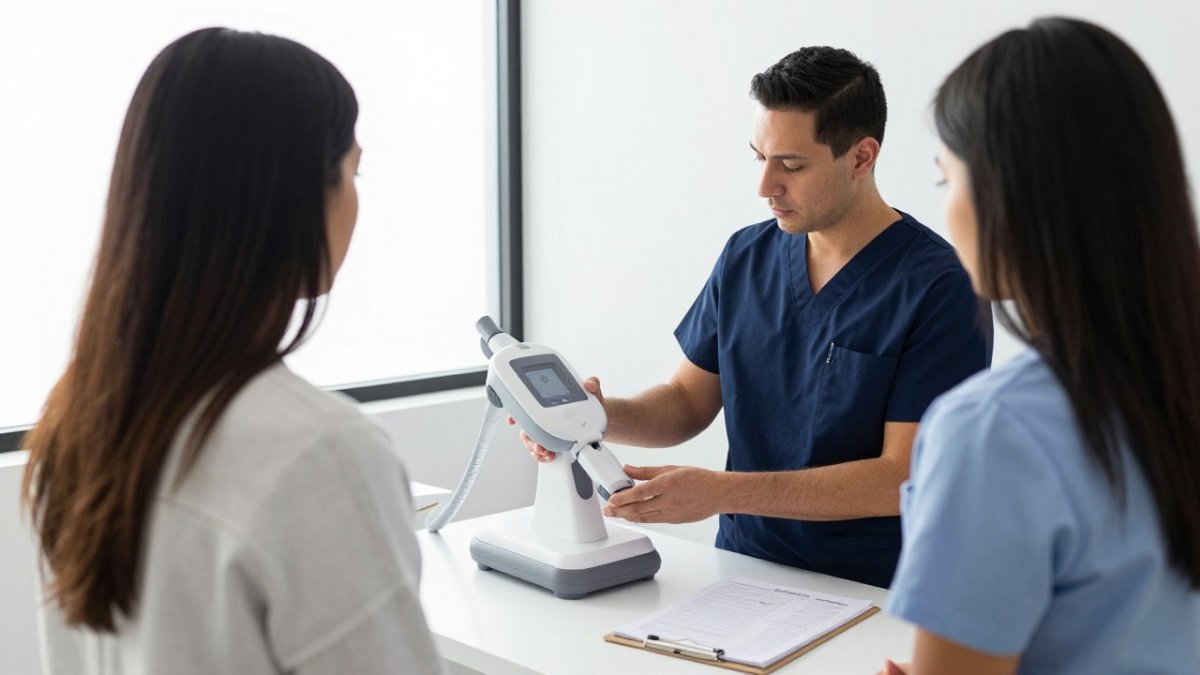
A step-by-step training plan works better than a single onboarding day. We recommend a four-phase approach:
- Knowledge phase: staff learn what each service does, who it's for, and who should avoid it.
- Observation phase: staff watch a trained operator run the full service.
- Supervised practice: staff perform the service under supervision.
- Sign-off: staff demonstrate competency before seeing clients alone.
Hyperbaric chambers and other advanced equipment need extra attention, so plan for refresher training and written protocols at the station.
Med Spa Wellness Technology and Workflow Integration
Technology should remove friction, not add it. The goal is a workflow where booking, screening, treatment, and follow-up all connect.
Start with your booking system. Wellness services have different time blocks than injectables. A 60-minute recovery session needs its own calendar rules.
Next, connect screening and consent to your intake process. Digital forms reduce errors and keep records clean.
Then look at client engagement. For practical guidance on wellness technology for client engagement, map these tools to your workflow.
The test for any new system is simple: does it save your front desk time or cost them time? If it's the latter, don't adopt it yet.
Med Spa Wellness Service Profitability and Performance Tracking
Most practices track total revenue and call it profitability. To see which tools support growth, review the best wellness technology for med spa revenue growth.
Build the model before you buy. For each candidate service, write down five inputs:
- Price per treatment. Set it from your demand survey and local market, not from the equipment vendor's suggested retail.
- Supply cost per treatment. Consumables, disposables, and any per-session licensing or software fee.
- Staff minutes per treatment. Include setup, treatment, cleanup, and documentation time, not just hands-on minutes.
- Room hours available per week. Be realistic about how many hours the room can actually be staffed and booked.
- Fixed costs. Equipment payment or depreciation, room build-out amortization, and any dedicated software.
From those inputs, calculate contribution margin per treatment (price minus supply and staff cost) and break-even volume (fixed costs divided by contribution margin).
Utilization is the assumption that decides everything. A service can have healthy margin per treatment and still lose money if the room sits empty.
Track these metrics monthly, per service:
- Revenue per treatment and contribution margin per treatment
- Utilization rate (booked hours divided by available hours)
- Staff cost per treatment versus the model
- Supply cost per treatment versus the model
- Client repeat rate and average visits per client per year
- Equipment payback progress against the original timeline
- No-show and cancellation rate
Review cadence matters more than the dashboard. Run a monthly service-level review with your medical director and practice manager.
Watch out: the most common modeling error is underestimating staff minutes per treatment, which inflates contribution margin and makes break-even look easier than it is.
Building Your Wellness Service Roadmap With Eternall Wellness
A roadmap beats a shopping list. The practices that win at med spa wellness plan in phases: prove demand, launch one service, measure results, then expand. For practical facility planning insights for commercial wellness services, review our guide.
Eternall Wellness supplies multi-modality recovery and wellness systems for gyms, spas, med spas, and wellness clinics. Our portfolio includes red light therapy systems, thermal recovery equipment, and hyperbaric chambers, all designed for commercial settings.
We also help businesses evaluate potential ROI, utilization, pricing strategies, client demand, and integration into existing operations.
Adding wellness services is a real business decision, and it deserves a real plan.
Frequently Asked Questions
How can a med spa add wellness services to its existing offerings without disrupting current treatments?
Start with a phased pilot: pick one or two services, such as red light therapy or thermal recovery, and run them in an underused treatment room during off-peak hours. Map the patient flow so wellness appointments do not compete with aesthetic bookings. Train a small staff cohort first, then expand once utilization and patient feedback confirm demand. This approach limits capital exposure and lets you refine protocols before a full launch.
Do med spas need to be HIPAA compliant when offering wellness services?
Yes. If your med spa transmits protected health information electronically, HIPAA applies to wellness services just as it does to aesthetic treatments. That means secure scheduling systems, encrypted patient records, and signed business associate agreements with any vendor that handles patient data. Review your intake forms and consent documents with a healthcare attorney to confirm they cover the new services and any lab or screening components.
How can a med spa measure whether a new wellness service is profitable?
Track revenue per service line against direct costs: equipment financing payments, consumables, staff time, and room utilization. Calculate a break-even point in treatments per month, then compare actual volume to that threshold. Also monitor retention and cross-sell rates, since wellness patients who also book aesthetic treatments raise lifetime value. Review these numbers monthly for the first two quarters before deciding to expand or adjust pricing.
What should a med spa consider when integrating wellness and aesthetic services?
Focus on clinical oversight, scope of practice, and informed consent. Confirm which services require a medical director's supervision and which staff members are licensed to perform them under state rules. Screen patients for contraindications, document everything in the medical record, and set clear referral pathways for findings that need primary care follow-up. Operationally, align scheduling, pricing disclosure, and staff training so the patient experience feels seamless across both service lines.