 ultimate-guide
Med Spa Revenue Diversification Strategies for 2026
Table of Contents
- Why Revenue Diversification Is the Key to Med Spa Growth
- The 7 Highest-Impact Med Spa Revenue Diversification Strategies
- 1. Launch Recurring Revenue Models and Memberships
- 2. Create Service Bundles That Boost Average Ticket Size
- 3. Optimize Pricing With Pre-Paid Packages
- 4. Expand Your Med Spa Service Menu With Recovery Modalities
- 5. Use Data to Drive Upselling and Cross-Selling
- 6. Implement Technology and Automation for Efficiency
- 7. Consider Mobile Services and Location Expansion
- How to Calculate Profitability for New Service Lines
- Choosing the Right Wellness Recovery Equipment for Clinics
- Proven Med Spa Client Retention Strategies to Stabilize Cash Flow
- Regulatory and Compliance Risks of Diversification
- Common Mistakes to Avoid When Diversifying Revenue
- Conclusion: Build a Resilient Revenue Model
- Frequently Asked Questions
Last Updated: September 5, 2026
Why Revenue Diversification Is the Key to Med Spa Growth
Med spa revenue diversification strategies are no longer optional for clinics that want to survive market shifts and changing consumer habits. Relying on a single high-margin treatment leaves your business exposed when trends fade or seasonal demand dips.
Revenue diversification creates multiple, distinct income sources so no single service line dictates your financial health, stabilizing cash flow and increasing business valuation.
The most resilient med spas treat diversification as a portfolio strategy, layering subscription revenue on top of one-time treatments, bundling complementary services, and adding recovery modalities. Below are the seven highest-impact strategies working today.
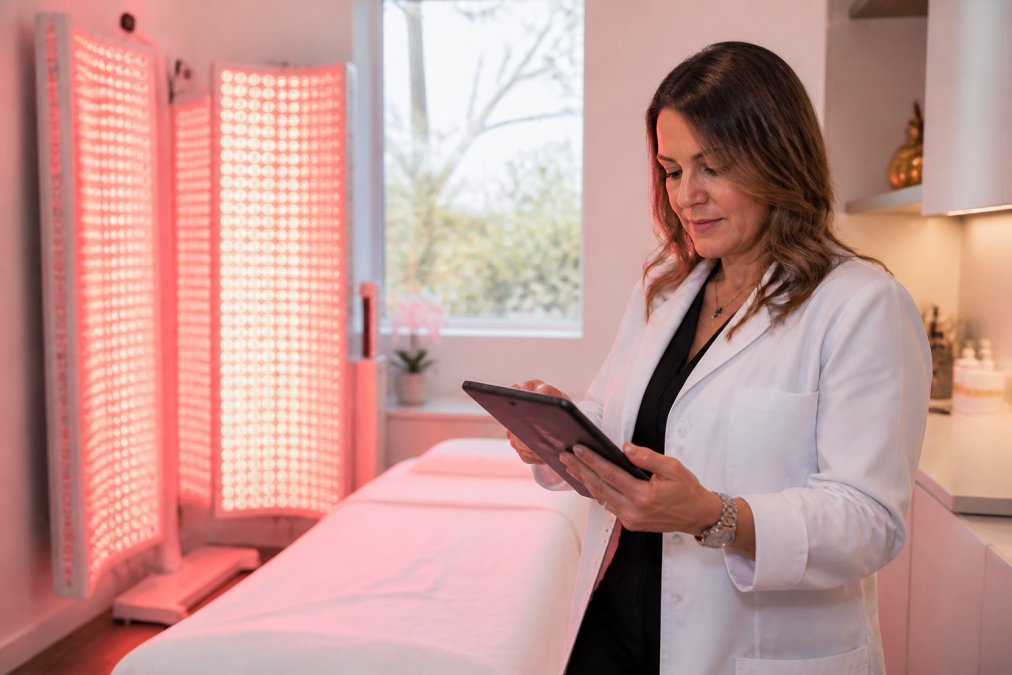
The 7 Highest-Impact Med Spa Revenue Diversification Strategies
These seven strategies build recurring revenue, increase client lifetime value, and reduce dependence on any single treatment. Each addresses a different weakness in the typical med spa business model.
1. Launch Recurring Revenue Models and Memberships
Membership models convert one-off clients into predictable monthly income through a fee that includes services, product discounts, or priority booking. The goal is to make membership so valuable that clients cancel individual treatments and let the subscription run.
2. Create Service Bundles That Boost Average Ticket Size
Bundling pairs a high-demand treatment with a complementary service clients might not otherwise try. Instead of a single facial, offer a "Radiance Package" combining the facial with a chemical peel and red light therapy, so clients feel they are getting a comprehensive plan.
3. Optimize Pricing With Pre-Paid Packages
Pre-paid packages ask clients to pay upfront for a series of treatments, often at a slight discount, improving cash flow immediately and locking in commitment. A client who has paid for five sessions is far more likely to complete them all.
4. Expand Your Med Spa Service Menu With Recovery Modalities
Adding recovery services such as red light therapy, compression therapy, or thermal treatments opens your doors to athletes, fitness enthusiasts, and wellness seekers who may never book an injectable or facial, while filling unused treatment rooms during off-peak hours.
5. Use Data to Drive Upselling and Cross-Selling
Your client database is one of your most valuable assets, yet many practices fail to mine it. By tracking treatment history, purchase patterns, and visit frequency, you can identify candidates for complementary services, such as a Botox client ideal for a filler consultation.
6. Implement Technology and Automation for Efficiency
Automation tools handle appointment reminders, post-treatment check-ins, and rebooking prompts without adding staff hours. Client relationship management systems track preferences and suggest relevant services based on past visits, reducing no-shows and freeing your front desk to sell higher-value services.
7. Consider Mobile Services and Location Expansion
Mobile aesthetics brings services directly to clients' homes or workplaces, working especially well for bridal parties, executive clients, and post-operative care. Location expansion, whether a second clinic or a gym partnership, extends your reach without cannibalizing your existing client base.
How to Calculate Profitability for New Service Lines
Every new service line must justify its existence with real numbers. The calculation starts with direct costs: equipment, consumables, staff time, and allocated overhead, then estimates use rates realistically, a hyperbaric chamber empty for 20 hours per week is not generating revenue.
Client Acquisition Cost vs. Lifetime Value by Service
Different services attract clients at different costs. A low-cost introductory facial might bring in new clients for modest marketing spend, while a high-ticket treatment like laser resurfacing requires a longer sales cycle. The key metric is the lifetime value of a client acquired through each service.
| Service Type | Typical Acquisition Effort | Revenue Potential | Retention Impact |
|---|---|---|---|
| Injectable (Botox/Filler) | Moderate | High per visit | Moderate, needs rebooking |
| Membership/Subscription | Low after initial | Recurring, predictable | High, automatic renewal |
| Recovery Modality (RLT) | Moderate | Medium per session | High, habitual usage |
| Pre-Paid Packages | Low | High upfront | High, locks in visits |
Staff Compensation Models for New Offerings
Compensation structures must align with each service's revenue model. Commission-based pay works well for high-ticket elective treatments where the provider drives the sale; hourly pay suits recovery modalities delivered on a schedule. Many clinics use a hybrid model: base hourly rate plus commission on products sold or packages booked.
Choosing the Right Wellness Recovery Equipment for Clinics
Selecting equipment for service menu expansion requires evaluating technology as a business asset, not just a clinical tool. Look for systems with a proven commercial track record, reliable manufacturer support, and clear maintenance requirements that integrate into current client flow without major disruption.
Financing is critical. Many facilities preserve capital by leasing or financing equipment rather than paying upfront, letting you generate revenue immediately while spreading cost over time. At Eternall Wellness, we help clinics evaluate wellness recovery equipment by modeling use, pricing, and payback periods before they commit.
Proven Med Spa Client Retention Strategies to Stabilize Cash Flow
Retention is cheaper than acquisition. Med spa client retention strategies focus on turning first-time visitors into long-term clients who book on a schedule, using membership programs, loyalty rewards, and automated rebooking reminders.
Retention also depends on client experience. A client who feels rushed or pressured is unlikely to return. Staff training on consultation techniques, follow-up communication, and personalized treatment planning make clients dramatically more likely to remain loyal and refer friends.
Regulatory and Compliance Risks of Diversification
Adding new services brings new regulatory obligations. Each modality has its own licensing requirements, safety protocols, and documentation standards. Hyperbaric chambers require specific training and emergency procedures; thermal treatments carry burn risks. Verify that your facility, staff certifications, and liability insurance cover the specific modality before launching.
State medical boards and local health departments set the scope of practice for aesthetic medicine. These rules vary by jurisdiction, so you must confirm what your state allows before expanding your service menu. The FDA guidance on aesthetic and recovery devices provides a baseline for device regulation, but state-level oversight of who may operate them is separate and equally important. Compliance failures can result in fines, license suspension, or loss of insurance coverage, which is why a thorough regulatory review belongs in your planning process before you purchase equipment or hire staff.
Common Mistakes to Avoid When Diversifying Revenue
The most common mistake is expanding too quickly without validating demand. Adding five new services at once divides your marketing budget, staff attention, and inventory across too many fronts. Launch one new service line, measure performance for 90 days, then make data-backed decisions about the next addition.
Inventory mismanagement is a second frequent error. Stocking products for services that have not yet built a client base ties up capital in slow-moving inventory. Start with minimal stock and scale up as demand materializes. A third mistake is neglecting the financial model, many clinics add a service because a vendor pitched it well, without calculating realistic revenue.
The Inventory Bloat Trap: Managing SKU Profitability
Most diversification guides stop at "stock less." But the real operational challenge is managing SKU-level profitability as your menu expands. When you add recovery modalities, new injectables, or skincare lines, your supply chain multiplies overnight, and without a system to track which items generate profit, you will tie up thousands of dollars in slow-moving inventory.
A practical framework for managing this is the ABC analysis, adapted for med spas:
- A-items: High-value, high-turnover products that generate 70-80% of your revenue. These are your core injectables and popular skincare lines. You should never run out of these, and you should negotiate volume pricing with suppliers.
- B-items: Moderate-value products with steady but slower turnover. These are your secondary treatment lines and recovery consumables. Review these monthly and adjust order quantities based on actual usage trends.
- C-items: Low-value or slow-moving products that make up a small fraction of revenue. These are the first candidates for elimination when they expire or fail to move within 90 days.
A common pattern is that diversification adds dozens of C-items that collectively consume 20% of storage space but generate less than 5% of revenue. The fix is a quarterly SKU review: rank every product by units sold and gross margin, and discontinue the bottom 10% that have not moved in 90 days.
The 90-Day Launch Cadence
Instead of launching multiple services simultaneously, adopt a 90-day launch cadence. Each quarter, introduce one new service line with a dedicated marketing push, staff training session, and inventory plan. Measure three numbers at day 90: new clients acquired, revenue per service delivered, and gross margin after all direct costs.
This cadence also protects staff from burnout. Adding five services at once means your front desk must learn five new consultation scripts, providers must master five new protocols, and inventory managers must track five new supply chains.
The Hidden Cost of Staff Training
Every new service requires staff training, and training time is a direct cost that rarely appears in the initial financial model. A typical training program for a new injectable or laser modality involves: (peer-reviewed research)
- Initial certification: 2-5 days of off-site training, including travel and lost clinical hours
- Supervised practice: 10-20 supervised treatments before the provider works independently
- Ongoing education: Annual refresher courses required to maintain certification
For a clinic with two providers, this can easily represent 60-80 hours of non-billable time in the first month of a launch. At an average provider rate of $150 per hour, that is $9,000 to $12,000 in hidden costs before the first paying client (bls.gov).
The Financial Model Checklist
Before adding any new service, run it through this checklist:
- Direct cost per treatment: Consumables, disposables, and product cost per session
- Staff cost per treatment: Provider time at their fully loaded hourly rate
- Training cost amortized: Total training hours divided by projected treatments in the first year
- Equipment cost per treatment: Purchase or lease cost divided by projected treatments over the equipment's useful life
- Marketing cost per new client: Projected spend to attract clients specifically for this service
- Break-even volume: Total fixed costs divided by contribution margin per treatment
If the break-even volume exceeds realistic client demand based on your database size and local market, the service does not belong in your menu yet. This checklist prevents adding services that look profitable on paper but cannot reach the volume needed to cover true costs.
Conclusion: Build a Resilient Revenue Model
Building a diversified revenue model is the most reliable path to long-term financial stability for your med spa. The strategies outlined here each address a specific vulnerability in a single-service business. The clinics that thrive treat diversification as an ongoing discipline, not a one-time project.
The challenge is knowing which services to add, what equipment will deliver real returns, and how to structure the financial model. That is where Eternall Wellness provides the clearest value. We help you evaluate technologies as business opportunities, with financing options to preserve capital and a focus on ROI, use, and integration into your existing operations.
Frequently Asked Questions
What are the most profitable services to add to a med spa?
The most profitable additions typically combine high utilization with recurring revenue potential. Wellness recovery services like red light therapy, compression therapy, and hyperbaric oxygen sessions fit this profile because they require multiple visits, encouraging package sales and memberships. These services also have lower consumable costs than many injectable treatments. Before adding any service, calculate the equipment cost, the space it occupies, and the expected session volume to confirm the profit margin works for your specific operation.
How can wellness technology improve med spa client retention?
Wellness technology creates a reason for clients to visit between aesthetic procedures. A client who comes for a monthly red light therapy session or a recovery package has more touchpoints with your brand, which strengthens loyalty. These services fit into membership models that provide predictable recurring revenue. When a client has an active membership, they are less likely to book elsewhere. This approach also opens doors to natural upselling by keeping clients engaged with your team on a consistent basis.
What are the regulatory considerations for adding wellness services to a medical practice?
Regulatory requirements depend on the service and your state. Hyperbaric chambers, for example, may have specific safety codes and oversight requirements that vary by jurisdiction. Your state medical board sets rules about which services require physician oversight and what protocols staff must follow. You must also verify your liability insurance covers new modalities. Before purchasing equipment, consult with a healthcare attorney familiar with your state's regulations and check with your local authorities about permits or inspections.
How do I balance aesthetic procedures with wellness recovery services?
Balance comes from scheduling and space planning. Use your treatment rooms for aesthetic procedures during peak demand hours and dedicate slower periods to wellness sessions. Alternatively, designate a specific room for recovery equipment that runs on a consistent schedule. Analyze your booking data to find gaps in your aesthetic calendar. Many clinics find that recovery services fill weekday mornings or early afternoons when cosmetic procedure demand is lower, turning idle time into billable hours.
What is the average profit margin for med spa wellness add-ons?
Profit margins vary significantly based on equipment cost, staffing, and utilization rates. Wellness services that use equipment rather than high-cost consumables often show strong margins once the equipment is paid for, because the cost per session is mainly staff time and overhead. The key metric is not the margin per session but the break-even point on the equipment investment. Track utilization and session pricing carefully to determine when a new service starts generating profit.
What are the best med spa client retention strategies to support new services?
Successful retention strategies for new services include introducing pre-paid packages that encourage a series of treatments, building membership tiers that bundle recovery sessions with aesthetic services, and implementing loyalty programs that reward frequent visits. Automated reminders and follow-up messages keep clients engaged between appointments. Train your front desk to explain how new services complement existing treatments, turning a single-service client into a multi-service regular.
How do I determine if my med spa has space for service menu expansion?
Start by auditing your current room utilization. If you have rooms empty more than 30% of your operating hours, you have space for service menu expansion. Consider whether equipment can be mobile within a room to serve multiple purposes. Some recovery modalities, like red light therapy panels, occupy minimal floor space and can be moved between rooms. Measure your actual appointment gaps over several weeks to see where a new service line fits without requiring additional square footage.
How fast can wellness recovery equipment pay for itself in a med spa?
The payback period depends on your session price, utilization rate, and financing structure. A reasonable target is to reach a break-even point within 8 to 18 months based on realistic session volume. If you plan to offer memberships or pre-paid packages, factor in the upfront cash flow those provide. Speak with equipment providers about financing options that preserve capital while the new service builds its client base.
This article was written using GrandRanker
Frequently Asked Questions
Q: What are the most profitable services to add to a med spa?
A: The most profitable additions typically combine high utilization with recurring revenue potential. Wellness recovery services like red light therapy, compression therapy, and hyperbaric oxygen sessions fit this profile because they require multiple visits, encouraging package sales and memberships. These services also have lower consumable costs than many injectable treatments. Before adding any service, calculate the equipment cost, the space it occupies, and the expected session volume to confirm the profit margin works for your specific operation.
Q: How can wellness technology improve med spa client retention?
A: Wellness technology creates a reason for clients to visit between aesthetic procedures. A client who comes for a monthly red light therapy session or a recovery package has more touchpoints with your brand, which strengthens loyalty. These services fit into membership models that provide predictable recurring revenue. When a client has an active membership, they are less likely to book elsewhere. This approach also opens doors to natural upselling by keeping clients engaged with your team on a consistent basis.
Q: What are the regulatory considerations for adding wellness services to a medical practice?
A: Regulatory requirements depend on the service and your state. Hyperbaric chambers, for example, may have specific safety codes and oversight requirements that vary by jurisdiction. Your state medical board sets rules about which services require physician oversight and what protocols staff must follow. You must also verify your liability insurance covers new modalities. Before purchasing equipment, consult with a healthcare attorney familiar with your state's regulations and check with your local authorities about permits or inspections.
Q: How do I balance aesthetic procedures with wellness recovery services?
A: Balance comes from scheduling and space planning. Use your treatment rooms for aesthetic procedures during peak demand hours and dedicate slower periods to wellness sessions. Alternatively, designate a specific room for recovery equipment that runs on a consistent schedule. Analyze your booking data to find gaps in your aesthetic calendar. Many clinics find that recovery services fill weekday mornings or early afternoons when cosmetic procedure demand is lower, turning idle time into billable hours.
Q: What is the average profit margin for med spa wellness add-ons?
A: Profit margins vary significantly based on equipment cost, staffing, and utilization rates. Wellness services that use equipment rather than high-cost consumables often show strong margins once the equipment is paid for, because the cost per session is mainly staff time and overhead. The key metric is not the margin per session but the break-even point on the equipment investment. Track utilization and session pricing carefully to determine when a new service starts generating profit.
Q: What are the best med spa client retention strategies to support new services?
A: Successful retention strategies for new services include introducing pre-paid packages that encourage a series of treatments, building membership tiers that bundle recovery sessions with aesthetic services, and implementing loyalty programs that reward frequent visits. Automated reminders and follow-up messages keep clients engaged between appointments. Train your front desk to explain how new services complement existing treatments, turning a single-service client into a multi-service regular.
Q: How do I determine if my med spa has space for service menu expansion?
A: Start by auditing your current room utilization. If you have rooms empty more than 30% of your operating hours, you have space for service menu expansion. Consider whether equipment can be mobile within a room to serve multiple purposes. Some recovery modalities, like red light therapy panels, occupy minimal floor space and can be moved between rooms. Measure your actual appointment gaps over several weeks to see where a new service line fits without requiring additional square footage.
Q: How fast can wellness recovery equipment pay for itself in a med spa?
A: The payback period depends on your session price, utilization rate, and financing structure. A reasonable target is to reach a break-even point within 8 to 18 months based on realistic session volume. If you plan to offer memberships or pre-paid packages, factor in the upfront cash flow those provide. Speak with equipment providers about financing options that preserve capital while the new service builds its client base.