 blog
blog
Is Hyperbaric Oxygen Therapy Worth It for Med Spas
Table of Contents
- Why Med Spas Are Adding Hyperbaric Oxygen Therapy
- mHBOT vs Medical Grade HBOT: What's the Difference
- Med Spa Equipment ROI: What the Numbers Look Like
- FDA Regulations for Hyperbaric Chambers in Commercial Settings
- Operational Realities: Space, Staffing, and Liability
- Is Hyperbaric Oxygen Therapy Right for Your Facility
- Frequently Asked Questions
Last Updated: October 2, 2026
Why Med Spas Are Adding Hyperbaric Oxygen Therapy
Med spas face a persistent challenge: treatment rooms sit idle between appointments, and clients plateau on existing services. Hyperbaric oxygen therapy has emerged as a solution that addresses both problems simultaneously. The question isn't whether hyperbaric chambers exist, they do. The real question is whether hyperbaric oxygen therapy is worth it for med spas as a revenue-generating service that justifies the capital investment and operational complexity.
The appeal is straightforward. Hyperbaric chambers attract a different clientele than traditional spa services. They appeal to athletes, executives, and wellness-focused clients willing to pay premium rates for recovery and longevity services. For med spas with established credibility and existing client relationships, adding hyperbaric therapy can increase per-visit revenue and extend client engagement beyond aesthetic treatments.
However, the decision requires more than enthusiasm. Space constraints, regulatory compliance, staff training, and realistic use rates all factor into whether this investment makes financial sense for your specific facility. At Eternall Wellness, we help med spa owners evaluate whether hyperbaric therapy aligns with their business model, client demand, and operational capacity, not just whether the technology works.
mHBOT vs Medical Grade HBOT: What's the Difference
mHBOT (mild hyperbaric oxygen therapy) operates at pressures between 1.3 and 2.4 atmospheres, typically using air-enriched or oxygen-enriched environments. Medical-grade HBOT (hyperbaric oxygen therapy) operates at pressures of 2.8 atmospheres or higher, delivering pure oxygen in a pressurized chamber.
The distinction matters because it determines regulatory requirements, operational complexity, and which client outcomes you can credibly market. Medical-grade chambers require physician oversight and are subject to stricter FDA regulations. mHBOT systems are less regulated, easier to operate, and require less staff training, but they also cannot claim the same clinical outcomes.
For med spas, mHBOT presents a lower barrier to entry. Setup is simpler, staffing requirements are less demanding, and the regulatory pathway is clearer. Medical-grade HBOT delivers stronger physiological effects but demands more infrastructure: medical director involvement, detailed patient intake protocols, and higher liability exposure.
The choice depends on your target market. If your clients seek wellness and recovery benefits, mHBOT works. If you're positioning yourself as a clinical recovery center serving serious athletes or post-injury clients, medical-grade HBOT justifies the added complexity. Most med spas that add hyperbaric therapy choose mHBOT because the operational fit aligns better with existing spa workflows.
Med Spa Equipment ROI: What the Numbers Look Like
ROI calculations for hyperbaric equipment depend on three variables: session pricing, use rate, and operating costs. Many med spas price mHBOT sessions to reflect the service tier without claiming clinical outcomes.
Session use is where most med spas discover reality. A chamber sitting empty generates zero revenue. A chamber used 3-4 times daily generates meaningful income. The difference between a successful installation and a failed one often comes down to whether your existing client base and marketing strategy can drive consistent bookings.
Operating costs include staffing for chamber operation, oxygen supplies (if using oxygen-enriched models), maintenance, and cleaning protocols. These aren't trivial. A staff member dedicated to chamber sessions, even part-time, represents ongoing expense that must be covered by session revenue.
The practical approach: calculate your breakeven point. Determine how many sessions per week you need to sell to cover equipment costs, financing, staffing, and supplies. Then honestly assess whether your facility can sustain that volume. Many med spas underestimate how much active marketing and client education is required to keep a hyperbaric service fully booked. Eternall Wellness helps clients work through these calculations before committing capital, because the equipment itself is only half the equation, the business model is the other half.
FDA Regulations for Hyperbaric Chambers in Commercial Settings
The FDA distinguishes between medical devices and non-medical wellness equipment. This distinction determines your compliance pathway and what you can claim about outcomes.
Medical-grade hyperbaric chambers are classified as Class III medical devices, requiring FDA approval and physician oversight. If you're operating a medical-grade chamber, you're entering a regulated medical device space with documentation, training, and patient safety requirements that mirror clinical settings.
mHBOT systems operate in a grayer regulatory area. Many are marketed as wellness equipment rather than medical devices, which reduces FDA oversight but also limits what claims you can make about health outcomes. You cannot claim that your mHBOT chamber treats decompression sickness, carbon monoxide poisoning, or any FDA-approved medical indication. You can claim wellness benefits, recovery, circulation support, oxygen availability, but the language matters legally.
The practical reality: consult with a healthcare attorney before purchasing any hyperbaric system. Verify whether your intended equipment requires FDA approval and what operational protocols your state's medical board expects. Some states have specific regulations for non-physician-operated chambers; others don't. Your location determines your compliance burden.
FDA guidance on hyperbaric devices and classification
Operational Realities: Space, Staffing, and Liability
Installing a hyperbaric chamber requires dedicated space. mHBOT systems vary in footprint, but most need a treatment room with climate control, electrical infrastructure, and oxygen supply (if applicable). That space cannot serve other purposes during sessions, it's committed to hyperbaric use.
Staffing is straightforward but non-negotiable. Someone trained on the equipment must be present during every session. This person monitors the client, manages pressure adjustments, handles emergency protocols, and maintains equipment logs. For most med spas, this means either dedicating existing staff or hiring part-time technicians specifically for chamber operation.
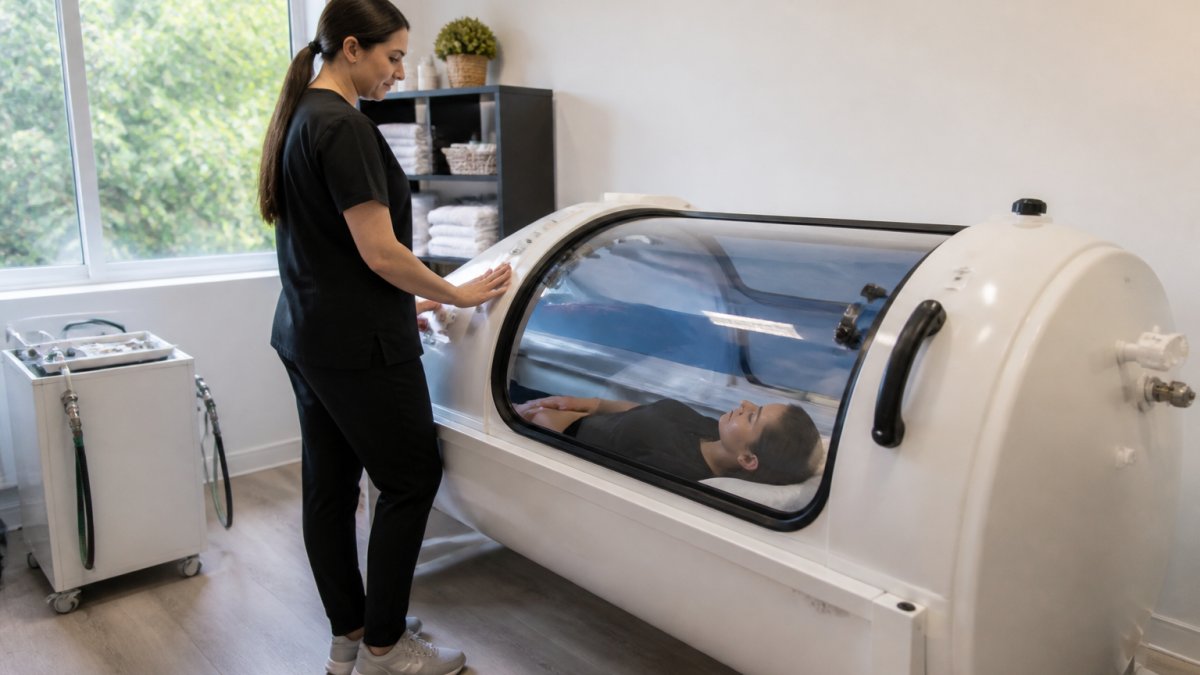
Liability is the conversation most med spas avoid until after they've purchased equipment. Hyperbaric chambers carry real risks. Pressure-related injuries, oxygen toxicity, and equipment malfunction are rare but possible. Your insurance must cover hyperbaric operations, which often costs more than standard spa coverage. You need clear informed consent protocols, incident documentation, and staff training on emergency procedures.
The liability calculus changes if you're operating mHBOT versus medical-grade HBOT. Medical-grade systems have higher liability exposure but clearer regulatory frameworks. mHBOT systems have lower regulatory burden but require you to define your own safety protocols and ensure your insurance actually covers the service you're providing.
Is Hyperbaric Oxygen Therapy Right for Your Facility
The decision hinges on three questions: Does your client base want this service? Can your facility support it operationally? Does the financial model work for your specific situation?
Start with client demand. Survey existing clients about interest in recovery services. Analyze which of your current services show the highest use and revenue per session.
Next, assess your operational capacity honestly. Do you have dedicated space? Can you staff the chamber consistently? Can your facility's electrical and climate systems support the equipment? Are you comfortable with the regulatory and liability requirements?
Finally, run the numbers with realistic assumptions. Don't project 100% use. Most med spas aim for consistent use on new services in the first year. Work backward from that realistic rate to determine whether revenue covers costs. Factor in the marketing effort required to educate clients and drive bookings.
Small business equipment ROI calculation framework
The answer to whether hyperbaric oxygen therapy is worth it for med spas is genuinely "it depends", but the dependency is on your specific situation, not on whether the technology works. Many successful med spas have integrated hyperbaric services and expanded revenue.
The decision to add hyperbaric oxygen therapy should be driven by real client demand and realistic financial projections, not by what competitors are doing. Eternall Wellness specializes in helping med spas, gyms, and wellness clinics evaluate whether new recovery modalities actually fit their business model.
| Consideration | mHBOT | Medical-Grade HBOT |
|---|---|---|
| Regulatory burden | Lower | Higher |
| Staff training required | Basic | Extensive |
| Physician oversight needed | No | Yes |
| Session price | Varies | Varies |
| Liability exposure | Moderate | Higher |
| Space requirements | Compact | Larger |
| Best for | Wellness-focused spas | Clinical recovery centers |
Frequently Asked Questions
How long does it take to see results from hyperbaric oxygen therapy?
Results vary by condition and individual response. Some clients report feeling improvements in energy or recovery within 3-5 sessions, while others may need 10-20 sessions to notice meaningful changes. Consistency matters, most protocols recommend sessions 2-5 times per week. Discuss realistic timelines with clients upfront to set proper expectations and reduce cancellations due to unmet expectations.
What is the difference between mHBOT and medical-grade HBOT for a med spa?
Mild hyperbaric oxygen therapy (mHBOT) operates at lower pressures (1.3-1.5 ATA) and requires less regulatory oversight, making it more accessible for commercial wellness settings. Medical-grade HBOT uses higher pressures (2.0+ ATA) and is primarily used for FDA-approved medical conditions like wounds and infections. For a med spa focused on wellness and recovery, mHBOT offers a lower barrier to entry, simpler compliance, and faster payback periods, though with different marketing positioning than clinical HBOT.
What are the main downsides of adding hyperbaric oxygen therapy to a med spa?
Key challenges include significant upfront equipment costs, ongoing maintenance and certification expenses, staff training requirements, space constraints in smaller facilities, and the need to build client demand in a competitive wellness market. Additionally, liability insurance may increase, and equipment utilization must remain consistent to justify the investment. Some facilities struggle to fill sessions initially, which can delay ROI. Thoroughly assess your member base and available space before committing.
What FDA regulations apply to hyperbaric chambers in a med spa?
The FDA classifies hyperbaric chambers. Commercial facilities must maintain proper device labeling and follow manufacturer guidelines. If offering services for FDA-approved indications, stricter clinical protocols apply. For wellness-focused mHBOT, regulatory requirements are lighter, but you must still comply with state-level wellness facility regulations. Consult with a regulatory specialist and your state's health department to confirm all requirements for your specific setup.