 how-to
How to Monetize Idle Treatment Rooms
Table of Contents
- Calculate Your Current Revenue Per Room
- How to Monetize Idle Treatment Rooms Through Service Bundling
- Wellness Business Revenue Diversification With Day Passes and Memberships
- Med Spa Space Optimization Strategies for Maximum Utilization
- Adding Recovery Services to Wellness Clinics: Scheduling and Workflow
- Legal, Insurance, and Compliance Considerations
- Reduce Downtime With Automated Booking and Capacity Planning
- Conclusion
Last Updated: August 28, 2026
Calculate Your Current Revenue Per Room
Before you can effectively monetize idle treatment rooms, you need a baseline. Revenue per room is the metric that tells you whether your facility is operating at capacity or leaving money on the table.
Start by calculating your current revenue per treatment room per month. Take your total monthly revenue from treatment services, divide it by the number of rooms you operate, then divide again by the number of business days in a month. This gives you a daily rate per room. Most wellness facilities see significant variation here, some rooms generate consistent income while others sit empty for hours at a time.
The real insight comes from comparing this figure across your different room types and service categories. A hydrotherapy room might generate $400 per day while a standard massage room generates $250. That gap isn't just about pricing, it's about use and demand. High-performing rooms tell you something important: clients value that service enough to book it. Underperforming rooms represent opportunity.
Document your current use rate by room type. Track how many hours each room sits empty during business hours. Many facilities discover that their "slow" periods aren't actually slow, they're just booked with lower-margin services. Once you see this pattern, you can start planning how to fill those gaps with higher-value offerings that complement your existing services.
How to Monetize Idle Treatment Rooms Through Service Bundling
Service bundling transforms idle time into revenue by packaging complementary treatments together. Instead of selling a 60-minute massage and a 30-minute recovery service as separate bookings, you sell them as a single premium experience at a higher price point.
The bundling strategy works because it solves a real client problem: decision fatigue. Most people don't know which recovery modality pairs best with their primary treatment. When you bundle services, you're making that decision for them based on your expertise. They get a more complete experience, and your facility fills rooms that would otherwise stay empty during their visit.
Start by identifying which services naturally complement each other. A client getting a deep tissue massage benefits from red light therapy afterward, the combination reduces inflammation and accelerates recovery (peer-reviewed research). Someone doing a fitness class benefits from a recovery lounge session. A med spa client getting a facial can add a thermal recovery treatment to enhance skin circulation and results.
Price your bundles strategically. The bundle price should be higher than any individual service but lower than buying them separately. This creates perceived value for the client while increasing your average transaction size. If a massage is $80 and red light therapy is $40 individually, bundle them for $110. You've increased revenue per visit while making the client feel they're getting a deal.
Track which bundles generate the highest demand. Some combinations will resonate immediately with your client base while others fall flat. The data will guide your next bundling decisions. After three months, analyze which bundles drove repeat bookings and which were one-time purchases. Double down on the winners and retire the losers.
Wellness Business Revenue Diversification With Day Passes and Memberships
Day passes and memberships address a fundamental challenge in wellness business revenue diversification: inconsistent use. They convert one-time visitors into recurring revenue streams and fill your calendar predictably.
A day pass gives a client access to multiple services during a single visit. Instead of booking one treatment, they pay a flat fee, say $99, and can use your recovery lounge, try a thermal session, and book a 30-minute massage. The psychology here is powerful: clients feel like they're getting maximum value, so they're more likely to book. Your facility gets guaranteed revenue and fills multiple rooms in one transaction.
Memberships work differently but serve the same purpose. A monthly membership, $149 for unlimited lounge access plus two treatment credits, creates predictable recurring revenue. Members book more frequently because they've already paid. They're also more likely to upgrade to premium services once they're in the door. Membership clients typically generate 40-60% higher lifetime value than one-time visitors (peer-reviewed research).
The key to successful day passes and memberships is removing friction from the booking experience. Your scheduling software should make it obvious what's included, what's available, and how much time each service takes. Clients should be able to book their full experience in under two minutes. Complexity kills conversion.
Position day passes as trial offers for people considering membership. Many facilities offer a discounted day pass ($59 instead of $99) to first-time visitors, then follow up with a membership offer. This creates a clear funnel: try the experience, see the value, commit to membership.
Med Spa Space Optimization Strategies for Maximum use
Med spa space optimization strategies require thinking about your facility as a system, not just a collection of rooms. Every square foot should either generate revenue or support the revenue-generating spaces.
Start with a facility audit. Map every room and track its use by hour of day and day of week. You'll likely discover that your busiest hours are concentrated, say, 10am-2pm and 5pm-7pm, while other hours are ghost towns. This pattern is common, but it's also fixable.
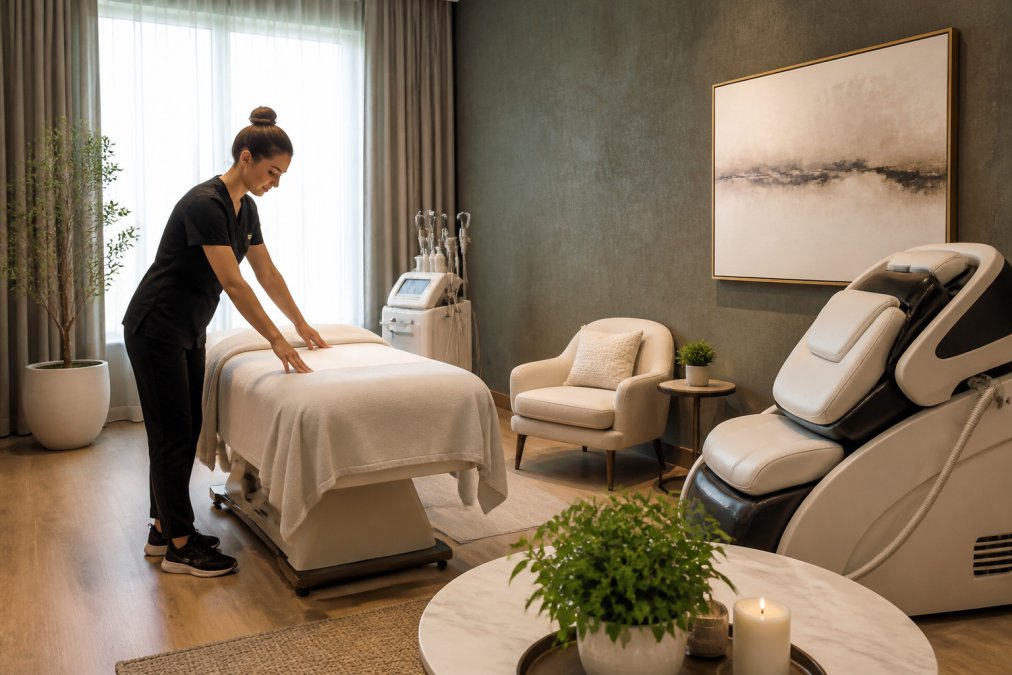
The solution involves staggering your service offerings to match demand patterns. If your massage therapists are fully booked during peak hours, that's when you schedule your lowest-touch services, recovery lounge access, day passes, self-service thermal sessions. These require minimal staff attention and generate revenue during slow periods.
Consider converting underutilized space into hybrid-use rooms. A treatment room that's booked for massage three days per week can host group recovery sessions, workshops, or private training on other days. This doesn't require structural renovation, just flexible scheduling and cross-training your staff.
Capacity planning software helps optimize this. Real-time booking data shows you exactly where bottlenecks exist. If your massage schedule is full but your recovery lounge is empty, the system can recommend bundled packages that move clients toward available services. This is passive monetization, the technology does the work for you.
Adding Recovery Services to Wellness Clinics: Scheduling and Workflow
When you're adding recovery services to wellness clinics, workflow integration determines whether it succeeds or becomes a chaotic add-on that frustrates staff and clients.
Recovery services need to fit seamlessly into your existing appointment flow. If your typical client visits for a 30-minute treatment and leaves, adding a 20-minute recovery service requires rethinking your schedule. Some facilities build recovery time into the existing appointment, a 50-minute total visit that includes 30 minutes of primary service plus 20 minutes of recovery. This simplifies booking and ensures clients actually use the recovery service instead of skipping it.
Other facilities create separate recovery appointments that clients book after their primary treatment. This works if your facility has natural gaps between primary appointments. If not, it creates scheduling conflicts and clients skip the recovery session because they're tired or need to leave.
Staff training is critical. Your therapists and wellness consultants need to understand why recovery services matter and how to recommend them authentically. Generic upselling doesn't work. Specific recommendations do: "Based on the work we just did on your shoulders, 20 minutes of red light therapy will accelerate your recovery. Most clients notice the difference within 48 hours."
Build recovery recommendations into your intake process. Before clients arrive, your system should note which recovery services align with their treatment. When they check in, staff can mention these recommendations naturally, not as an afterthought.
Track recovery service adoption by treatment type. You'll discover that certain primary services have high recovery attachment rates while others don't. This data guides your next training session and helps you refine your recommendations.
Legal, Insurance, and Compliance Considerations
Operating recovery services in your facility introduces legal and insurance considerations that vary by service type and your location. This isn't an area where you can cut corners.
Start with your liability insurance. Most general liability policies for wellness facilities don't automatically cover all recovery modalities. Hyperbaric chambers, thermal systems, and advanced recovery equipment often require specific coverage riders. Contact your insurance broker before adding new services and ask explicitly what's covered and what requires additional policies.
Compliance requirements depend on your service offerings and your facility type. If you're operating a med spa, your state's medical board has specific rules about which services require physician oversight and which don't. Some states require that hyperbaric chambers be operated only under medical supervision. Others allow trained technicians to operate them. You need to know your state's specific requirements.
Documentation is essential. Maintain detailed records of staff training, equipment maintenance, client intake forms, and adverse events. If a client has a negative experience, your documentation protects both you and your staff. Many facilities use digital intake forms that capture informed consent, health history, and specific contraindications for each service.
Client contraindications matter more than you might think. Some recovery modalities aren't appropriate for clients with certain conditions. Red light therapy has different contraindications than hyperbaric chambers. Your staff needs training on these, and your booking system should flag high-risk situations.
Consider working with a healthcare attorney familiar with your state's regulations. The cost of a consultation is far lower than the cost of operating out of compliance or facing liability issues. Many attorneys can review your intake forms, staff training protocols, and service descriptions to ensure they meet legal standards.
Reduce Downtime With Automated Booking and Capacity Planning
Automated booking and capacity planning software is the operational backbone of successful treatment room monetization. Without it, you're managing use manually, which is both inefficient and prone to error.
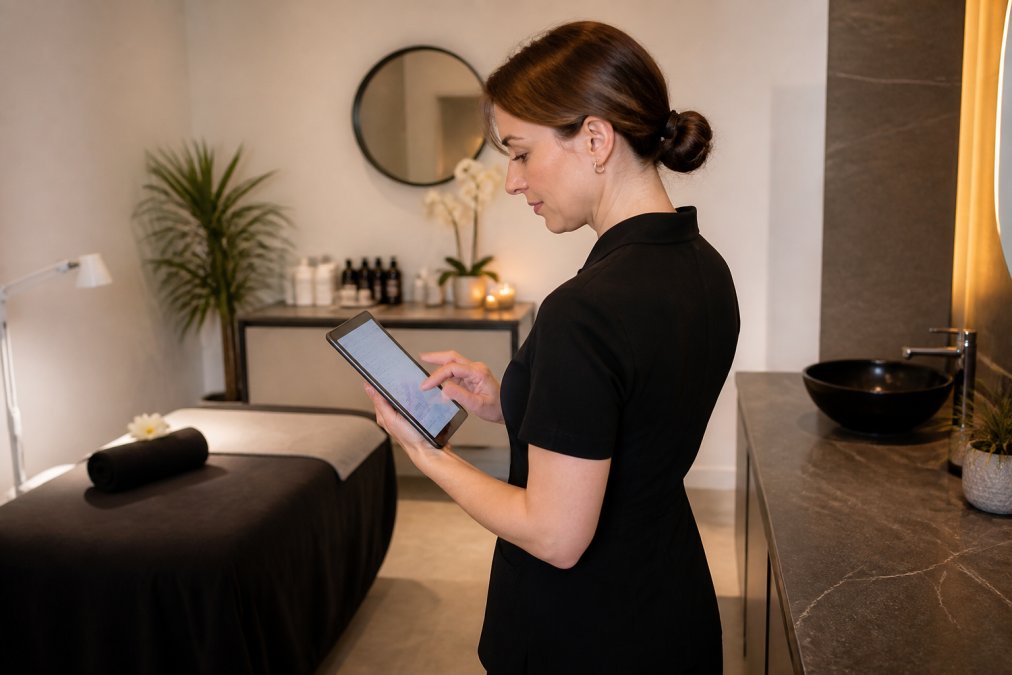
The right booking software does several things simultaneously. It shows clients available appointments in real-time, eliminating the back-and-forth of phone calls and emails. It routes clients toward available services based on their preferences and your facility's needs. It sends automated reminders, reducing no-shows. It captures intake information before clients arrive, simplifying check-in.
Capacity planning goes deeper. The software analyzes your use patterns and recommends pricing adjustments, service bundling, and scheduling changes. If your data shows that Tuesday afternoons are consistently empty, the system can recommend a discounted "Tuesday Special" or a themed package that fills those slots. If certain service combinations drive higher revenue, it can suggest those combinations to clients.
Integration with your point-of-sale system is critical. Your booking software should talk to your payment system, your client database, and your staff scheduling system. This creates a unified view of your business. When a client books an appointment, the system automatically reserves the room, alerts relevant staff, and sends confirmation emails. No double-booking. No confusion.
Many facilities underestimate the revenue impact of reducing no-shows. A 10% no-show rate means 10% of your treatment room capacity sits empty. Automated reminders, text, email, or both, can cut no-shows in half (peer-reviewed research). That's an immediate 5% use increase with zero additional marketing spend.
Start with a platform that's built for wellness facilities, not just general appointment scheduling. Wellness-specific software understands your service types, your pricing models, and your client experience. Generic scheduling tools often lack the flexibility you need for bundling, memberships, and recovery service workflows.
Monetizing idle treatment rooms requires a systematic approach: measure your current use, identify service combinations that clients value, implement bundling and membership models, optimize your facility layout and scheduling, integrate recovery services into your workflow, understand your legal obligations, and deploy technology that automates the entire process.
Eternall Wellness helps wellness facilities evaluate recovery technologies not just as equipment purchases, but as complete business solutions. With financing options available to preserve capital, you can expand your service offerings and create recurring revenue streams without straining your budget. The key is understanding your facility's specific use patterns, your client demand, and your operational capacity, then matching the right recovery systems to those realities. When you combine premium recovery equipment with smart scheduling and bundling strategy, idle treatment rooms become your highest-margin revenue source.
Frequently Asked Questions
Q: What is a realistic ROI timeline for adding recovery equipment to a wellness facility?
A: ROI depends on your utilization rate, pricing strategy, and facility size. Request a custom ROI analysis from your equipment provider based on your specific member count and pricing model.
Q: How do I know if my med spa has enough client demand for new recovery services?
A: Start by surveying existing clients about interest in recovery modalities like red light therapy or thermal systems. Review your current appointment gaps and idle time, if you have rooms sitting empty 30% or more of operating hours, you have capacity to fill. Test demand with a limited launch: offer one recovery service at a discounted rate for 60 days, track utilization, and measure member feedback before committing to full equipment investment.
Q: What legal and insurance issues should I address before adding recovery services?
A: Consult your business insurance provider about coverage for new equipment and services, hyperbaric chambers and thermal systems may require additional liability coverage. Review your facility's operating permits to confirm that new wellness modalities comply with local health department regulations. If you're considering sub-leasing idle rooms to independent practitioners, work with a healthcare attorney to draft proper agreements that protect your liability and define operational standards.
Q: How can I prevent my staff from getting overwhelmed with new service training?
A: Choose equipment providers that include comprehensive staff training and ongoing support. Implement a phased rollout: train one staff member thoroughly first, then have that person train others. Use appointment scheduling software to control booking volume during the training period, and create simple one-page operating guides for each piece of equipment. Start with one recovery modality rather than adding multiple services at once.
This article was written using GrandRanker