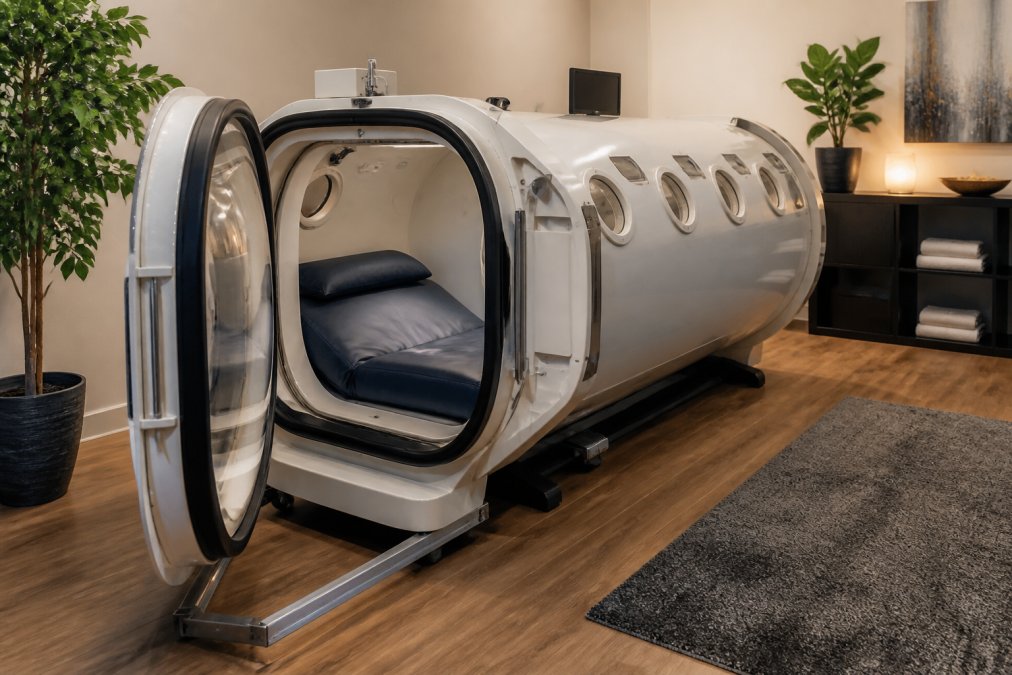
 listicle
Commercial Grade Hyperbaric Chambers: 2026 Buyer Guide
Table of Contents
- Commercial Grade Hyperbaric Chambers: What Defines Them
- Hard-Shell vs. Soft-Shell: Which Commercial Chamber Is Right for You?
- FDA Approved Hyperbaric Chambers for Sale: What Clearance Really Means
- Top Commercial Chambers on the Market
- ROI of Hyperbaric Oxygen Therapy for Med Spas
- Hyperbaric Chamber Installation Requirements and Space Planning
- Financing, Warranty, and Total Cost of Ownership
- Making the Final Decision: A Checklist for Buyers
- Frequently Asked Questions
Last Updated: September 8, 2026
Commercial Grade Hyperbaric Chambers: What Defines Them
A commercial grade hyperbaric chamber is a medical or wellness device engineered for continuous, high-volume operation in professional facilities, distinguished from home-use units by stricter safety certifications, higher pressure capabilities, and durable construction. When you purchase commercial grade hyperbaric chambers, you are investing in equipment that must withstand daily pressurization cycles while maintaining patient safety and clinical-grade performance. At Eternall Wellness, we help gyms, med spas, and wellness clinics evaluate these systems not just as equipment, but as revenue-generating services.
The distinction matters because the market is crowded with units that look similar but perform very differently under commercial load. A chamber built for occasional home use will fail when subjected to back-to-back sessions across a 12-hour operating day. Commercial units feature industrial compressors, medical-grade oxygen delivery systems, and chamber interiors designed for repeated cleaning and disinfection between clients.
What separates true commercial equipment from consumer products comes down to three factors: certification standards, duty cycle ratings, and service infrastructure. The FDA classification of hyperbaric chambers treats chambers differently based on intended use, and that regulatory distinction should anchor your purchasing decision.
Hard-Shell vs. Soft-Shell: Which Commercial Chamber Is Right for You?
The fundamental choice when you purchase commercial grade hyperbaric chambers is between rigid hard-shell units and inflatable soft-shell designs. Hard-shell chambers, typically constructed from steel or aluminum, support higher pressure levels (often up to 3.0 ATA) and are considered the clinical standard for medical applications. Soft-shell chambers, made from reinforced fabric, generally operate at lower pressures around 1.3 to 1.5 ATA and are popular in wellness settings.
Here is where the decision gets practical:
- Hard-shell monoplace chambers accommodate one patient lying flat, offer superior pressure control, and dominate hospital and clinical environments
- Hard-shell multiplace chambers hold multiple patients plus an attendant, requiring substantially more space and higher installation costs
- Soft-shell chambers cost less upfront, inflate around a seated or reclining patient, and suit wellness centers offering introductory hyperbaric oxygen therapy sessions
For med spas and wellness clinics, the pressure ceiling directly determines which therapeutic protocols you can offer. Lower-pressure soft-shell systems limit your ability to serve clients seeking more intensive sessions, which constrains your pricing flexibility and clinical credibility.
FDA Approved Hyperbaric Chambers for Sale: What Clearance Really Means
When buyers search for FDA approved hyperbaric chambers for sale, they often misunderstand what regulatory status actually signifies. The FDA does not "approve" chambers in the way it approves pharmaceuticals. Instead, it classifies devices and requires clearance through the 510(k) pathway or premarket approval for specific indications.
A chamber that is FDA cleared has demonstrated substantial equivalence to a legally marketed predicate device. This clearance is tied to specific intended uses, and the FDA guidance on hyperbaric oxygen therapy devices outlines which medical conditions qualify for coverage. For wellness applications, the regulatory picture is different: facilities offering "wellness" or "relaxation" sessions typically operate outside FDA-cleared medical indications, which creates a gray zone buyers must understand.
What matters for commercial buyers is whether the chamber is manufactured to recognized standards, including ASME certification for pressure vessels and UL listing for electrical safety. These certifications, combined with FDA clearance where applicable, form the compliance foundation for liability protection and insurance eligibility.
Top Commercial Chambers on the Market
The commercial hyperbaric market offers several established manufacturers, each with distinct strengths.
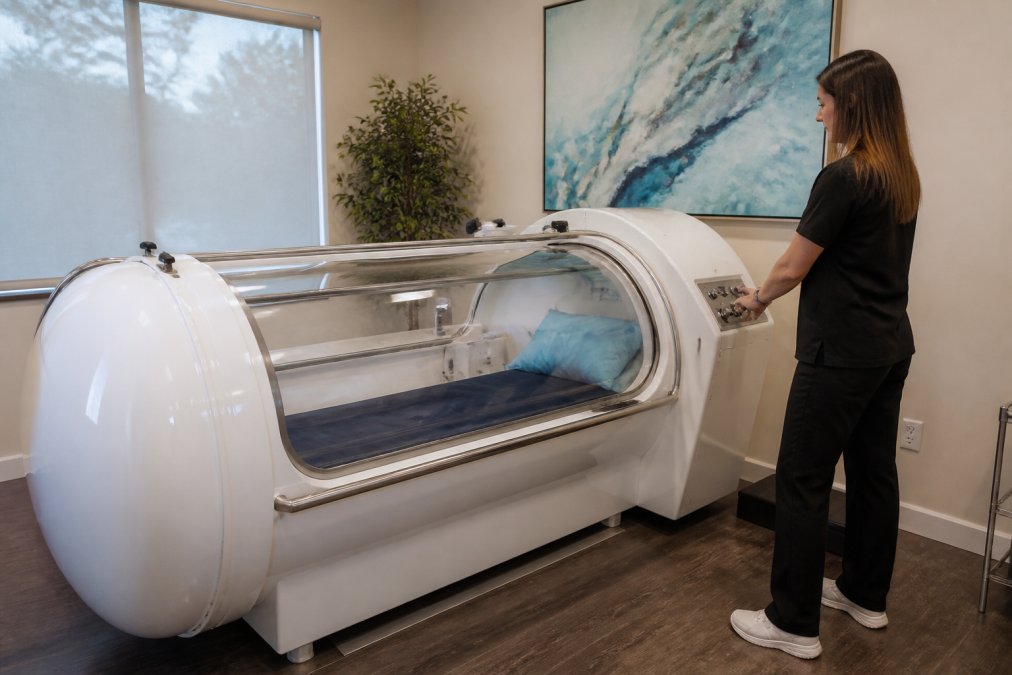
Sechrist Model 3600: The Clinical Standard
Sechrist has built its reputation in hospital and clinical settings, and the Model 3600 monoplace chamber reflects that pedigree. It is a large-bore, hard-shell unit that accommodates patients up to a substantial weight capacity with a spacious chamber interior that reduces claustrophobia. The chamber operates at therapeutic pressure levels suitable for FDA-cleared indications.
The tradeoff is cost. Sechrist units command a premium, and the installation requirements are significant. You need dedicated space, reinforced flooring, and professional installation. This is the right choice for clinics pursuing insurance reimbursement for medically indicated hyperbaric oxygen therapy, where clinical credentials directly drive revenue.
Reimers Systems: Customizable Multiplace Options
Reimers Systems offers customizable multiplace chambers, which allow multiple patients to receive treatment simultaneously under attendant supervision.
Reimers builds to ASME standards and offers extensive customization, from chamber dimensions to oxygen delivery systems. The downside is lead time and cost. Multiplace systems require a larger capital commitment and more complex facility planning than monoplace alternatives. For hospitals and large clinics treating diverse patient populations, the investment often justifies itself through higher daily patient throughput.
OxyHealth: Popular for Wellness Centers
OxyHealth offers soft-shell and semi-rigid designs marketed to med spas and recovery studios. Their chambers are widely distributed and carry a lower price point than clinical hard-shell units, making them accessible to facilities entering the hyperbaric market.
The limitation is pressure. OxyHealth's wellness-focused units typically operate at lower ATA levels, which restricts the protocols you can offer. For facilities positioning hyperbaric as a premium wellness add-on rather than a medical service, however, these chambers offer an accessible entry point with established brand recognition.
| Chamber | Type | Best For | Key Limitation |
|---|---|---|---|
| Sechrist Model 3600 | Hard-shell monoplace | Clinical/hospital use | High cost, complex installation |
| Reimers Systems | Hard-shell multiplace | High-volume clinical ops | Large footprint, long lead times |
| OxyHealth | Soft-shell/semi-rigid | Wellness centers | Lower pressure ceiling |
ROI of Hyperbaric Oxygen Therapy for Med Spas
The ROI of hyperbaric oxygen therapy for med spas depends on three variables: session pricing, use rate, and operating costs. Unlike clinical facilities that bill insurance, med spas typically charge per session as a cash-based wellness service, which simplifies revenue modeling but requires strong client demand.
A realistic framework for evaluating ROI starts with session capacity. A monoplace chamber running 6 sessions per day, 6 days per week, generates roughly 144 billable sessions monthly. The revenue potential depends entirely on your market positioning and local demand. The American Med Spa Association industry resources provide benchmarking data on service pricing and use that can inform your projections.
Operating costs include oxygen supply, chamber maintenance, staffing, and utilities. Oxygen concentrators reduce recurring oxygen costs compared to cylinder delivery, and modern chambers increasingly integrate concentrators to control this expense. Staffing requirements are modest: one trained operator can manage chamber sessions while monitoring clients, but training costs and certification time must factor into your startup budget.
Hyperbaric Chamber Installation Requirements and Space Planning
Hyperbaric chamber installation requirements extend far beyond finding an empty room. These are pressure vessels with specific electrical, ventilation, and safety demands that must be addressed before delivery. Facilities that skip proper planning face costly delays and potential code violations.
Space planning starts with the chamber envelope plus clearance zones. A monoplace hard-shell chamber typically requires a room of at least 150 to 200 square feet when you account for the unit footprint, operator workspace, and client access. Multiplace chambers demand significantly more. Ceiling height matters for chambers with vertical loading, and floor loading capacity must accommodate the chamber weight plus oxygen supply equipment.
Ventilation is a critical and often overlooked requirement. Hyperbaric chambers require dedicated airflow to manage oxygen levels in the room and prevent oxygen accumulation. The NFPA standards for hyperbaric facilities specify ventilation rates and fire safety requirements that commercial facilities must meet. Your local building department and fire marshal will enforce these standards during permitting.
Electrical requirements vary by chamber type but generally include dedicated circuits with adequate amperage for compressors and control systems. Soft-shell chambers are more forgiving on installation, often operating on standard electrical service, while hard-shell systems may require upgraded service panels.
Financing, Warranty, and Total Cost of Ownership
The purchase price of commercial hyperbaric chambers tells only part of the financial story. Total cost of ownership (TCO) includes installation, ongoing maintenance, oxygen supply, training, and eventual component replacement. Buyers who focus solely on sticker price routinely underestimate their five-year costs by a significant margin.
Financing options have expanded as the wellness industry has grown, and many facilities now preserve capital by leasing or financing equipment rather than paying cash. Eternall Wellness offers financing options that allow facilities to acquire hyperbaric chambers while preserving working capital for marketing, staffing, and facility improvements. This approach treats the chamber as a revenue-generating asset rather than a capital expense.
Warranty coverage varies meaningfully between manufacturers. Standard warranties typically cover the chamber structure and pressure components for one to three years, with consumable parts like seals and gaskets excluded. Extended service agreements are worth evaluating for hard-shell units where component failure means significant downtime. Ask every manufacturer for a detailed warranty document before purchasing, not a summary sheet.
Maintenance costs scale with chamber complexity. Hard-shell chambers require periodic certification and inspection of pressure components, while soft-shell units have simpler maintenance profiles but shorter lifespans under heavy commercial use. Factor replacement costs for soft-shell chambers into your long-term financial model.
Making the Final Decision: A Checklist for Buyers
Before you purchase commercial grade hyperbaric chambers, work through this checklist to ensure your investment aligns with your business model, facility constraints, and revenue goals.
- Define your clinical vs. wellness positioning and confirm the chamber's pressure capabilities match your intended protocols
- Verify FDA clearance status and read the actual clearance letter for your intended use
- Confirm ASME certification, UL listing, and compliance with NFPA facility standards
- Conduct a professional site survey to validate space, electrical, ventilation, and floor loading requirements
- Model your ROI using realistic session pricing, use rates, and marketing costs
- Compare total cost of ownership across manufacturers, including installation, maintenance, and consumables
- Review warranty terms in detail and evaluate extended service agreements
- Confirm financing terms and ensure monthly payments align with projected cash flow
- Verify the manufacturer's service response time and parts availability in your region
- Research the manufacturer's longevity and commitment to the hyperbaric market
The decision ultimately comes down to matching the chamber to your business model. A clinical practice pursuing insurance reimbursement needs a hard-shell, FDA-cleared system with the documentation to support claims. A med spa offering wellness sessions can succeed with a lower-pressure unit that fits a smaller budget and simpler installation. There is no universally correct answer, only the right answer for your specific operation.
Purchasing commercial hyperbaric chambers is a significant capital decision that affects your facility's operations, compliance posture, and revenue potential for years. The equipment must match your clinical capabilities, your space constraints, and your financial model. Eternall Wellness helps gyms, med spas, and wellness clinics evaluate hyperbaric technology as a business investment, not just an equipment purchase. Our team supports you through ROI modeling, financing options, and integration planning so your chamber becomes a reliable revenue stream rather than an idle asset. Get started with Eternall Wellness and build a hyperbaric service that pays for itself.
Frequently Asked Questions
How much does a commercial hyperbaric chamber cost?
Pricing for commercial-grade chambers varies significantly based on size, configuration, and certifications. For accurate, current pricing on commercial systems, contact Eternall Wellness directly for a quote tailored to your facility's needs.
What is the difference between mild and hard-shell hyperbaric chambers?
Hard-shell chambers are typically constructed from steel or aluminum and can achieve higher pressures, usually up to 3.0 ATA. They are considered clinical grade and are often FDA cleared for specific medical conditions. Mild or soft-shell chambers use a zippered fabric bag and typically pressurize with ambient air to lower levels, around 1.3 ATA, which is not considered clinical treatment.
What are the FDA requirements for commercial hyperbaric chambers?
Hyperbaric chambers are regulated as medical devices by the FDA. For a chamber to be legally marketed for medical treatment in the U.S., it must have FDA clearance, typically through the 510(k) pathway. This means the manufacturer must demonstrate the device is substantially equivalent to a legally marketed device. Always verify a chamber's FDA clearance status before purchase.
Do I need a medical license to operate a commercial hyperbaric chamber?
Operating a commercial hyperbaric chamber for medical purposes typically requires oversight by a licensed physician, though specific regulations vary by state. The chamber itself must be operated by trained technicians who understand hyperbaric medicine and safety protocols. Many facilities hire a medical director to supervise treatments and ensure compliance with healthcare regulations.