 ultimate-guide
Red Light Therapy for Gyms: 7 Business Benefits
Table of Contents
- What Red Light Therapy Is and How It Works for Gym Members
- 7 Proven Benefits of Red Light Therapy for Gym Recovery
- Red Light Therapy Session Duration and Optimal Wavelengths
- Gym Recovery Zone Ideas: Creating a Premium Recovery Space
- How to Add Recovery Services to Your Gym
- Red Light Therapy and Member Retention: The Business Case
- Safety, Contraindications, and Medical Screening
- Conclusion
Last Updated: August 29, 2026
What Red Light Therapy Is and How It Works for Gym Members
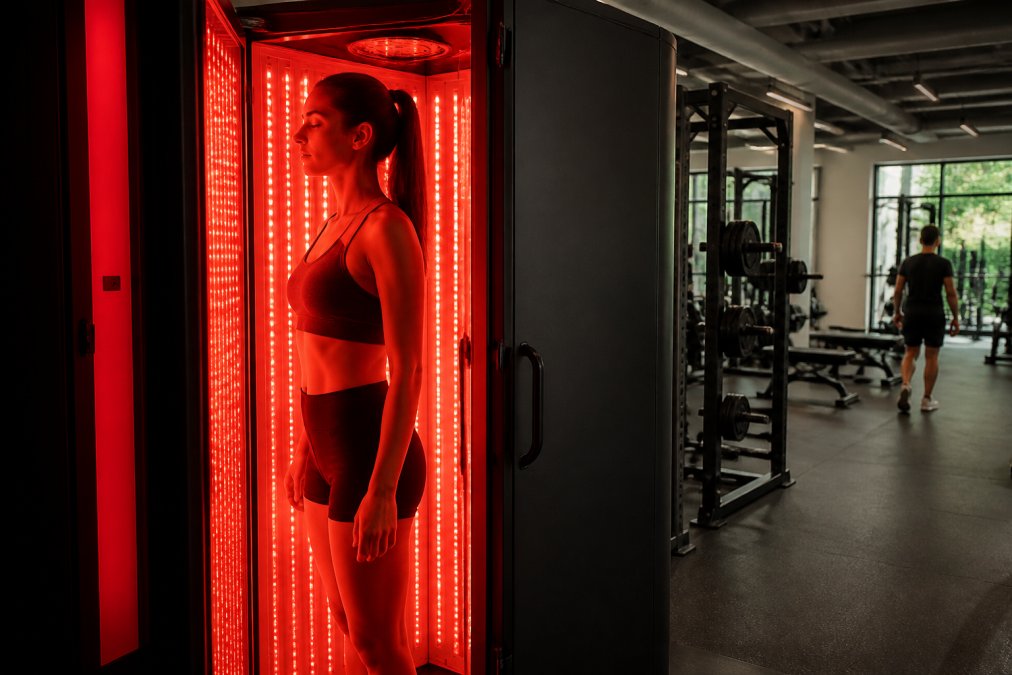
Red light therapy for gyms is a recovery modality that uses specific wavelengths of light, typically between 600 and 1,000 nanometers, to stimulate cellular function and accelerate recovery (peer-reviewed research). The mechanism centers on photobiomodulation, a process where light energy penetrates tissue and interacts with mitochondria, the energy-producing structures within cells.
When red and near-infrared light reaches muscle tissue, it stimulates the production of adenosine triphosphate (ATP), the primary energy currency of cells (peer-reviewed research). This increased ATP production enhances cellular repair mechanisms and reduces oxidative stress, the cellular damage that accumulates after intense exercise. The result is faster recovery, reduced inflammation, and improved muscle function.
For gym owners, understanding the science matters less than understanding the outcome: members experience tangible recovery benefits that keep them coming back. The technology is non-invasive, requires minimal staff training, and fits naturally into existing gym workflows. Eternall Wellness has helped facilities integrate red light therapy systems into their recovery zones, turning idle space into revenue-generating services that differentiate their offering in a competitive market.
The wavelengths matter significantly. Red light (600-700 nanometers) penetrates skin effectively and benefits surface-level tissue and collagen production. Near-infrared light (700-1,100 nanometers) penetrates deeper, reaching muscle and bone tissue. Most commercial systems combine both wavelengths to deliver comprehensive recovery benefits.
7 Proven Benefits of Red Light Therapy for Gym Recovery
The business case for adding red light therapy rests on seven core benefits that members actively seek and will pay for as a premium service. Each benefit translates directly into member retention and new client acquisition when positioned correctly.
Faster Muscle Recovery and Reduced Soreness
Red light therapy accelerates the recovery process by enhancing cellular repair and reducing delayed onset muscle soreness (DOMS), that post-workout soreness that peaks 24-48 hours after intense training (peer-reviewed research). The mechanism involves reducing inflammation markers and improving blood flow to affected tissue, which clears metabolic waste products that contribute to soreness.
Members who experience less soreness are more likely to maintain consistent training frequency. They return to the gym sooner, train harder, and progress faster. This directly impacts membership retention because consistency drives results, and results drive loyalty. A member who trains three times per week consistently will renew their membership. A member who takes five days off between sessions because of soreness is a churn risk.
The practical benefit: members using red light therapy post-workout report noticeable reduction in soreness within 24-48 hours. This is the benefit they feel immediately and talk about to other members. It becomes a word-of-mouth driver for your recovery services.
Improved Muscle Endurance and Performance
Red light therapy enhances muscle endurance capacity by improving mitochondrial function and ATP production. Muscles with better energy production sustain effort longer before fatigue sets in. This translates to more reps, longer sets, or higher intensity before hitting failure.
For gym members, this means measurable performance improvements: they can complete more repetitions in their final set, maintain higher intensity during cardio sessions, or push through training plateaus. These improvements compound over weeks and months, creating the progress that keeps members engaged.
The business angle: members see performance gains attributed to your facility's recovery services. They associate your gym with results. This becomes part of your competitive positioning, not just a place to lift, but a place where recovery technology helps them perform better.
Skin Health and Collagen Benefits
Red light therapy stimulates dermal collagen density and improves skin texture through increased fibroblast activity and collagen synthesis. This benefit extends beyond the gym to overall wellness, which appeals to members seeking holistic health outcomes.
Members notice improved skin clarity, reduced appearance of fine lines, and better skin texture within 4-6 weeks of consistent red light exposure. This secondary benefit creates additional reasons to use the service and positions your gym as a comprehensive wellness destination rather than just a training facility.
For med spas and aesthetic-focused facilities, this benefit directly supports your core business. Red light therapy complements existing skincare services and creates natural cross-selling opportunities.
Reduced Inflammation and Cellular Repair
Red light therapy reduces systemic inflammation by decreasing pro-inflammatory cytokines and activating anti-inflammatory pathways. This extends recovery benefits beyond muscle soreness to overall body recovery and joint health.
Members with chronic inflammation, joint issues, or general recovery needs see measurable improvements in mobility, pain levels, and overall recovery status. This appeals to a broader demographic than just high-intensity trainers, it attracts members seeking general wellness and longevity benefits.
The cellular repair mechanism also supports tissue regeneration, which benefits members recovering from minor injuries or managing chronic conditions. This positions your recovery zone as a therapeutic asset, not just a performance enhancement tool.
Red Light Therapy Session Duration and Optimal Wavelengths
Effective red light therapy sessions typically run 10-20 minutes for most applications, with 15 minutes serving as an optimal baseline for post-workout recovery. Session duration depends on light intensity, distance from the source, and the specific wavelength combination.
Higher-intensity systems can deliver results in shorter sessions, some premium systems achieve effective recovery stimulation in 8-10 minutes. Lower-intensity systems may require 20-30 minutes to deliver comparable benefits. The key variable is total photon dose, measured in joules per square centimeter (J/cm²).
Most research on muscle recovery uses wavelength combinations that include both red light (630-700 nanometers) and near-infrared light (800-1,000 nanometers). Red light addresses surface tissue and skin benefits. Near-infrared penetrates deeper into muscle and bone. The combination provides comprehensive cellular stimulation.
For gym implementation, session duration matters operationally. Shorter, effective sessions allow higher member throughput and reduce equipment idle time. A 15-minute standard creates natural spacing between members and keeps your recovery zone flowing efficiently throughout the day.
Gym Recovery Zone Ideas: Creating a Premium Recovery Space
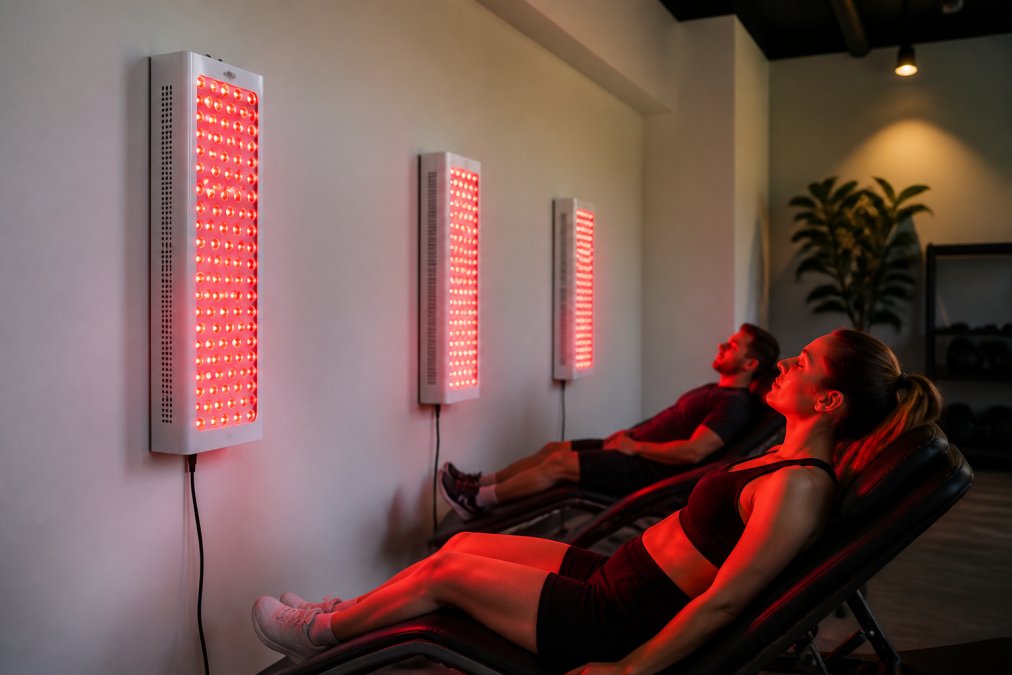
A dedicated recovery zone transforms unused gym space into a premium member amenity that generates consistent revenue. The physical layout matters, it should feel distinct from the training floor, communicate wellness and recovery, and accommodate multiple members simultaneously.
Effective recovery zones combine red light therapy with complementary modalities: contrast therapy (hot and cold exposure), compression therapy, stretching areas, and quiet recovery spaces. This multi-modality approach appeals to members seeking comprehensive recovery and justifies premium pricing.
The lighting design is critical. Red light therapy panels should be mounted at heights that allow standing or seated positioning, typically 12-24 inches from the body. Ambient lighting should be warm and inviting, this is a recovery space, not a clinical treatment room. Many facilities use soft overhead lighting combined with the therapeutic red light to create an experience that feels both professional and rejuvenating.
Space allocation typically ranges from 200-400 square feet for a functional recovery zone. This accommodates 4-6 members simultaneously, creates natural session flow, and justifies the equipment investment through use. Smaller gyms can start with 100-150 square feet and expand as demand grows.
Eternall Wellness helps facilities design recovery zones that maximize member experience and operational efficiency. The goal is creating a space where members want to spend time, feel the benefits, and see recovery as a natural extension of their training.
How to Add Recovery Services to Your Gym
Adding recovery services requires three core decisions: equipment selection, service pricing, and staff training. Each decision impacts member adoption and revenue generation.
Start by assessing member demand. Survey your existing members about recovery priorities. Do they experience soreness? Are they interested in performance enhancement? Do they value skin health benefits? This feedback directly informs which recovery modalities to prioritize and how to position them in marketing.
Equipment selection should balance member benefits with operational simplicity. Red light therapy systems range significantly in sophistication and price point. Entry-level systems are straightforward to operate, members typically manage their own sessions with minimal staff involvement. More advanced systems may require staff-assisted positioning or integration with other modalities.
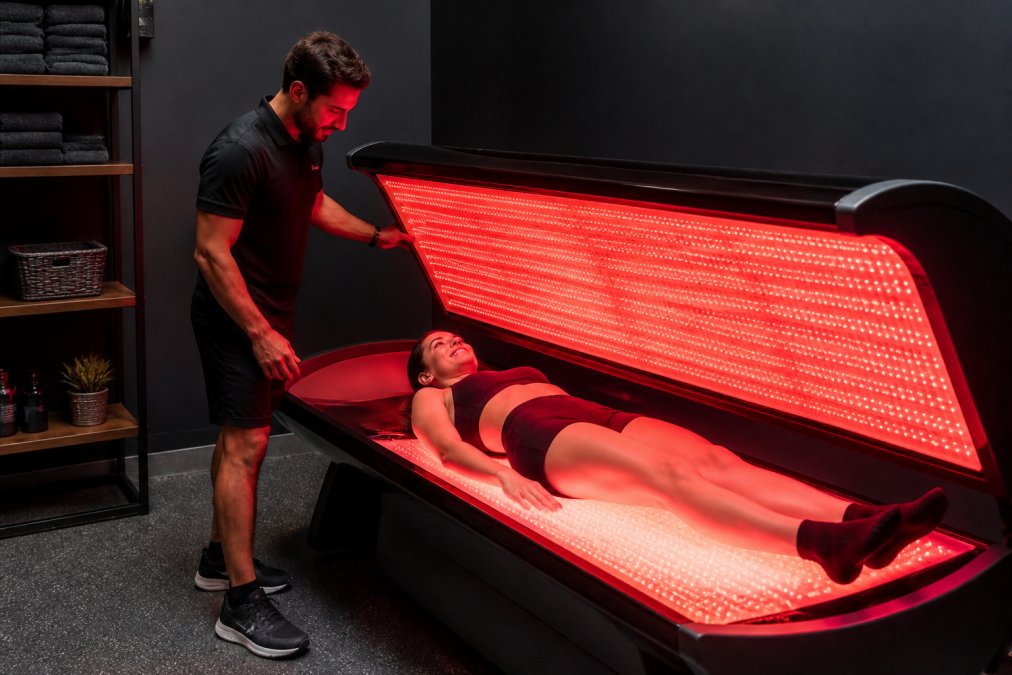
Staff training is essential but straightforward. Most red light therapy systems require only basic instruction: positioning, session duration, safety considerations. Staff should understand the benefits well enough to explain them to members and answer basic questions. This typically requires 30-60 minutes of training per staff member.
Pricing strategy determines revenue potential. Recovery services can be offered as standalone purchases, membership add-ons, or bundled with training packages. The pricing depends on your market, member demographics, and competitive positioning. Premium facilities charge more; value-focused gyms price lower but emphasize accessibility.
Marketing the service requires education. Most members don't understand red light therapy initially. Content that explains the science, shows recovery benefits, and demonstrates how it complements training drives adoption. Video testimonials from members experiencing results are particularly effective.
Eternall Wellness supports facilities through this entire process, from equipment selection and financing to service positioning and member communication. The goal is moving beyond equipment ownership to building a sustainable recovery service that members value and use consistently.
Red Light Therapy and Member Retention: The Business Case
Member retention is the highest-use metric in gym operations. Retaining existing members costs a fraction of acquiring new ones, and retained members generate predictable recurring revenue. Recovery services directly impact retention by enhancing member results and creating additional reasons to visit the facility.
Members who experience faster recovery and better performance progress faster. Faster progress builds confidence and motivation. Motivated members renew their memberships. The recovery service becomes the differentiator that keeps members from churning to a competitor.
Recovery services also create new revenue streams beyond membership fees. Members pay for individual sessions or recovery add-ons. These services increase member lifetime value, the total revenue generated from a member across their entire relationship with your facility.
The competitive advantage is significant. Most gyms don't offer professional recovery services. Adding red light therapy positions your facility as serious about member results. It attracts performance-focused members willing to pay premium membership rates and use additional paid services.
For smaller gyms, recovery services solve a critical problem: how to compete against large chains without matching their size or equipment variety. A well-executed recovery zone creates a unique member experience that chains can't replicate. It becomes your signature offering.
The retention math is straightforward. If recovery services increase average member tenure by three months, that's three additional months of membership revenue per member. At typical gym membership rates, that's several hundred dollars per member annually. Across a 500-member facility, that's tens of thousands in additional annual revenue from improved retention alone.
Safety, Contraindications, and Medical Screening
Red light therapy is generally well-tolerated, but specific contraindications require screening. Members taking photosensitizing medications, certain antibiotics, anti-inflammatories, and psychiatric medications, may experience adverse reactions. These members should consult their physician before using red light therapy.
Thyroid conditions require caution. While red light therapy doesn't directly affect thyroid function, members with thyroid issues should avoid direct light exposure to the neck area. Positioning guidance during sessions prevents this issue.
Eye safety is often misunderstood. Red light therapy doesn't damage eyes when used at appropriate distances and intensities, but direct eye exposure should be avoided. Standard positioning, light directed at the body, not the face, eliminates this concern entirely.
Pregnancy is a relative contraindication. While red light therapy isn't harmful to pregnancy, insufficient research exists to recommend it as a safe intervention during pregnancy. Pregnant members should consult their healthcare provider before using the service.
Skin conditions like active dermatitis or severe acne may be aggravated by heat from light exposure. Members with these conditions should start conservatively or consult a dermatologist.
Medical screening doesn't require extensive questionnaires. A simple intake form asking about medications, thyroid conditions, pregnancy, and serious medical conditions captures the necessary information. Members with contraindications can still use your gym; they simply don't use the recovery service.
This screening process protects both members and your facility. It demonstrates professional responsibility and reduces liability risk. Eternall Wellness provides guidance on appropriate screening protocols that comply with industry standards and protect your facility.
Adding red light therapy to your gym addresses a fundamental member need: faster recovery and better results. Members who recover faster train more consistently, progress faster, and stay longer. Recovery services generate additional revenue while strengthening member loyalty.
The business case is clear: recovery services differentiate your facility, increase member lifetime value, and create competitive advantage. Eternall Wellness helps you implement these services strategically, not just as equipment, but as a revenue-generating service that supports your core business. Get started with Eternall Wellness and transform underutilized space into a member retention engine that drives consistent, predictable revenue growth.
=== FAQ ANSWERS (audit these too, same rules) ===
[1] Q: Does red light therapy at the gym actually work for muscle recovery? A: Red light therapy works by stimulating mitochondrial function and ATP production at the cellular level, which supports faster tissue regeneration and reduced muscle soreness. Research shows near-infrared light wavelengths (typically 600-1000 nanometers) penetrate muscle tissue and reduce oxidative stress from intense workouts. Results vary by individual, session duration, and wavelength used, but many gym members report noticeable improvements in recovery time and reduced delayed onset muscle soreness (DOMS) within 2-3 weeks of consistent use.
[2] Q: How long should a typical red light therapy session last for gym members? A: Most effective gym sessions range from 10-20 minutes per session, 3-5 times per week. Optimal session duration depends on the device's wavelength and power output, higher-power systems may require shorter exposure, while lower-power devices may need longer sessions. Starting with 10-15 minutes allows members to assess tolerance and results. Sessions immediately post-workout or within 2 hours of training tend to produce the best outcomes for muscle recovery and inflammation reduction. Consistency matters more than duration; regular shorter sessions outperform occasional longer ones.
[3] Q: Can red light therapy help improve gym member retention rates? A: Yes. Red light therapy serves as a premium differentiator that justifies membership renewal and attracts members seeking advanced recovery options. Facilities offering red light therapy can experience increased member engagement, extended facility visit duration, and higher perceived value of their membership. The service creates a compelling reason for members to stay longer post-workout and return more frequently. When positioned as part of a comprehensive recovery zone alongside other modalities, red light therapy strengthens retention by addressing a key member pain point: faster, more effective recovery between training sessions.
[4] Q: What safety considerations should gyms know about red light therapy equipment? A: Red light therapy is generally safe for most users, but gyms should screen members for contraindications including active cancer, certain medications that increase photosensitivity, and recent eye surgery. Proper wavelength selection (therapeutic ranges: 600-700 nanometers for superficial effects, 700-1000 nanometers for deeper tissue penetration) and distance from the device are critical. Staff should be trained on proper positioning, session duration, and when to refer members to their healthcare provider before use. Equipment should meet electrical safety standards and be regularly maintained. Gyms should also establish clear liability protocols and ensure members understand the equipment is a wellness tool, not a medical device.
Frequently Asked Questions
Does red light therapy at the gym actually work for muscle recovery?
Red light therapy works by stimulating mitochondrial function and ATP production at the cellular level, which supports faster tissue regeneration and reduced muscle soreness. Research shows near-infrared light wavelengths (typically 600-1000 nanometers) penetrate muscle tissue and reduce oxidative stress from intense workouts. Results vary by individual, session duration, and wavelength used, but many gym members report noticeable improvements in recovery time and reduced delayed onset muscle soreness (DOMS) within 2-3 weeks of consistent use.
How long should a typical red light therapy session last for gym members?
Most effective gym sessions range from 10-20 minutes per session, 3-5 times per week. Optimal session duration depends on the device's wavelength and power output, higher-power systems may require shorter exposure, while lower-power devices may need longer sessions. Starting with 10-15 minutes allows members to assess tolerance and results. Sessions immediately post-workout or within 2 hours of training tend to produce the best outcomes for muscle recovery and inflammation reduction. Consistency matters more than duration; regular shorter sessions outperform occasional longer ones.
Can red light therapy help improve gym member retention rates?
Yes. Red light therapy serves as a premium differentiator that justifies membership renewal and attracts members seeking advanced recovery options. Facilities offering red light therapy can experience increased member engagement, extended facility visit duration, and higher perceived value of their membership. The service creates a compelling reason for members to stay longer post-workout and return more frequently. When positioned as part of a comprehensive recovery zone alongside other modalities, red light therapy strengthens retention by addressing a key member pain point: faster, more effective recovery between training sessions.
What safety considerations should gyms know about red light therapy equipment?
Red light therapy is generally safe for most users, but gyms should screen members for contraindications including active cancer, certain medications that increase photosensitivity, and recent eye surgery. Proper wavelength selection (therapeutic ranges: 600-700 nanometers for superficial effects, 700-1000 nanometers for deeper tissue penetration) and distance from the device are critical. Staff should be trained on proper positioning, session duration, and when to refer members to their healthcare provider before use. Equipment should meet electrical safety standards and be regularly maintained. Gyms should also establish clear liability protocols and ensure members understand the equipment is a wellness tool, not a medical device.
This article was written using GrandRanker