 How-to
7 Legal Risks of Operating a Hyperbaric Wellness Center
Last Updated: November 9, 2026
Quick Summary
Hyperbaric wellness centers face legal risks from FDA device rules, advertising claims, fire code, operator training, informed consent and insurance gaps. Equipment may be legal to own, but how you describe, operate and document it carries legal weight.
- Check the chamber's FDA clearance and labeling before offering any service.
- Keep marketing claims tied to documented evidence and avoid guaranteeing results.
- Pressurized oxygen lowers ignition temperatures, so fire code review is essential.
- Document operator training and run emergency drills at least once a year.
- Ask your broker about hyperbaric or pressurized-vessel exclusions in general liability policies.
Table of Contents
- Why Hyperbaric Wellness Centers Face Unusual Legal Exposure
- FDA Device Classification and Hyperbaric Oxygen Therapy Regulations
- Advertising Claims That Create Liability
- Hyperbaric Chamber Fire Safety and Fire Code Compliance
- Operator Training, Emergency Procedures and Standard of Care
- Informed Consent, Insurance and Liability Coverage
- Securing Your Hyperbaric Center's Compliance Before Opening
- Frequently Asked Questions
Hyperbaric wellness centers operate in a legal gray zone that many owners underestimate until a complaint, inspection or lawsuit arrives. FDA device database and classification records are the starting point for anyone trying to understand which rules apply to a hyperbaric chamber. Eternall Wellness supplies hyperbaric chambers and other recovery systems to gyms, spas, med spas and clinics. The short version: the equipment may be legal to own, but how you describe it, who uses it and how you document each session all carry legal weight.
This article walks through seven legal risks. Each one is a place where a well-meaning center can run into trouble. We cover federal device rules, advertising claims, fire code, operator training, informed consent, insurance and the steps to take before you open.
Why Hyperbaric Wellness Centers Face Unusual Legal Exposure
A hyperbaric wellness center sits between medicine and consumer wellness. That mix creates exposure that a typical gym or spa does not face. The equipment pressurizes a sealed space, uses concentrated oxygen and can cause injury if something fails. At the same time, the services are often marketed directly to healthy adults who want recovery or better sleep.
Regulators and courts tend to ask two questions: what the device is cleared to do, and what the business actually claims it does. When those answers differ, liability follows.
- The device is regulated, not just sold as furniture.
- Marketing language can turn a wellness service into a medical claim.
- Pressurized oxygen creates physical safety and fire risks.
- Customers may be injured, so records and consent matter.
FDA Device Classification and Hyperbaric Oxygen Therapy Regulations
Hyperbaric chambers are medical devices under federal law. The U.S. Food and Drug Administration device classification database lists the clearance status and intended use for each product. For the specific legal requirements that apply to operating these chambers, see the regulations guide. Your chamber's labeling defines what it is legally allowed to do, and you should keep a copy of that labeling on file.
Most hyperbaric chambers sold for wellness use are cleared under specific indications. Using a device outside those indications is not automatically illegal for every clinician, but it changes your risk profile considerably. Talk with a healthcare attorney before offering any service the labeling does not describe.
Class II Clearance, Prescription Use and Off-Label Use
Many hyperbaric systems fall into a Class II category, which usually requires premarket clearance. Clearance tells you what the manufacturer proved to the FDA. It does not automatically cover every service a center might want to offer.
Watch for these three terms when you review equipment:
- Prescription use: Some systems are labeled for use under a physician's order.
- Off-label use: Using a device for a purpose outside its cleared indications.
- Non-indicated conditions: Health conditions the labeling does not mention.
A common mistake is assuming that a device sold to wellness buyers is cleared for wellness claims. Check the labeling before you write a single sales sentence.
Advertising Claims That Create Liability
Advertising is where many centers get into trouble fastest. A claim like "improves recovery" or "boosts immunity" can be read as a medical promise. The Federal Trade Commission guidance on health claims applies to substantiation requirements for health-related advertising, and state consumer protection laws add their own standards.
Hyperbaric oxygen therapy advertising claims deserve special attention because customers often arrive with health expectations. Keep every claim tied to documented evidence, and avoid promising outcomes for conditions the device is not labeled to treat.
- Avoid naming diseases unless the labeling supports that use.
- Keep testimonials accurate and disclose any compensation.
- Do not guarantee results.
Hyperbaric Chamber Fire Safety and Fire Code Compliance
Fire safety is a legal risk that wellness operators can overlook. A pressurized chamber holds an oxygen-enriched atmosphere. Oxygen itself does not burn, but at higher partial pressures it dramatically lowers the ignition temperature of fabrics, hair products, hand sanitizer, electronics and even some metals, and it accelerates flame spread. A spark that would be trivial in a spa room can become a flash fire inside a chamber.
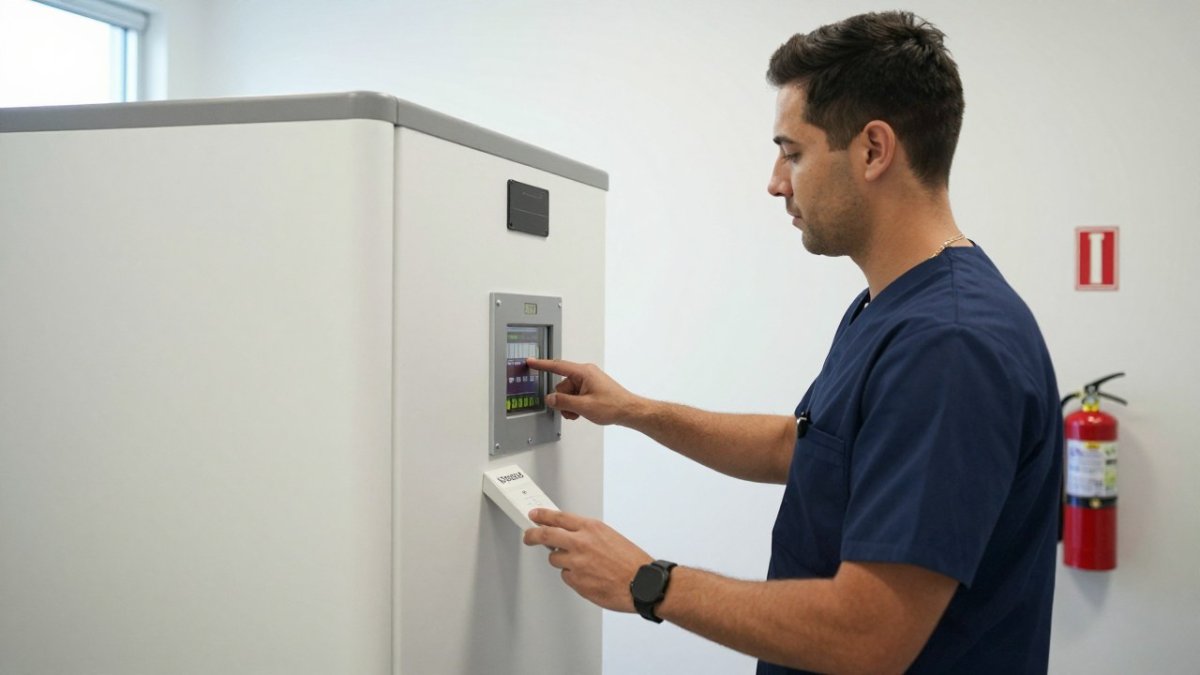
The applicable framework is layered. The National Fire Protection Association standards publishes NFPA 99, the Health Care Facilities Code, which addresses hyperbaric facilities and oxygen-enriched atmospheres, and NFPA 53, which covers fire hazards in oxygen-enriched environments. Your local jurisdiction adopts a fire code, commonly a version of the International Fire Code, and the fire marshal interprets it for your specific build-out. The chamber manufacturer's installation manual is also part of the legal record, because most codes defer to listed installation instructions.
A fire code review for a wellness center should cover:
- Room construction and clearances. Required separation from ignition sources, clearance between the chamber and walls, shelving, heaters and outlets, and whether the room needs fire-rated assemblies.
- Oxygen-enriched atmosphere controls. Prohibitions on open flames, smoking, vaping, oil-based lotions, alcohol-based hand sanitizer, synthetic clothing and personal electronics inside or near the chamber.
- Electrical work. Grounding, bonding, receptacle placement and the use of hospital-grade or listed equipment in the treatment room.
- Suppression and detection. Fire extinguisher type and placement (water or approved agents, not CO2 near oxygen-enriched areas in some configurations), smoke detection, and whether the room needs a suppression system.
- Ventilation and exhaust. How the chamber vents, where exhaust terminates, and whether the room meets the mechanical code for the gas being used.
- Signage and egress. Posted warnings, occupant load, exit access and emergency lighting.
Watch out: a certificate of occupancy for a spa or gym does not automatically cover a pressurized oxygen chamber. Adding the chamber can trigger a change-of-use review, and operating without the correct occupancy classification is a code violation independent of any patient injury.
Ask your local fire marshal for a pre-opening inspection and keep the written report. If the marshal has not seen a hyperbaric chamber before, bring the manufacturer's installation manual.
Operator Training, Emergency Procedures and Standard of Care
Whoever runs the chamber is part of your legal exposure. If an operator makes an error, a court will ask whether your training and procedures met a reasonable standard of care. Documented training is your best defense.
Build a training file for every operator that includes:
- Manufacturer training completion records
- Written pressurization and depressurization procedures
- Emergency steps for a client who feels unwell or panics
- Contact information for local emergency medical services
Hyperbaric chamber operator training should also cover recognizing signs of barotrauma and oxygen toxicity. Practice the emergency drill at least once a year and record it.
Operator training and documentation are the core of your defense, so the key steps are summarised below.
| Training record | What to keep | Frequency |
|---|---|---|
| Manufacturer training | Completion records | Per operator |
| Pressurization procedures | Written steps | Ongoing |
| Emergency drill | Recorded drill | At least once a year |
| Emergency services | Local contact information | Keep on file |
Informed Consent, Insurance and Liability Coverage
Informed consent and insurance are the two operational controls that decide whether a lawsuit is defensible. The specifics matter more than a passing mention.
What a Legally Defensible Consent Form Should Contain
A consent form is only as good as the screening that precedes it. Build the form and the intake screening as one document set, reviewed by a healthcare attorney licensed in your state. At minimum, the form should address:
- The service described accurately. Name the device, the pressure and duration range, and the fact that the service is a wellness offering, not a treatment for a diagnosed condition unless your clinical model supports that.
- Known risks and side effects. Barotrauma to the ear and sinuses, temporary vision changes, claustrophobia, fatigue, and the rare but serious risks of oxygen toxicity and pneumothorax.
- Contraindications and screening questions. Pregnancy, untreated pneumothorax, certain lung conditions, seizure history, recent ear or sinus surgery, implanted devices, and current medications. Ask clients to disclose these in writing before the first session.
- No guarantee of results. State plainly that outcomes vary and that the service is not a substitute for medical care.
- Emergency and referral language. What the center will do if a client becomes unwell, and that the client consents to emergency transport if needed.
- Signature, date and witness or staff attestation. Keep the signed original and a screening record for every session, not just the first.
Watch out: a consent form copied from another center or downloaded from a template site may reference services, pressures or state law that do not match your operation. A form that misdescribes the service can be worse than no form, because it documents that you knew the risks and still failed to disclose them accurately.
How Hyperbaric Exposure Is Actually Underwritten
General liability policies frequently exclude or sublimit medical equipment, pressurized vessels and oxygen-related exposures. A standard gym or spa policy is not designed for a chamber. When you talk to your broker, ask specifically:
- Whether the policy form includes a hyperbaric or pressurized-vessel exclusion, and whether it can be endorsed away.
- Whether professional liability (errors and omissions) is needed in addition to general liability, particularly if any staff member holds a clinical license.
- Whether the policy covers off-label or non-indicated use if your center offers services outside the device labeling.
- What the aggregate and per-occurrence limits are, and whether the landlord or equipment vendor requires additional insured status.
- Whether abuse and molestation, cyber and business interruption coverage are included, since a single incident can shutter a center.
A broker who writes med spa or physical therapy business may be a useful starting point. Get the exclusions in writing, not just the certificate of insurance, and share the certificate with your landlord and equipment vendor as required by your lease and purchase agreements.
Securing Your Hyperbaric Center's Compliance Before Opening
Compliance is easier to address before you open than after an inspection or lawsuit. Work through a short checklist before your first paying client arrives:
- Confirm the chamber's FDA clearance and labeling match your intended services
- Review all marketing claims against that labeling
- Obtain a fire code inspection and keep the report
- Document operator training and emergency drills
- Finalize informed consent and screening forms with an attorney
- Confirm liability coverage that names hyperbaric exposure
Eternall Wellness can share product documentation and labeling for the systems we offer. For current pricing or a quote, contact us through our website, and review every legal point with a qualified attorney in your state before opening.
Frequently Asked Questions
What legal requirements apply to operating a hyperbaric wellness center?
A hyperbaric wellness center typically must satisfy several overlapping requirements: FDA device rules governing how chambers are labeled and used, state medical board rules on who may prescribe or supervise hyperbaric oxygen therapy, local zoning and fire code approvals, and business licensing. Because state rules vary considerably, owners should confirm requirements with their state medical board, the local fire marshal and an attorney familiar with healthcare business law before opening.
Can a wellness center offer hyperbaric oxygen therapy without a physician?
This depends on the state and on how the therapy is presented. Many hyperbaric treatments are intended for use under a physician's prescription, and offering them without medical oversight can create exposure to unlicensed practice claims. Some centers limit services to mild hyperbaric sessions and avoid medical claims, but that approach carries its own advertising risks. Confirm the rules in your state before offering any session.
Can a hyperbaric wellness center be liable for injuries or complications?
Yes. Injuries such as barotrauma, oxygen toxicity or fire-related harm can lead to negligence claims if operators lacked training, skipped safety checks or failed to document informed consent. Liability exposure also grows when advertising promises results the device is not cleared to deliver. Written protocols, certified operators and appropriate insurance reduce, but do not eliminate, that exposure.
What training and emergency procedures should hyperbaric chamber operators have?
Operators should complete manufacturer-specific training, document it, and practice emergency procedures such as rapid decompression of the chamber, patient evacuation, fire response and communication with emergency medical services. Written standard operating procedures, regular drills and periodic recertification help show a court that the center met the expected standard of care.