 how-to
Financing Options for Medical Grade Oxygen Chambers
Table of Contents
- Understanding Medical Equipment Financing for Oxygen Chambers
- What Drives Hyperbaric Chamber Cost
- Hyperbaric Chamber Lease vs. Buy: Which Fits Your Cash Flow
- Using a Hyperbaric Chamber Monthly Payment Calculator
- How to Apply for Financing: A Step-by-Step Process
- Eligibility, Credit Requirements, and Due Diligence
- Modeling ROI and Break-Even Before You Sign
- Conclusion
- Frequently Asked Questions
Last Updated: October 19, 2026
Understanding Medical Equipment Financing for Oxygen Chambers
Financing options for medical grade oxygen chambers fall into three main categories: equipment loans, lease agreements, and seller financing. Each trades off ownership, cash flow, and total cost differently.
Most buyers focus on the sticker price. That is the wrong starting point.
The distinction between medical grade oxygen chambers and consumer-grade units matters here, because lenders treat them as different asset classes.
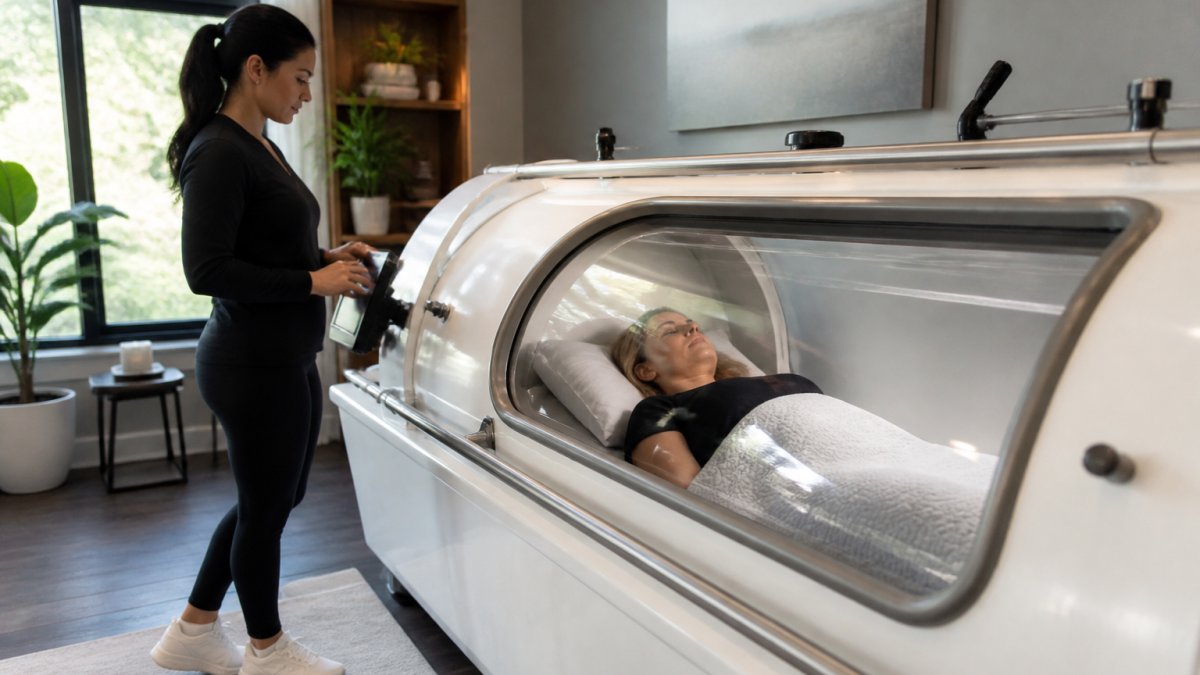
Medical grade oxygen chambers are pressurized systems built for clinical or commercial recovery settings, so financing them is typically a business transaction rather than a consumer purchase.
Loan, Lease, and Seller Financing Compared
Equipment loans give you ownership from day one. You borrow a lump sum, repay it with interest over a fixed term, and the chamber is your asset.
Lease financing keeps the equipment off your balance sheet in an operating lease and lowers the monthly outlay.
Seller financing means the equipment provider extends payment terms directly. It is faster and often more flexible than a bank, but you should read the default and service clauses carefully.
| Option | Ownership | Monthly Outflow | Best For | Main Trade-off |
|---|---|---|---|---|
| Equipment loan | Immediate | Higher | Buyers keeping the unit long-term | Larger capital commitment |
| Lease financing | At term end (or return) | Lower | Testing demand before committing | No equity until buyout |
| Seller financing | Per contract | Negotiable | Speed and flexibility | Fewer consumer protections |
What Drives Hyperbaric Chamber Cost
Hyperbaric chamber cost is driven by four things: chamber type, pressure rating, installation requirements, and operating overhead. Hard-sided chambers cost more than soft-sided units due to materials and engineering. Monoplace chambers hold one person; multiplace chambers hold several and cost more to install and run.
The purchase price is only part of the picture. Total cost of ownership includes delivery, installation, staff training, maintenance contracts, and ongoing operating costs. Buyers who model only the equipment price routinely underestimate what the chamber costs over five years.
Hard-Sided vs. Soft-Sided and Monoplace vs. Multiplace
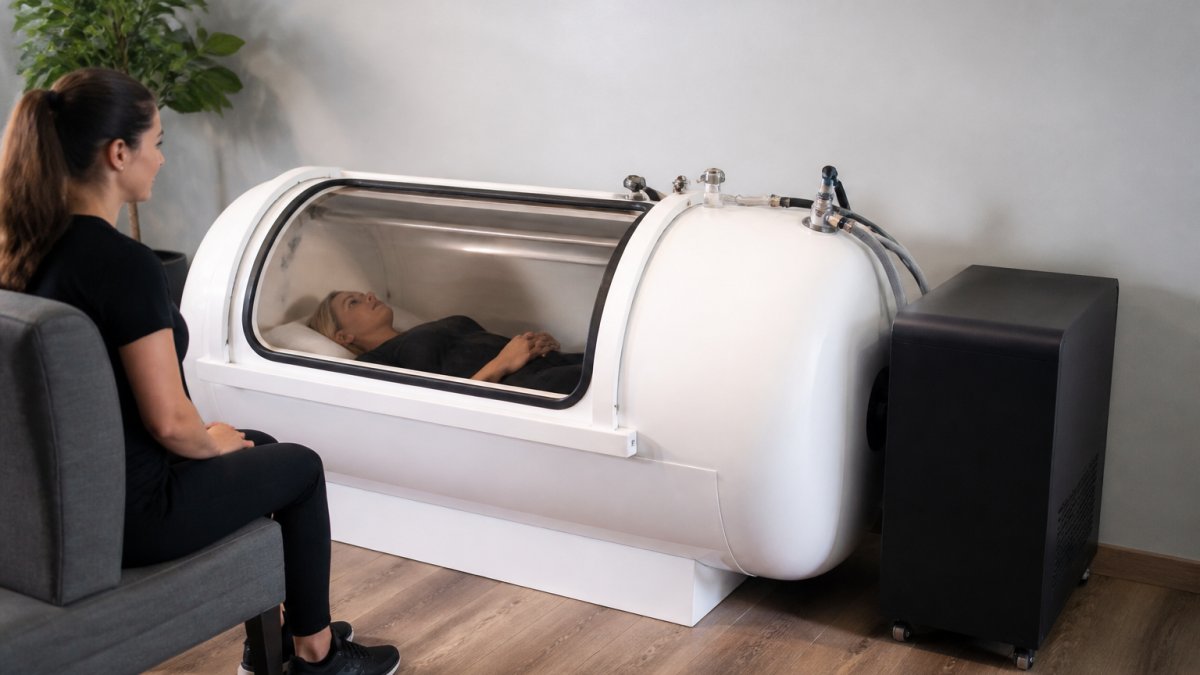
Hard-sided chambers are rigid, pressurized vessels built for higher pressures and clinical use. Soft-sided chambers are lighter and cheaper but suit lower-pressure, wellness-focused applications.
Monoplace chambers serve one client at a time, which simplifies scheduling and staffing. Multiplace chambers serve several, which raises throughput but demands more space and more rigorous operating procedures.
Hyperbaric Chamber Lease vs. Buy: Which Fits Your Cash Flow
The hyperbaric chamber lease vs. buy decision comes down to one question: how confident are you in demand?
Leasing preserves cash flow and shifts obsolescence risk to the lessor. Buying builds equity and usually costs less over a long horizon. For a facility adding a new service line, a lease with a buyout option is often the lower-risk entry point.
| Scenario | Lease | Buy |
|---|---|---|
| Demand unproven | Lower risk | Higher risk |
| Established client base | Slight premium | Lower long-term cost |
| Capital preservation priority | Strong fit | Weak fit |
| Balance sheet sensitivity | Off balance sheet (operating) | On balance sheet |
Our view: if you cannot reasonably forecast use for the first six months, do not buy yet.
Using a Hyperbaric Chamber Monthly Payment Calculator
A hyperbaric chamber monthly payment calculator estimates your payment from four inputs: principal, interest rate, term length, and down payment. Run three scenarios (conservative, expected, optimistic) so you see the range, not a single number.
The calculator only tells you the payment. It does not tell you whether the payment is affordable. Pair the output with a revenue estimate based on realistic session counts. If the payment exceeds what a conservative use forecast generates, the deal is too thin.
- Principal: the amount financed after down payment
- Rate: fixed APR from your lender's written quote
- Term: typically 24 to 60 months for equipment
- Down payment: often negotiable; a larger one lowers the payment
How to Apply for Financing: A Step-by-Step Process
Applying for equipment financing follows a predictable sequence. Have your documents ready before you start and the process moves quickly.

- Define the project scope. Confirm the chamber model, installation cost, and training needs as one total figure.
- Gather business documents. Expect to provide business tax returns, bank statements, and formation documents.
- Get pre-qualified. A soft pre-qualification shows your likely terms without a hard credit pull.
- Compare written offers. Line up rate, term, fees, and prepayment terms side by side.
- Submit the full application. This triggers underwriting and a hard credit inquiry.
- Review the terms in writing. Confirm the APR, total repayment, and any origination fees.
- Sign and schedule delivery. Coordinate installation and training with the equipment provider.
The U.S. Small Business Administration's loan programs are worth reviewing if you are weighing a government-backed option against private equipment financing.
Eligibility, Credit Requirements, and Due Diligence
Most financing pages stop at "check your credit," which is not useful when underwriting a five- or six-figure clinical asset. Approval and rate depend on business credit, time in operation, revenue, and the chamber's resale value. Lenders weigh those four inputs differently, and knowing which lever you can pull separates a clean approval from a string of declines.
How Lenders Actually Score the Deal
Business credit and personal credit. For sole proprietors and newer LLCs, lenders typically pull both.
Book a 30-Minute Facility Review →
Time in business. Many equipment lenders want at least 12 months of operating history; two years or more opens up bank and SBA-style options.
Equipment value and collateral. A hard-sided, clinical-grade chamber holds resale value better than a soft-sided wellness unit, improving your collateral position and potentially lowering the rate.
What Changes Your Terms
| Factor | Stronger Position | Weaker Position |
|---|---|---|
| Credit | 700+ personal, established business credit | Thin or damaged credit |
| Time in business | 2+ years | Under 12 months |
| Down payment | 10-20% | 0-10% or none |
| Collateral | Hard-sided, high-resale chamber | Soft-sided, low-resale unit |
| Guarantee | Business-only | Personal guarantee required |
A larger down payment is the fastest lever most buyers can pull. Moving from 0% to 20% down frequently improves the rate and reduces the total interest paid, even though it ties up cash.
Due Diligence on the Lender and the Contract
The financing agreement is a contract you will live with for years. Read the full document, not the summary sheet.
- Request the complete financing agreement, including default and acceleration clauses
- Confirm whether the rate is fixed or variable, and what index a variable rate tracks
- Ask about origination, documentation, late, and returned-payment fees
- Confirm whether there is a prepayment penalty and how it is calculated
- Verify the equipment warranty and who performs service
- Check whether the lender reports to business credit bureaus
- Confirm what happens to the financing if the equipment is replaced or the business is sold
A personal guarantee is common on small equipment loans. If you sign one, the lender can pursue your personal assets on default. Ask explicitly whether a guarantee is required and whether it can be limited or burned off after a period of on-time payments.
For context on how the FDA regulates medical devices, review the agency's device guidance before finalizing equipment claims, and confirm with the manufacturer which clearances or classifications apply to the specific chamber you are financing.
Modeling ROI and Break-Even Before You Sign
ROI modeling starts with use, but the number that decides the deal is total cost of ownership, not purchase price. A chamber that looks affordable on the invoice gets expensive once installation, oxygen supply, staffing, maintenance, and downtime are added. Build the model in layers so you can see which assumption does the most work.
Build the Cost Stack
Start with every cost the project will generate, not just the equipment.
- Equipment: the quoted chamber price, including any required accessories.
- Installation: electrical work, ventilation, floor-loading reinforcement, and commissioning. Get a written quote before signing the equipment contract.
- Training: staff certification and onboarding time.
- Oxygen supply: ongoing cost of medical-grade oxygen, which scales with session volume and pressure protocol.
- Maintenance and service: service contracts, replacement parts, and scheduled inspections.
- Staffing: the labor to run sessions, which is often the largest recurring cost.
- Insurance and compliance: liability coverage and any required operational documentation.
Add those into a single annual operating cost figure, then add the annual debt service from your financing quote. That total is your true annual cost of the service.
Model Revenue From Utilization, Not Optimism
Revenue is sessions sold multiplied by price per session. The trap is assuming full utilization. Model three levels, pessimistic, realistic, and strong, and use the pessimistic case to test the deal.
A simple structure:
- Estimate sessions per week at each utilization level.
- Multiply by your session price to get weekly revenue.
- Subtract variable costs (oxygen, consumables, per-session labor).
- Subtract fixed costs (rent allocation, insurance, maintenance contract).
- Subtract monthly debt service.
- The result is monthly net cash flow.
Break-even in months equals total project cost divided by monthly net cash flow. If break-even only works in the strong scenario, the deal is fragile.
A Cash-Flow Sanity Check
| Scenario | Sessions/Week | Covers Debt Service? | Decision Signal |
|---|---|---|---|
| Pessimistic | Low | No | Renegotiate price, term, or down payment |
| Realistic | Moderate | Yes, with margin | Proceed with monitoring |
| Strong | High | Comfortably | Confirm staffing and oxygen capacity |
Model the payment against a bad month, not a good one. If the chamber still covers its own debt service at roughly half of expected utilization, you have a resilient deal. If it only works at full booking, you are financing hope, not a service line.
At Eternall Wellness, we help facilities build these projections before they commit, because the equipment is only half the equation.
Conclusion
The hard part of financing a hyperbaric chamber is not finding a lender. It is knowing, before you sign, whether the monthly payment fits inside a realistic revenue forecast. Get that model right and the financing structure becomes an easy choice.
Eternall Wellness helps gyms, med spas, and wellness clinics evaluate hyperbaric chambers as revenue-generating services, not just equipment purchases. We support financial projections, use planning, and integration into your operations, with financing options designed to preserve capital. Get started with Eternall Wellness.
Frequently Asked Questions
What financing options are available for a medical-grade oxygen chamber?
Most buyers choose between an equipment loan, a lease, or seller financing. Equipment loans give you ownership and a fixed monthly payment, typically over two to seven years. Leases keep upfront cash low and can include maintenance. Seller financing comes directly from the equipment provider and may be easier to qualify for. Compare the total cost of each option, not just the monthly figure, and confirm whether installation and accessories are included in the financed amount.
Can equipment financing cover installation and accessories?
Often yes, but you have to ask. Many lenders will roll delivery, installation, and add-on accessories into the financed amount so you avoid a separate out-of-pocket bill. Confirm in writing what the loan or lease covers before you sign. If installation is excluded, budget for it separately, since setup costs can add meaningfully to your total project cost and affect your break-even timeline.
How do I estimate whether a hyperbaric chamber can generate enough revenue to cover its payments?
Start with your projected monthly payment, then work backward. Estimate how many sessions you can realistically sell per week, multiply by your session price, and subtract operating costs like staff time, maintenance, and consumables. Compare that net figure to your payment. Use conservative utilization numbers rather than best-case ones, and run the math at 50% and 75% capacity so you know your margin of safety before committing.
What should I compare when reviewing hyperbaric chamber financing offers?
Compare the annual percentage rate, term length, total interest paid, and whether there are origination or prepayment penalties. Check what happens if you want to pay off early or upgrade equipment. Ask whether the lender specializes in medical equipment, since terms and approval odds differ from general business loans. Finally, read the fine print on hidden fees and confirm the payment schedule matches your revenue cycle.