 how-to
Digital Marketing Strategies for Boutique Wellness Studios
Table of Contents
- Why Boutique Wellness Studios Need a Measurable Marketing Funnel
- Wellness Studio Marketing Ideas That Build a Distinctive Brand
- Local SEO for Wellness Studios: Getting Found in Your Neighborhood
- Fitness Studio Lead Generation: Turning Interest Into Booked Sessions
- Wellness Studio Email Marketing and Automation That Retains Clients
- Paid Advertising, Retargeting, and Budgets That Make Sense
- A 90-Day Implementation Plan for Boutique Wellness Studios
- Conclusion: Build the System, Not Just the Campaign
- Frequently Asked Questions
Last Updated: October 14, 2026
Why Boutique Wellness Studios Need a Measurable Marketing Funnel
Most boutique wellness studios market in bursts: a slow week triggers a promotion, a busy week ends it, and nobody tracks what worked.
At Eternall Wellness, we work with gyms, med spas, and wellness clinics adding recovery services. The studios that grow measure the whole path, not just the ads.
From Discovery to Retention: The Five Stages That Matter
Every client moves through five stages. Skip one and the funnel leaks.
- Discovery - someone finds you through search, social, or word-of-mouth
- Interest - they check your schedule, prices, and reviews
- Trial - they book an intro offer or first session
- Conversion - they buy a membership or package
- Retention - they keep coming back and refer friends
Most studios pour everything into stage one. Retention is where the money lives.
The KPIs to Track at Every Stage
Pick one number per stage and review it monthly.
| Stage | KPI | What Good Looks Like |
|---|---|---|
| Discovery | Website traffic and profile views | Steady month-over-month growth |
| Interest | Booking page visits | Rising share of total traffic |
| Trial | Trial signups | Consistent weekly volume |
| Conversion | Trial-to-member rate | Most trials convert within 30 days |
| Retention | Monthly churn and referrals | Churn falling, referrals rising |
A common mistake is tracking likes instead of bookings. Likes do not pay rent.
Wellness Studio Marketing Ideas That Build a Distinctive Brand
Generic studios compete on price. Distinctive studios compete on identity. Your brand positioning is what people say about you when you are not in the room.
Answer one question: what do you do that the gym down the street cannot? Build every message around that answer.
Positioning Beyond Fitness: Recovery, Thermal, and Light Therapies
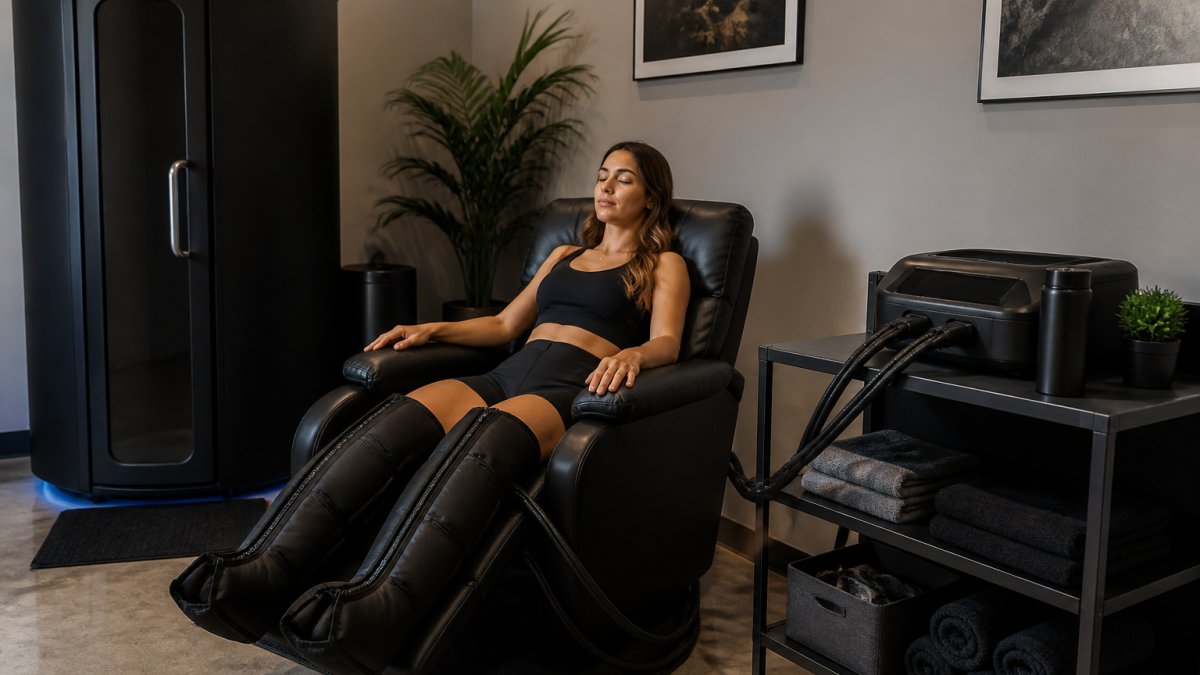
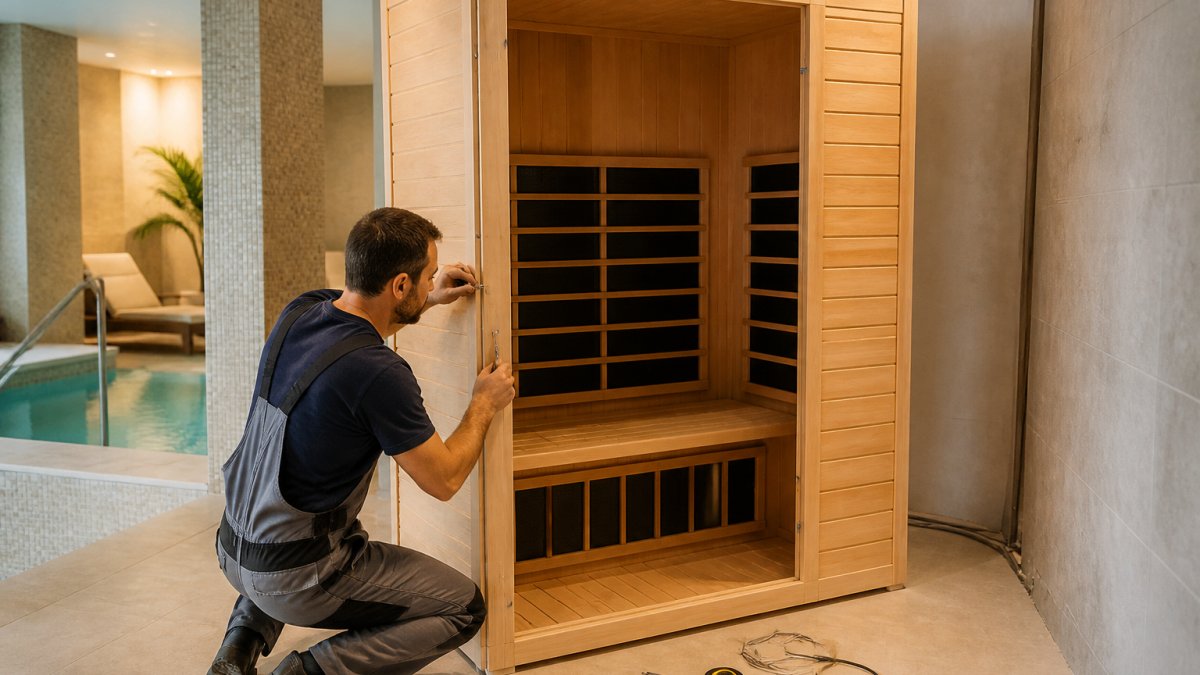
Fitness is crowded; recovery is not. Many studios add red light therapy, thermal recovery, and hyperbaric oxygen therapy to stand apart. These modalities attract a different client who comes for how they feel, not just how they look, opening new revenue and longer visits. Before you buy, check how a system fits your space, staff, and schedule.
Community-Building, Referral Programs, and Word-of-Mouth
Referrals are the cheapest clients you will ever get, and a simple program beats a clever one.
- Offer a free class or session to the friend
- Give the referring member a small perk, like a guest pass
- Ask for the referral right after a great session, not by email weeks later
Word-of-mouth grows when members feel like insiders. Host a monthly member night. Post their progress. Name them in your newsletter.
Local SEO for Wellness Studios: Getting Found in Your Neighborhood
Local SEO for wellness studios makes your studio appear when nearby people search for what you offer. It beats paid ads because the intent is already there, and the basics matter more than tricks.
- Claim and complete your Google Business Profile
- Use the same name, address, and phone number everywhere
- Add your city and neighborhood to page titles and descriptions
Local search rewards consistency. If your hours are wrong on one site, Google trusts you less.
Google Business Profile and Online Reviews
Your Google Business Profile is often the first thing a new client sees. Treat it like a storefront.
- Add real photos of your space, staff, and equipment
- Post updates weekly, including promotions and new services
- Respond to every review, good or bad, within a day or two
Online reputation is built one review at a time. Ask happy clients right after a session; a steady flow beats a sudden burst.
Fitness Studio Lead Generation: Turning Interest Into Booked Sessions
Fitness studio lead generation turns a curious visitor into a booked session. The gap between interest and booking is where most studios lose people.
Remove friction. Every extra step costs you signups.
- Put a booking button on every page
- Keep forms to two or three fields
- Show your schedule before asking for payment
Introductory Offers and Trial Signup Flows
A strong intro offer lowers the client's risk and gives you a clear way to measure interest.
A simple flow works best:
- Ad or post sends people to a landing page
- Landing page explains the offer in one line
- Visitor books a time slot
- You send a confirmation and reminder
- Staff greets them by name at the door
Wellness Studio Email Marketing and Automation That Retains Clients
Wellness studio email marketing keeps your studio in front of clients between visits. Most studios collect emails and never use them, money left on the table.

Segment Before You Send
A single list is a single message. Segments let you send the right message to the right person. Four segments cover most boutique wellness studios:
- New leads, signed up for the intro offer but have not booked yet.
- Active clients, booked in the last 30 days.
- At-risk clients, no visit in 31-60 days.
Each segment gets different content. New leads need a reason to book. Active clients need reasons to come more often. At-risk and lapsed clients need a reason to return that does not feel like a guilt trip.
The Core Automated Sequences
Automation handles the repetitive work so your staff does not have to. A CRM tracks every client and triggers messages at the right time. Four sequences do most of the work:
1. Intro offer follow-up (for new leads)
- Day 0: Welcome email with the offer, a booking link, and what to expect on the first visit.
- Day 2: Short text or email answering the top three questions (what to wear, where to park, how long it takes).
- Day 5: A gentle nudge with a specific time slot suggestion.
2. Post-first-visit (for trial clients)
- Same day: Thank-you note from the instructor or therapist by name.
- Day 2: Tips for the next visit and a link to book again.
- Day 7: Check-in and a soft offer for a package or membership.
3. At-risk re-engagement (for clients with no visit in 31-60 days)
- Day 31: "We miss you" message with a specific class or service they used to book.
- Day 45: A small incentive, a guest pass, a free add-on, or a discounted session.
- Day 60: A direct question: "Is there something we could do better?" Replies here often reveal fixable problems.
4. Lapsed win-back (for clients with no visit in 61+ days)
- Day 61: A personal note from the owner or their usual instructor.
- Day 75: A time-limited offer tied to a new service or schedule change.
- Day 90: Move them to a low-frequency newsletter list so you stop paying to email people who will not return.
Keeping Automation From Feeling Impersonal
Automation fails when it reads like automation. Three habits fix that:
- Use the client's name and their actual history. "You usually book the 6 a.m. Thursday class, we added a 6 a.m. Tuesday." That is a trigger, not a blast.
- Send from a real person. Messages from the owner or the client's usual instructor outperform messages from "The Studio."
- Cap frequency. Two to four sends per month per client is plenty. More than that and open rates fall, unsubscribes rise, and your domain reputation suffers.
Choosing and Connecting a CRM
You do not need an enterprise system, just one that connects to your booking software, supports tags or segments, and sends email and SMS.
When you evaluate a CRM, ask three questions:
- Does it sync bookings automatically, or will staff have to update it by hand?
- Can it trigger a message based on a client's last visit date?
- Can you export your list if you switch tools later?
If the answer to any of those is no, keep looking. A CRM that requires manual updates will be abandoned within a quarter.
Paid Advertising, Retargeting, and Budgets That Make Sense
Paid ads work best when they support a funnel you already have; running ads to a broken booking page just burns cash faster. Studios that win with paid media treat it as a math problem, not a creative one.
A Realistic Starting Budget by Channel
Most boutique wellness studios should not spread a small budget across five platforms. Pick one primary channel, fund it for 60 to 90 days, then add a second. A common pattern among studios spending under $2,000 per month:
| Channel | Typical Monthly Test Budget | Primary Job in the Funnel |
|---|---|---|
| Meta (Facebook/Instagram) retargeting | $300-$600 | Recover site visitors and trial no-shows |
| Meta prospecting | $500-$1,200 | Fill intro offers with new local audiences |
| Google Search (brand + service terms) | $400-$900 | Capture high-intent "near me" and modality searches |
| Google Local Services / Performance Max | $300-$800 | Supplement Google Business Profile visibility |
| TikTok or YouTube Shorts | $300-$700 | Awareness for recovery, thermal, or niche modalities |
These are starting ranges, not targets. Your cost per acquisition depends on your market, offer, and booking page conversion, a dense metro usually pays more per click than a smaller market.
The Math That Decides Whether to Scale
Before you increase a budget, know three numbers:
- Customer acquisition cost (CAC), total ad spend divided by new paying clients in the same period.
- Average first-90-day value, what a new client actually spends in their first three months, including intro offer, first package, and any add-ons.
- Retention-adjusted lifetime value, first-90-day value multiplied by your average client lifespan in months.
A simple rule: if CAC is more than one-third of retention-adjusted lifetime value, the channel is fragile; under one-fifth, you likely have room to scale. Retargeting usually produces the lowest CAC of any paid channel because the audience already knows the studio.
Retargeting Sequences That Actually Convert
Retargeting is often the best first spend: site visitors already know you, and a reminder ad costs less than finding new strangers. But a single ad is not a sequence. A basic three-step flow:
- Days 1-3 after site visit: Show the intro offer with a clear next step ("Book your first session").
- Days 4-10: Show social proof, a short client story, a review screenshot, or a tour of the space.
- Days 11-21: Show urgency or a secondary offer, such as a bundle or a limited-time add-on.
Exclude anyone who already booked. Nothing wastes budget faster than advertising an intro offer to someone who already bought it.
Modality-Specific Paid Angles
Paid creative should match the modality, not the studio's general brand:
- Yoga and meditation studios: Lead with stress relief, sleep, and beginner-friendly framing. Avoid advanced-pose imagery, which narrows the audience.
- Massage and bodywork: Lead with specific concerns (tension, recovery, mobility) and same-week availability.
- Recovery and thermal (red light, sauna, cold plunge, hyperbaric): Lead with how clients feel after, plus a clear first-visit price. These modalities often convert better on Google Search than on social because intent is higher.
When to Pause a Channel
Pause a channel when any of these is true for 30 consecutive days:
- CAC exceeds one-third of retention-adjusted lifetime value.
- Trial-to-member conversion from that channel is less than half your studio average.
- You cannot staff the demand the channel creates without hurting the client experience.
Keep your advertising budget tied to a goal, not a habit. Set a monthly cap, review results, and move money toward what works.
A 90-Day Implementation Plan for Boutique Wellness Studios
A plan beats a pile of tactics. Here is how we would sequence the first 90 days.
Days 1-30: Foundation
- Complete your Google Business Profile
- Fix your booking flow
- Set up a CRM and a welcome email
Days 31-60: Reach
- Launch a referral program
- Post weekly on social media
- Start a small retargeting campaign
Days 61-90: Measure and Scale
- Review your funnel KPIs
- Double down on the best channel
- Add new services or offers that fit demand
Track results weekly. Adjust monthly. Small, steady changes beat one big relaunch.
Conclusion: Build the System, Not Just the Campaign
The studios that grow are not the ones with the biggest ad budget. They have a system that turns strangers into regulars and regulars into advocates, covering discovery, trial, conversion, and retention, and it runs whether you are watching or not.
If you are adding recovery or wellness services to your studio, the marketing has to match the equipment. Eternall Wellness helps facilities evaluate premium systems, including red light therapy, thermal recovery, and hyperbaric chambers, with financing options that preserve your capital, plus the business side, from use and pricing to integration with your current operations.
Get started with Eternall Wellness and build a revenue-generating service your clients come back for.
Frequently Asked Questions
What digital marketing strategies work best for boutique wellness studios?
The strongest mix combines local SEO, a Google Business Profile with regular reviews, email marketing with automated follow-ups, and a referral program. For boutique wellness studios, the highest return usually comes from retaining existing clients and turning them into word-of-mouth advocates, since acquiring a new member costs more than keeping one. Paid ads and retargeting work best once your booking funnel and follow-up messages are already in place.
How can a boutique wellness studio attract new clients online?
Start with a clear introductory offer for first-time visitors, then drive traffic through local keywords, social media content, and partnerships with complementary businesses. A simple trial signup flow, such as a discounted first session or a two-week pass, lowers the barrier. Follow up within 24 hours by email or text to convert trial visitors into members. Tracking your cost per acquisition helps you know which channel deserves more budget.
How much should a boutique wellness studio spend on digital marketing?
A common starting point is 5 to 10 percent of projected monthly revenue, split across local SEO, email, and a small paid test budget. If you are adding a new service like recovery or thermal therapy, consider a launch budget separate from your ongoing spend. Track cost per acquisition and return on investment monthly, then shift budget toward the channels that produce booked sessions rather than just clicks.
How can a wellness studio measure whether its marketing is working?
Build a simple funnel report that tracks website traffic, trial signups, class bookings, conversion rate, and member retention. Review it monthly. Attribution for local studios is imperfect, so also ask new clients how they found you at signup. Pair that with your Google Business Profile insights and email open rates. If trial signups rise but retention stays flat, your follow-up sequence needs work, not more ad spend.