 blog
blog
7 Best Commercial Cryotherapy Machines for Gyms
Table of Contents
- What to Look for in Commercial Cryotherapy Machines
- 1. CryoBuilt Electric Cryotherapy Chamber
- 2. Juka Nitrogen Cryotherapy Chamber
- 3. MECOTEC Electric Cryo Chamber
- 4. CryoSkin T-Shock
- 5. Zimmer Cryo 6
- 6. Cryo Innovations XR
- 7. Impact Cryotherapy Room
- How Do You Calculate ROI on a Commercial Cryotherapy Machine?
- Cryotherapy Business Profitability: What Actually Drives It
- Commercial Cryotherapy Machine Cost: What to Budget For
- Cryotherapy Safety Standards and Compliance
- Frequently Asked Questions
Last Updated: October 3, 2026
What to Look for in Commercial Cryotherapy Machines
Choosing a commercial cryotherapy machine is a capital decision, not a gadget purchase. The right system becomes a revenue-generating service that keeps members coming back; the wrong one drains cash on maintenance, energy, and idle floor space. Most buyers focus on the chamber itself and overlook the operating costs that follow it for years.
At Eternall Wellness, we help gyms, med spas, and wellness clinics evaluate these systems as business assets rather than equipment. That means weighing cooling technology, installation footprint, and total cost of ownership before specs. Below, we break down the seven strongest options and what separates them.
Electric vs. Nitrogen-Cooled Systems
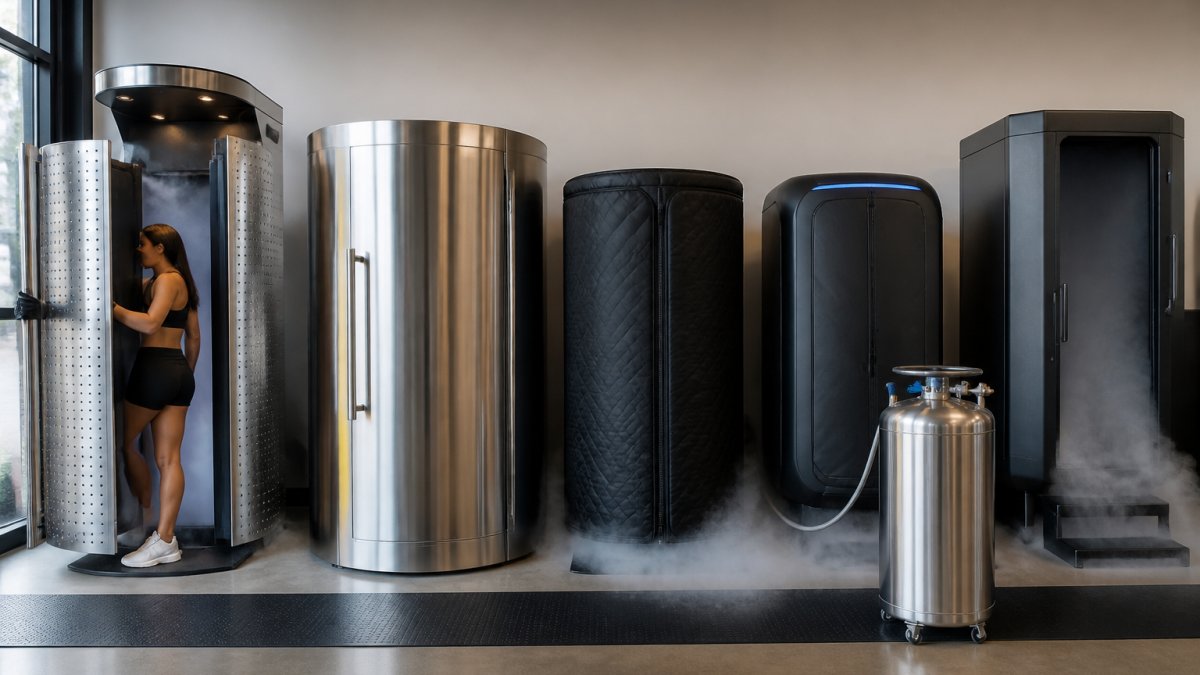
Electric cryotherapy chambers use a vapor-compression refrigeration system, similar to a large commercial freezer, to chill the air around the body. Nitrogen-cooled chambers drop temperature by releasing vaporized liquid nitrogen into the cabin. The two approaches differ in nearly every operational category that matters to a gym owner.
| Factor | Electric Chambers | Nitrogen-Cooled Chambers |
|---|---|---|
| Consumables | None | Liquid nitrogen refills |
| Temperature range | Roughly -110°C to -140°C | Colder, down to about -160°C |
| Installation | Higher power draw, ventilation | Tank storage and venting required |
| Operating cost | Electricity only | Electricity plus nitrogen supply |
| Maintenance | Compressor servicing | Cryogen handling and safety checks |
Electric systems cost more upfront but cut recurring operational expenditure, since there is no cryogen to buy, store, or lose to evaporation. Nitrogen systems reach colder temperatures and tend to have a lower sticker price, but the consumable cost never stops. For most gyms adding whole-body cryotherapy as a membership perk, electric wins on predictability. Nitrogen makes sense where the coldest possible exposure is the selling point.
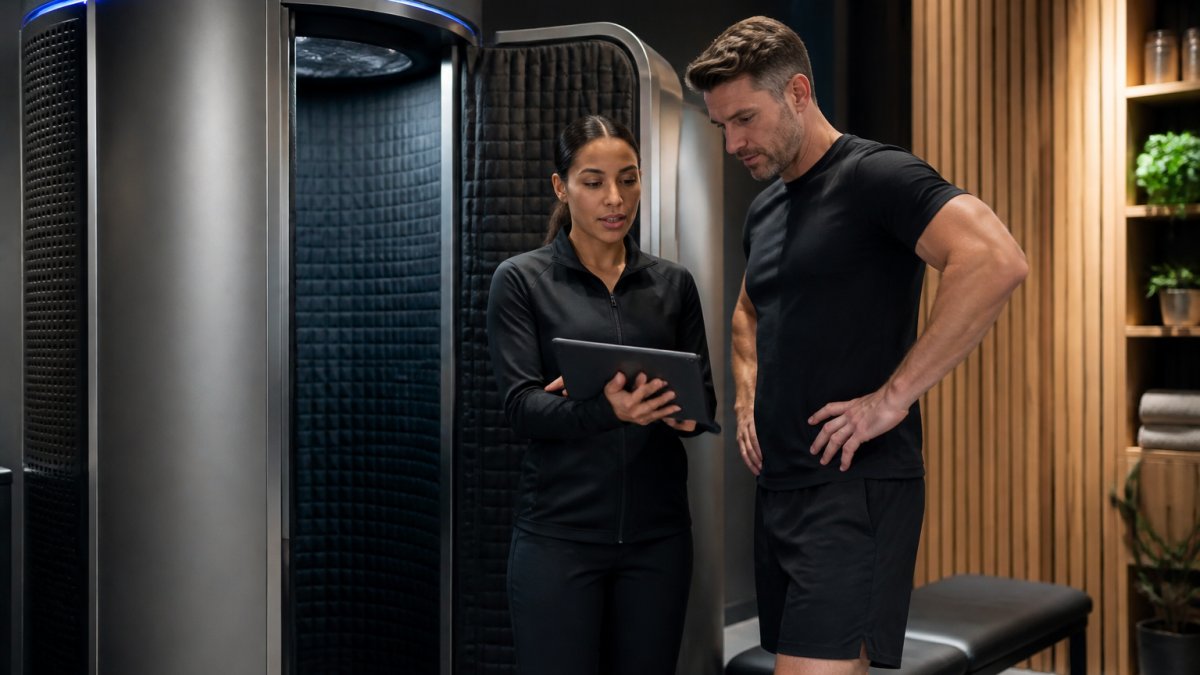
1. CryoBuilt Electric Cryotherapy Chamber
CryoBuilt builds electric, nitrogen-free chambers aimed squarely at the fitness market. The pitch is simple: no consumables, no cryogen handling, and a cabin sized to fit a commercial recovery room. The cooling stack uses a closed refrigeration loop, so once installed, the operating cost is largely electricity and scheduled servicing.
That model appeals to gyms that want a revenue-generating service without a supply chain. The trade-off is a higher upfront price and a real electrical load, since the compressor needs dedicated power and ventilation. For a facility running dozens of sessions a day, the absence of a nitrogen bill usually offsets that premium over time.
Best for: Gyms that want predictable costs and no consumables.
2. Juka Nitrogen Cryotherapy Chamber
Juka is one of the best-known names in nitrogen-cooled cryotherapy, and its chambers are common in dedicated recovery studios. Sessions are short, often two to three minutes, and the extreme cold produces the sharp endorphin release clients associate with the treatment.
The catch is infrastructure. A Juka installation needs liquid nitrogen delivered on a schedule, a safe storage area, and ventilation. Staff must be trained in cryogen handling and safety standards. For a high-volume studio that can keep the cabin busy, the throughput justifies the logistics. For a gym adding cryotherapy as a side offering, the nitrogen supply chain can become a headache.
Best for: High-volume recovery studios with staff to manage cryogen.
3. MECOTEC Electric Cryo Chamber
MECOTEC makes electric cryo chambers that avoid liquid nitrogen entirely, using a refrigeration system to reach treatment temperatures. The cabins are built for continuous commercial use, and the lack of cryogen simplifies both safety compliance and daily operation.
What sets MECOTEC apart is build quality and the clinical-grade feel of the units, which matters when you are selling a premium recovery experience. The downside is cost and installation complexity: these are heavy, power-hungry machines that need proper ventilation requirements met before they run. Buyers should confirm their electrical service can handle the load.
Best for: Clinics and premium studios prioritizing build quality.
4. CryoSkin T-Shock
CryoSkin T-Shock is a different category of machine. Rather than whole-body cryotherapy, it is a localized treatment device used for body contouring and skin tightening, applying controlled cold and heat through a handheld applicator. It is a technician-operated service, not a walk-in cabin.
For med spas, that distinction is the point. T-Shock adds a hands-on, appointment-based service that fits existing treatment rooms and staff workflows. It does not deliver the whole-body cold exposure athletes seek for muscle recovery, so it complements rather than replaces a cryo chamber. Med spa directors often pair the two.
Best for: Med spas adding body contouring to existing services.
5. Zimmer Cryo 6
Zimmer's Cryo 6 is a localized cold-air device used for pain management and post-treatment cooling. It delivers a focused stream of cold air to a targeted area, which makes it useful in chiropractic and physical therapy settings where a patient needs localized inflammation reduction rather than a full-body session.
The unit is compact, which solves the installation footprint problem that whole-body chambers create. It is not a revenue-generating membership perk on its own; it is a clinical tool that supports treatment plans. Chiropractic practices integrating recovery equipment often start here because it fits an existing room and workflow.
Best for: Chiropractic and physical therapy practices.
6. Cryo Innovations XR
Cryo Innovations builds nitrogen-free electric cryo chambers with a focus on the user interface and session control. The XR line is designed so staff can run sessions with minimal training, and the controls let operators set and monitor temperature precisely.
That ease of operation matters more than buyers expect. A machine that is confusing to run sits idle. The XR line targets gyms and studios that want a chamber their front-desk staff can operate confidently. As with any electric system, confirm your power and ventilation requirements before committing.
Best for: Facilities wanting simple, staff-friendly operation.
7. Impact Cryotherapy Room
Impact Cryotherapy offers walk-in cryo rooms rather than individual cabins, which changes the throughput math. A room can move clients through faster than a single-person chamber, which matters when cryotherapy is a high-traffic membership benefit.
The larger footprint is the obvious trade-off. A cryo room needs dedicated floor space and a serious ventilation setup. For a large facility where cryotherapy is a headline amenity, the room format can generate more revenue per square meter than a single cabin. For a smaller gym, it is usually more machine than the space can justify.
Best for: Large facilities with high cryotherapy demand.
How Do You Calculate ROI on a Commercial Cryotherapy Machine?
ROI on a commercial cryotherapy machine comes down to use: how many paid sessions you run per day, at what price, against your total cost of ownership. The machine is only half the equation. Energy consumption, maintenance, consumables (if nitrogen-cooled), and staff time make up the rest.
A simple ROI calculation looks like this:
- Monthly revenue = sessions per day × price per session × operating days
- Monthly cost = lease or financing payment + energy + maintenance + consumables + staff time
- Payback period = total upfront cost ÷ monthly net revenue
The variable most buyers get wrong is use. A chamber that runs ten sessions a day pays back far faster than one running two. Before buying, model a conservative session count based on your actual member base, not an optimistic one.
Cryotherapy Business Profitability: What Actually Drives It
Cryotherapy business profitability depends on three levers: pricing, use, and retention. A cryotherapy session is a recurring service, so the members who return weekly are worth far more than one-time visitors. Bundling cryotherapy into a membership tier tends to raise retention because members see ongoing value.
Pricing strategy matters as much as the machine. Facilities that position cryotherapy as a premium add-on can charge more per session but may see lower volume. Those that bundle it into memberships trade per-session revenue for higher retention and predictable recurring income. Neither is wrong; the right choice depends on your clientele.
What most operators miss is the retention effect. Members who use recovery services visit more often, and more visits mean more ancillary spending. That is why cryotherapy works best as part of a broader recovery offering rather than a standalone gimmick.
Commercial Cryotherapy Machine Cost: What to Budget For
Commercial cryotherapy machine cost varies widely by technology, and we do not quote specific prices because they depend on the system, configuration, and your facility. What we can tell you is the cost categories to budget for, so nothing surprises you after purchase.
- Equipment cost: The chamber or device itself, plus any installation hardware.
- Installation: Electrical work, ventilation, and floor reinforcement where needed.
- Financing or leasing: Monthly payments if you preserve capital instead of paying upfront.
- Energy: Ongoing electricity, higher for electric chambers, plus nitrogen for cryogen systems.
- Maintenance: Preventative maintenance plans and warranty coverage terms.
- Consumables: Liquid nitrogen refills for nitrogen-cooled systems.
- Staff training: Time and any certification required to operate the equipment safely.
Financing lets facilities preserve capital and start generating revenue sooner, so the machine can begin paying for itself while you make payments. For current pricing on any system, request a quote, since configuration and installation drive the final number.
Cryotherapy Safety Standards and Compliance
Cryotherapy safety standards are not optional, and they differ by technology. Nitrogen-cooled systems carry the added risk of oxygen displacement, so ventilation requirements and cryogen handling protocols matter. Electric systems avoid that specific hazard but still need proper installation and operator training.
Before you buy, confirm three things:
- The equipment meets the relevant safety certifications for commercial use.
- Your facility meets ventilation and electrical requirements for the specific system.
- Staff are trained and, where required, certified to operate the equipment.
Liability and insurance coverage deserve a direct conversation with your insurer before installation. Some policies require disclosure of cryotherapy equipment, and coverage terms vary. Getting this wrong can leave a facility exposed if something goes wrong. Ask the vendor what safety documentation and training they provide, and confirm your insurer is comfortable with the setup before the machine arrives.
Frequently Asked Questions
What are the best cryotherapy machines for commercial gym use?
The best commercial cryotherapy machines for gyms include CryoBuilt, Juka, MECOTEC, CryoSkin, Zimmer, Cryo Innovations, and Impact Cryotherapy. Each offers different advantages: electric chambers like CryoBuilt and MECOTEC avoid liquid nitrogen handling, while nitrogen systems like Juka and Impact provide deeper cold. Your choice depends on space, budget, and whether you want whole-body or localized treatments.
Is cryotherapy a profitable service for fitness centers?
Cryotherapy can be profitable for fitness centers that position it as a premium recovery service. Profitability depends on utilization, pricing, and operational costs. Cryotherapy business profitability improves when you bundle sessions with memberships or personal training packages.
What are the safety regulations for operating cryotherapy chambers?
Cryotherapy safety standards require proper ventilation for nitrogen systems, emergency shut-off switches, oxygen monitors, and staff training. Always check your state's health department rules and ensure your equipment meets relevant listings.
What is the difference between electric and nitrogen-based cryotherapy machines?
Electric cryotherapy machines use refrigeration to cool the chamber, eliminating the need for liquid nitrogen and reducing ventilation requirements. Nitrogen-based machines inject liquid nitrogen vapor to reach lower temperatures faster, but they require regular nitrogen deliveries and stricter safety measures. Electric systems typically have higher upfront costs but lower ongoing operational expenditure.