 ultimate-guide
Benefits of Hyperbaric Chambers for Spas in 2026
Table of Contents
- What Hyperbaric Chambers Actually Do for Spa Clients
- FDA Regulations for Mild Hyperbaric Chambers: What Spa Owners Must Know
- Commercial Hyperbaric Chamber ROI: The Numbers Behind the Investment
- Marketing Hyperbaric Therapy to Spa Clients: Attract and Retain Members
- Safety, Side Effects, and Who Should Avoid Hyperbaric Sessions
- Claustrophobia and Comfort: Managing Client Anxiety in Soft-Shell Chambers
- Hygiene and Maintenance Protocols for Commercial Hyperbaric Chambers
- Frequently Asked Questions
Last Updated: September 15, 2026
What Hyperbaric Chambers Actually Do for Spa Clients
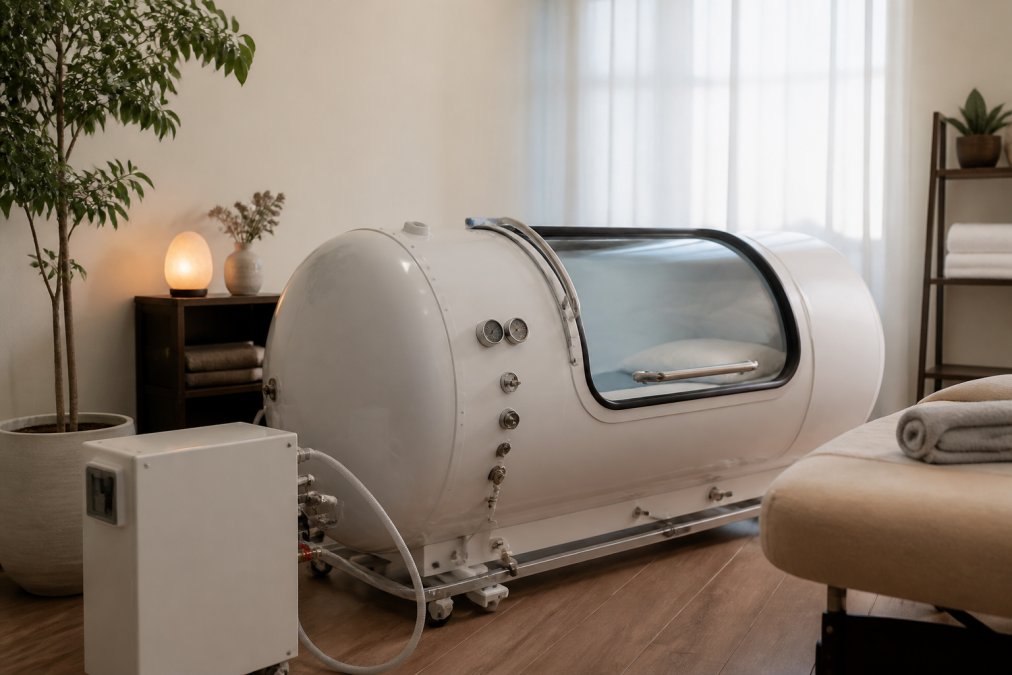
Hyperbaric chambers are pressurized environments that deliver concentrated oxygen to the body, and in a spa setting they are used to support recovery, skin health, and overall wellness rather than to treat acute medical emergencies. Understanding the benefits of hyperbaric chambers for spas starts with one distinction: clinical hyperbaric oxygen therapy (HBOT) uses high atmospheric pressure to treat specific diagnosed conditions, while wellness-grade chambers operate at lower pressure for general rejuvenation. At Eternall Wellness, we help spa and med spa operators evaluate where these systems fit into a broader recovery menu.
The Mechanism, in Plain Terms
At sea level, the air you breathe is roughly 21 percent oxygen, and hemoglobin carries most of it. A hyperbaric chamber raises the ambient pressure, which does two things. First, it increases the partial pressure of oxygen in the lungs, so more oxygen dissolves directly into blood plasma rather than riding only on hemoglobin. Second, that dissolved oxygen reaches tissue that normal circulation serves poorly, areas of inflammation, post-exercise muscle damage, or skin recovering from a laser treatment. The downstream effects clients care about are cellular repair, collagen production, and tissue oxygenation, which is why the service pairs naturally with red light therapy and thermal recovery.
What a Session Actually Looks Like
Most wellness-grade sessions run 60 to 90 minutes at pressures well below the 2.0 to 3.0 atmospheres absolute (ATA) used in clinical HBOT (uhms.org). A typical spa visit follows a predictable arc:
- Intake and screening. The client completes a health questionnaire, and staff confirm no contraindications before anyone enters the chamber.
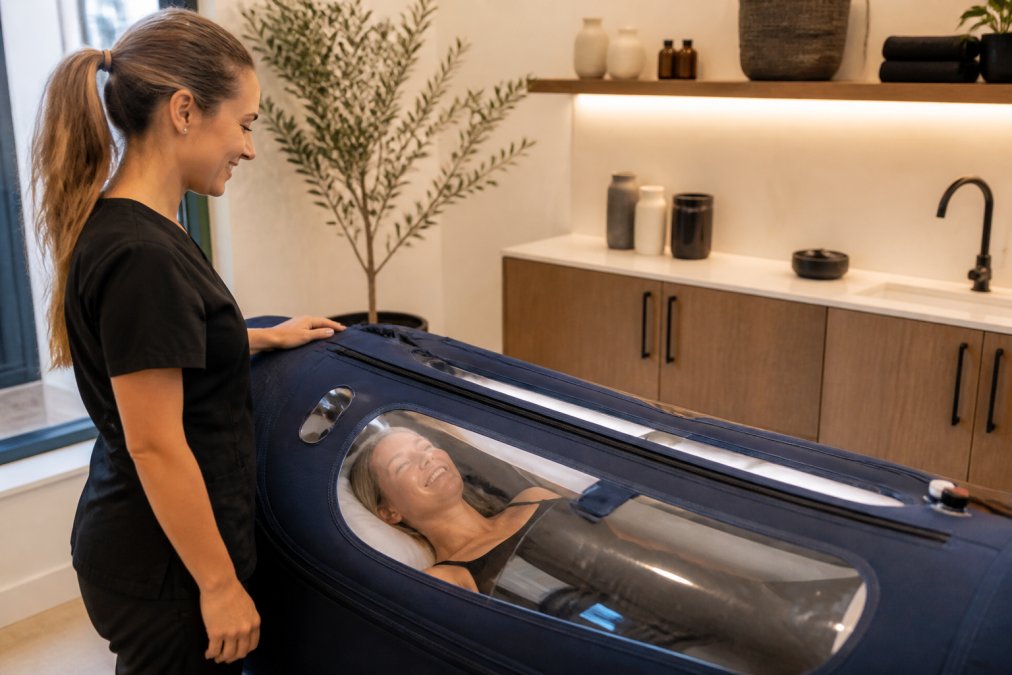
- Settling in. The client reclines inside the chamber, often with a blanket, headphones, or a tablet. Soft-shell units are transparent, so the room stays visible.
- Compression. Pressure rises gradually over the first several minutes. This is when clients feel ear pressure, similar to descending in an airplane, and staff coach them to swallow, yawn, or use a gentle Valsalva maneuver.
- Treatment plateau. The bulk of the session happens at the target pressure. Many clients nap or listen to audio.
- Decompression. Pressure returns to ambient slowly, usually over five to ten minutes.
- Post-session. Clients typically report feeling alert or deeply relaxed. Some notice mild fatigue that resolves within hours.
Why It Fits a Spa Menu
A chamber is not a replacement for a massage or a facial, it is an add-on that raises the perceived value of everything around it. A client who books a 60-minute massage can pair it with a recovery session and leave feeling they received a two-part treatment. Operators gain a premium service with a short staff-to-client ratio, which improves margin per treatment room. The key is positioning: describe the experience and the recovery support, not a medical outcome.
FDA Regulations for Mild Hyperbaric Chambers: What Spa Owners Must Know
Mild hyperbaric chambers fall under different regulatory treatment than medical-grade HBOT devices, and spa owners need to understand the line before they buy. The FDA's guidance on hyperbaric oxygen therapy devices classifies chambers intended to treat specific medical conditions as Class II medical devices requiring clearance, while lower-pressure wellness chambers marketed for general relaxation sit in a different category. This distinction matters operationally, and it is the single most common source of trouble for spa operators who blur it.
The Two Categories, Side by Side
| Medical-Grade HBOT | Wellness-Grade Chamber | |
|---|---|---|
| Regulatory status | Class II device, cleared for specific indications | Generally marketed for relaxation and general wellness |
| Typical pressure | 2.0-3.0 ATA | Well below clinical pressures |
| Intended use | Treatment of diagnosed conditions | Non-medical recovery and rejuvenation |
| Who operates it | Clinical staff under physician oversight | Trained spa staff |
| Marketing language | May reference cleared indications | Must avoid disease or treatment claims |
The Marketing Line You Cannot Cross
If you market a chamber as treating a diagnosed condition, wound healing, carbon monoxide poisoning, decompression sickness, or any of the indications cleared for medical HBOT, you invite regulatory scrutiny, because you are now making claims the device is not cleared to support. If you market it as a wellness and recovery service, you stay within the intended-use boundaries the manufacturer specifies. A common mistake is copying clinical HBOT language onto a spa menu. The words "treats," "cures," and "therapy for" a named condition are the tripwires. Keep claims aligned with how the device is cleared and labeled, and train staff to describe the experience, not prescribe outcomes.
What This Means for Your Intake Process
Because wellness-grade chambers are not cleared to treat disease, your intake process carries more weight, not less. Build a health questionnaire that screens for the contraindications covered later in this article, require physician clearance where a client's history warrants it, and document every session. If a client asks whether the chamber will help a specific medical condition, the correct answer is a referral to their physician, not a yes.
Questions to Ask a Manufacturer Before You Sign
- What is the device's intended use, as stated in its labeling?
- Is it cleared by the FDA, and if so, for what indications?
- What marketing claims does the manufacturer permit resellers to make?
- What training and documentation does the manufacturer provide?
- Who handles service, calibration, and parts?
Getting clear answers in writing protects you from inheriting a manufacturer's overreach. A vendor who encourages you to advertise clinical outcomes is a liability, not a partner.
If a client with a contraindication has an adverse event, the missing documentation becomes a serious liability. Skipping a health intake form to speed up bookings is the single most common compliance mistake.
Commercial Hyperbaric Chamber ROI: The Numbers Behind the Investment
Commercial hyperbaric chamber ROI depends on use, session pricing, and how well the service integrates with your existing membership base. The math is straightforward: a chamber that runs several sessions per day at a set price generates recurring revenue that compounds as members add it to their routine. Because pricing varies by device type, facility size, and configuration, Eternall Wellness works with each operator to model their specific scenario rather than quoting a generic figure. The variables that move ROI most are session duration, how many clients you can cycle through per day, and whether you sell single sessions or bundle them into memberships. Financing options let facilities preserve capital while adding the service, so the equipment can begin generating revenue without a large upfront outlay.
| ROI Lever | What It Affects | Why It Matters |
|---|---|---|
| use rate | Sessions per day | Higher volume spreads fixed costs |
| Session pricing | Revenue per visit | Positioning drives margin |
| Membership bundling | Retention and recurring revenue | Predictable monthly income |
| Financing terms | Upfront capital needed | Preserves cash for operations |
Marketing Hyperbaric Therapy to Spa Clients: Attract and Retain Members
Marketing hyperbaric therapy to spa clients works best when you sell the outcome and the experience, not the equipment. Clients searching for recovery, anti-aging, and stress reduction respond to clear language about how a session feels and what it supports. Position the chamber alongside your existing services: a client who books a facial may add a recovery session, and a gym member chasing better recovery time may become a regular. The strongest retention driver is routine. Offer intro sessions, package pricing, and membership tiers that make the chamber a habit rather than a one-time treat. Staff who can explain the experience confidently convert more bookings than any brochure, so invest in training and let your team speak to comfort, duration, and what to expect.
Bundle a first hyperbaric session with an existing high-margin service like a massage or red light session. Clients who experience recovery services together are far more likely to rebook than those who try a standalone session.
Safety, Side Effects, and Who Should Avoid Hyperbaric Sessions
Hyperbaric sessions are generally well tolerated at wellness-grade pressures, but they are not appropriate for everyone, and honest screening protects both clients and your business.
Claustrophobia and Comfort: Managing Client Anxiety in Soft-Shell Chambers
Hygiene and Maintenance Protocols for Commercial Hyperbaric Chambers
Frequently Asked Questions
What are the primary benefits of hyperbaric chambers for spa clients?
Spa clients use hyperbaric chambers for wellness goals like faster recovery after exercise, reduced inflammation, improved skin elasticity, and mental clarity. The mild pressure and increased oxygen saturation support cellular repair and collagen production. Many med spas pair sessions with red light therapy or massage for a comprehensive rejuvenation experience. Unlike clinical HBOT for medical conditions, spa sessions focus on general wellness and relaxation.
How do FDA regulations for mild hyperbaric chambers affect spa operations?
The FDA provides guidance on hyperbaric oxygen therapy devices, and spas cannot make medical claims unless operating under a physician's supervision and using cleared equipment for approved indications. Always verify a chamber's FDA clearance status and follow the manufacturer's safety protocols before offering sessions.
What is the typical commercial hyperbaric chamber ROI for a spa?
ROI depends on session pricing, utilization rates, and operating costs. Membership models and packages improve predictability. Eternall Wellness provides financing options and works with facilities to model potential revenue based on their client base. Request a custom ROI analysis from the manufacturer for accurate projections.
How can I market hyperbaric therapy to spa clients effectively?
Focus on wellness outcomes clients already care about: faster recovery, glowing skin, and stress relief. Offer introductory sessions at a reduced rate, bundle with popular services like facials or massage, and collect testimonials. Use email campaigns and social media to educate on the experience, addressing claustrophobia concerns with photos of open soft-shell chambers. Partner with local fitness studios or sports teams to reach athletes seeking recovery.