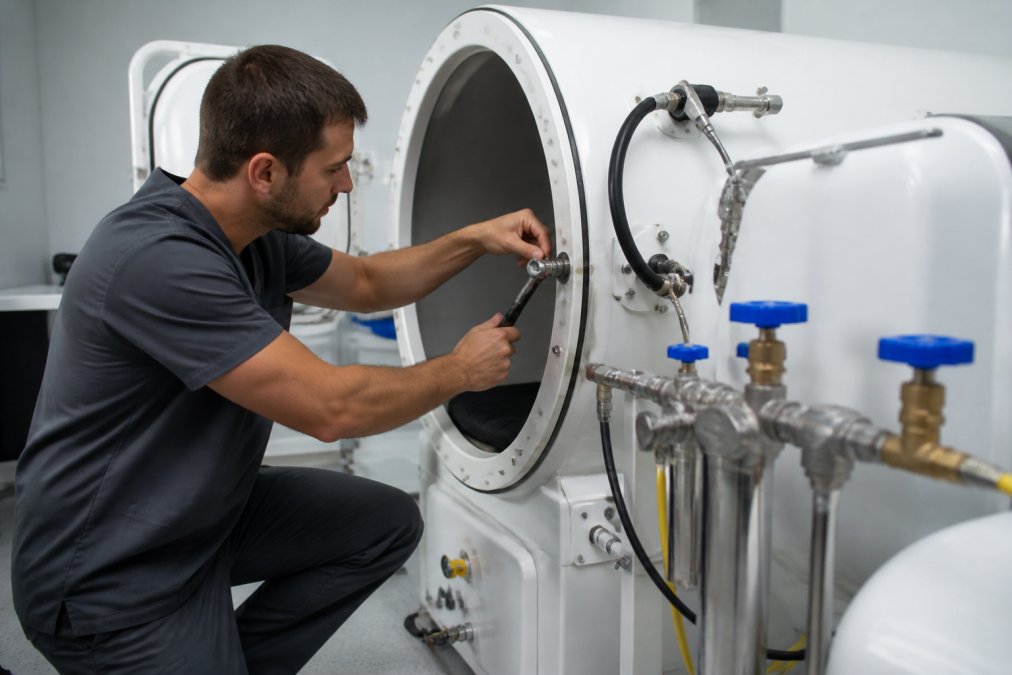
 ultimate-guide
Hyperbaric Chamber Maintenance and Safety Protocols
Table of Contents
- FDA Hyperbaric Chamber Safety Regulations: What Facility Managers Must Know
- Preventative Maintenance Schedule for Hyperbaric Chambers
- Hyperbaric Chamber Fire Prevention Protocols
- Monoplace vs. Multiplace Chamber Safety: Key Differences
- Troubleshooting Common Mechanical Failures in Hyperbaric Chambers
- Digital Logging and Compliance Software for Hyperbaric Facilities
- Post-Maintenance Validation Testing: Ensuring Equipment Performance
- Frequently Asked Questions
Last Updated: September 24, 2026
FDA Hyperbaric Chamber Safety Regulations: What Facility Managers Must Know
Hyperbaric chamber maintenance and safety protocols exist because hyperbaric chambers are regulated medical devices in the United States, and the FDA classifies them as Class II devices requiring clearance before marketing. That single fact shapes everything a facility manager needs to know about operating one safely.
At Eternall Wellness, we work with gyms, med spas, and wellness clinics adding hyperbaric systems to their service mix. The FDA's device framework covers labeling, indications for use, and adverse event reporting. The FDA hyperbaric oxygen therapy device information outlines which cleared indications exist and what manufacturers must document. Facilities that operate outside cleared indications carry liability that no revenue projection justifies.
Your obligations as an operator fall into three buckets: equipment maintenance records, staff training documentation, and patient safety monitoring. Each must be auditable on demand.
Preventative Maintenance Schedule for Hyperbaric Chambers
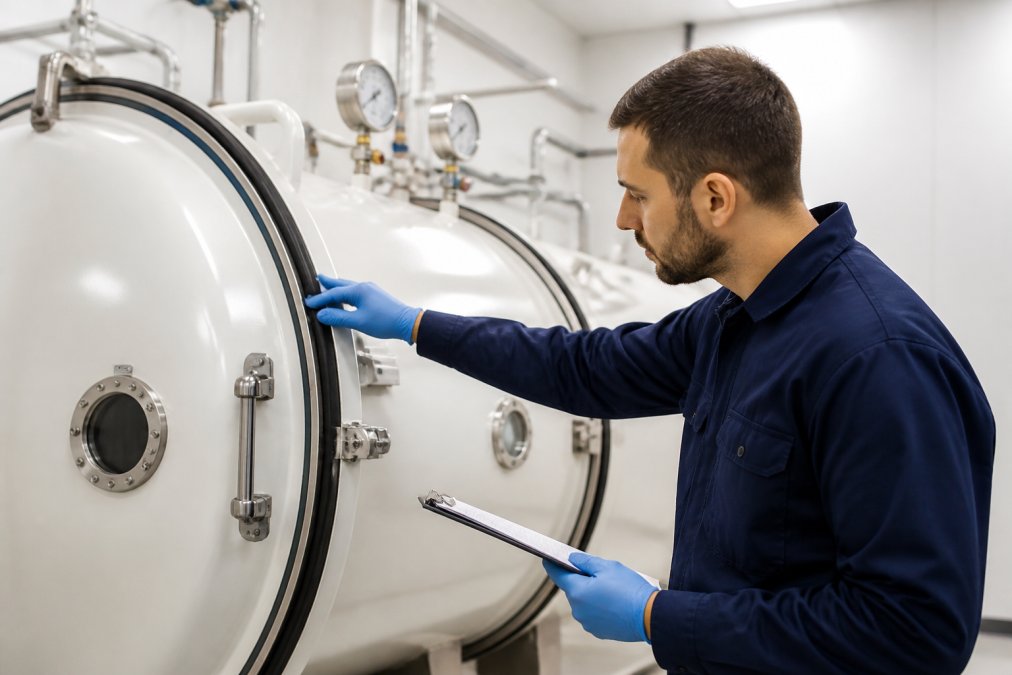
A preventative maintenance schedule for hyperbaric chambers should follow a tiered cadence: daily checks before each session, weekly system reviews, monthly deeper inspections, quarterly and semi-annual service, and annual professional recertification. Skipping tiers creates compounding risk because each tier catches a different class of failure, daily checks catch wear, monthly checks catch drift, and annual service catches structural degradation that only shows up under full pressure.
Daily, Weekly, and Monthly Maintenance Tasks
Daily tasks take minutes but catch the majority of problems. Weekly and monthly tasks need dedicated staff time. The table below reflects the cadence most clinical facilities follow; your manufacturer's service manual always overrides it where the two conflict.
| Frequency | Task | Who Performs It |
|---|---|---|
| Before every session | Inspect door seals and gaskets for cracking, flattening, or debris; verify pressure gauge reads zero at rest; test intercom and viewing port clarity | Trained operator |
| Daily | Wipe down interior surfaces with approved disinfectant; check oxygen supply pressure; confirm emergency shutoff is unobstructed | Trained operator |
| Weekly | Verify oxygen sensor calibration against a reference gas; inspect hoses and fittings for cracks or kinks; check exhaust filters and vent lines for blockage | Lead technician |
| Monthly | Full seal integrity test under pressure; filter replacement check; alarm and interlock function test; review maintenance log for missed entries | Biomedical tech |
| Quarterly | Pressure relief valve verification; electrical grounding continuity check; internal fire suppression system inspection | Biomedical tech |
| Semi-annual | Oxygen concentration analyzer recalibration; full ventilation and exhaust system service; staff competency re-verification | Biomedical tech and safety officer |
| Annually | Pressure vessel certification; full system audit; manufacturer-specified service; documentation review for regulatory readiness | Certified inspector |
Home vs. Clinical Maintenance Differences
Home chambers and clinical chambers diverge sharply in maintenance burden, and conflating the two is one of the most common mistakes in facility planning. A home soft-sided chamber needs basic cleaning, periodic pump checks, and a visual inspection of the zipper seal, the user can typically handle all of it. A clinical-grade rigid chamber requires documented calibration, professional seal testing, pressure vessel recertification, and regulatory recordkeeping that a home user never touches.
Post-Maintenance Validation Testing
Validation testing after any maintenance confirms the chamber still performs to specification before it returns to patient use. This step gets skipped more than any other, and it is the single most important control against a maintenance-induced failure. A chamber that was working before maintenance is not guaranteed to work after it.
Hyperbaric Chamber Fire Prevention Protocols
Fire prevention is the single most critical safety domain in hyperbaric operations. High-pressure oxygen accelerates combustion dramatically, and materials that are safe at normal atmospheric pressure can become dangerous inside an enriched chamber.
Oxygen Enrichment Risks and Fire Suppression Systems
Oxygen enrichment happens when the chamber atmosphere exceeds normal oxygen concentration. Even small increases raise fire risk substantially. The NFPA 99 Health Care Facilities Code sets requirements for chamber construction, electrical grounding, and fire suppression in clinical settings.
Your fire prevention protocol needs four elements:
- Prohibit all ignition sources inside the chamber, including electronics and synthetic clothing
- Ground every conductive surface to prevent static discharge
- Install an internal fire suppression system appropriate to the chamber type
- Train every operator on emergency depressurization procedures
Monoplace vs. Multiplace Chamber Safety: Key Differences
Monoplace and multiplace chambers require different safety approaches because their operational realities differ at every level, atmosphere, monitoring, staffing, and emergency response. A monoplace chamber holds one patient and typically uses 100% oxygen directly as the breathing medium. A multiplace chamber holds multiple patients and usually compresses the room with air while patients breathe oxygen through masks or hoods.
Atmosphere and Fire Risk
In a monoplace chamber, the entire interior is oxygen-enriched, which means every material inside, bedding, clothing, equipment, is in a high-oxygen environment. Fire risk is concentrated and immediate. In a multiplace chamber, the room atmosphere is compressed air, and only the patient's breathing circuit carries high-concentration oxygen. Fire risk is lower in the room atmosphere but still present at the mask and hood, and any oxygen leak raises the room's oxygen fraction over time.
Monitoring and Staffing
In a monoplace chamber, staff monitor from outside through a viewing port and communicate via intercom. The patient is alone inside, which means the operator must be able to recognize distress visually and respond without physical access. That places a premium on clear communication equipment and a written protocol for emergency depressurization from outside.
Emergency Depressurization
Emergency depressurization is faster and simpler in a monoplace chamber because there is one occupant and the operator controls the vent from outside. In a multiplace chamber, depressurization affects everyone inside, and the inside attendant must manage patient anxiety and positioning while the outside operator controls the vent. The decompression rate must be controlled to avoid barotrauma, which means a multiplace emergency is a coordinated event, not a single button press.
Fire Suppression and Ventilation
Fire suppression differs by chamber type. Monoplace chambers typically use an internal water deluge or inert gas system triggered from outside. Multiplace chambers use a combination of internal suppression and the built-in ventilation system to dilute oxygen and clear smoke. Ventilation requirements are more demanding in multiplace chambers because the room atmosphere must be continuously exchanged to prevent oxygen buildup from mask leaks.
What This Means for Facility Managers
Confirm which chamber type you operate before writing any operational procedure, because the protocols are not interchangeable. A monoplace fire drill does not prepare your staff for a multiplace emergency, and a multiplace staffing plan will not fit a monoplace budget. A common compliance failure is a facility that adopts a generic safety manual written for the other chamber type.
Troubleshooting Common Mechanical Failures in Hyperbaric Chambers
Most mechanical failures trace to three sources: seal degradation, sensor drift, and ventilation blockage. Catching these early prevents downtime and protects patient safety.
Seal Integrity, Calibration, and Venting System Checks
Seal integrity failures show up as slow pressure loss or audible hissing during compression. Inspect door gaskets for cracking, flattening, or debris before every session. A common mistake is assuming a seal is fine because it looks clean, when the real test is whether the chamber holds pressure.
Digital Logging and Compliance Software for Hyperbaric Facilities
Paper logs fail inspections. Digital logging systems timestamp every hyperbaric chamber maintenance action, flag missed intervals, and generate compliance reports on demand.
Post-Maintenance Validation Testing: Ensuring Equipment Performance
Validation testing after any maintenance confirms the chamber still performs to specification. Run a full pressure test, verify oxygen concentration readings against a calibrated reference, and test all alarms and emergency systems. Document the results with the date, technician name, and specific readings.
Frequently Asked Questions
What are the safety standards for using a hyperbaric chamber?
In the U.S., hyperbaric chambers must meet FDA requirements for safety and effectiveness, and facilities should follow NFPA 99 for fire safety and ASME PVHO-1 for pressure vessel design. Key standards cover oxygen concentration limits (typically below 23.5%), fire suppression systems, emergency depressurization, and regular maintenance. Always verify your specific chamber's compliance and consult a qualified hyperbaric safety director to ensure all protocols are met.
How often should hyperbaric chambers undergo professional maintenance?
Professional maintenance frequency depends on the manufacturer's recommendations and usage. Most clinical chambers require annual inspections by a certified technician, with more frequent checks for high-use facilities. A preventative maintenance schedule for hyperbaric chambers should include daily operator checks, monthly system tests, and annual full-service inspections. Always document all maintenance and keep records for regulatory compliance and safety audits.
What are the prohibited items and fire safety rules for hyperbaric chambers?
Prohibited items include anything that can generate a spark or static electricity, such as lighters, matches, electronics, synthetic clothing, and oil-based products. Fire safety rules require strict control of oxygen levels, use of fire-retardant materials, and installation of fire suppression systems. Patients must wear 100% cotton gowns and avoid jewelry, hair products, and makeup. Hyperbaric chamber fire prevention protocols should be posted and reviewed with all staff and patients before each session.
What are the common risks associated with hyperbaric oxygen therapy?
Common risks include barotrauma (ear and sinus injuries), oxygen toxicity, and temporary vision changes. Fire risk is low but serious if protocols are not followed. Pre-treatment patient evaluation and in-chamber monitoring help mitigate these risks. Facilities should have emergency procedures for rapid depressurization and complication management. Always consult a qualified healthcare provider to assess individual suitability for HBOT.