 ultimate-guide
Hyperbaric Chamber Business Model for Clinics
Table of Contents
- Why Hyperbaric Chamber Services Drive Revenue for Clinics
- HBOT Clinic Startup Costs and Capital Requirements
- Wellness vs. Medical Models: Which Operational Structure Works
- Hyperbaric Oxygen Therapy Insurance Billing Codes and Reimbursement
- Mild vs Hard Hyperbaric Chamber Business ROI Comparison
- Regulatory Compliance, Certification, and Safety Standards
- Patient Acquisition, Retention, and Revenue Scaling
- Staffing, Training, and Operational Support
Last Updated: August 22, 2026
Why Hyperbaric Chamber Services Drive Revenue for Clinics
Hyperbaric oxygen therapy (HBOT) represents one of the fastest-growing revenue streams in the wellness and medical clinic space. Facilities that add HBOT capabilities can see new revenue channels activate, with recurring membership and session-based pricing models driving consistent cash flow.
A hyperbaric chamber business model allows clinics to monetize existing square footage, attract members seeking premium recovery modalities, and create predictable recurring revenue. HBOT sessions naturally encourage repeat visits, patients typically complete treatment protocols spanning multiple sessions, each generating revenue. The dual positioning is particularly attractive: clinics can operate under a wellness model (cash-pay memberships) or integrate with medical insurance billing for clinical applications. A gym with 150 members can launch HBOT profitably. A med spa can diversify service offerings. A chiropractic clinic can integrate it into patient treatment plans and strengthen retention.
The challenge most operators face isn't demand, it's understanding the operational and financial structure required to make the hyperbaric chamber business sustainable. This guide walks through startup costs, regulatory requirements, staffing models, and the specific revenue mechanics that separate profitable operations from those that struggle with use.
HBOT Clinic Startup Costs and Capital Requirements
The initial investment for a hyperbaric chamber business varies significantly based on chamber type, facility modifications, and operational model. Most clinics should plan for total startup capital depending on equipment acquisition, facility preparation, regulatory compliance, and working capital reserves.
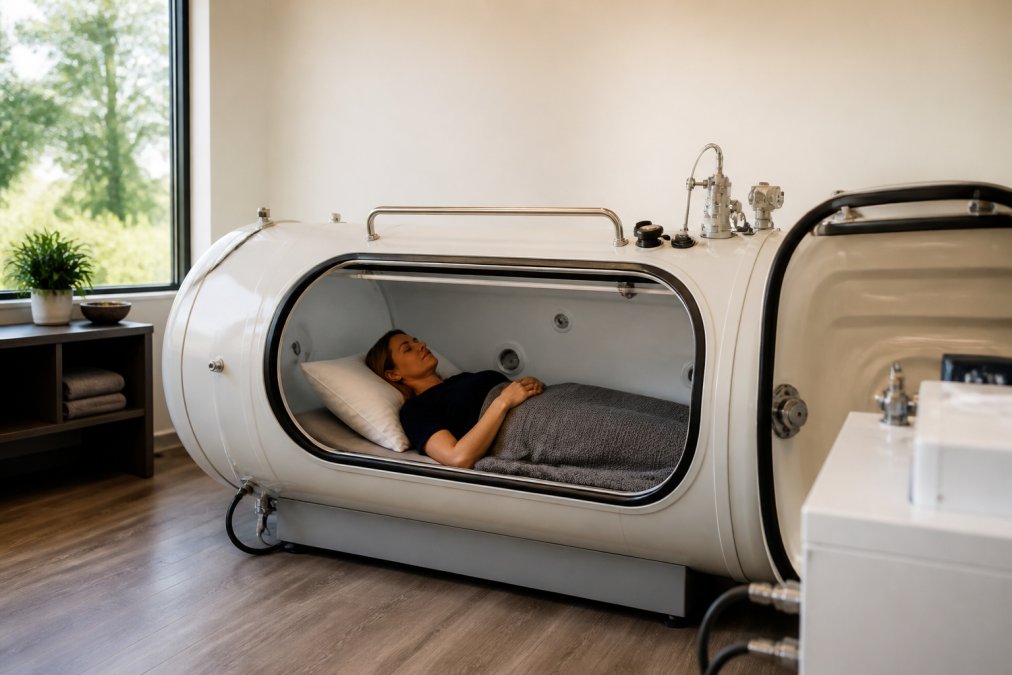
Hard-shell chambers, the clinical-grade systems used in medical settings, require the largest upfront investment. These systems demand dedicated electrical infrastructure, compressed air systems, and often necessitate facility modifications to meet safety codes. Soft-shell chambers have lower installation requirements and can fit into existing treatment rooms with minimal facility modification.
Beyond the chamber itself, budget for oxygen delivery systems, safety equipment, patient monitoring technology, and backup power systems. Regulatory compliance costs include facility licensing, medical director consultation, staff training and certification, and initial insurance policies. Many operators underestimate these ancillary costs, they often represent a significant portion of total startup capital.
Rather than purchasing outright, many operators use equipment financing, which preserves working capital and allows you to spread costs across the revenue the system generates. Plan for operational expenses (staff, utilities, maintenance, marketing) before the system reaches use targets. This buffer prevents cash flow crises during the ramp-up phase.
| Cost Category | Soft-Shell Chamber | Hard-Shell Chamber |
|---|---|---|
| Chamber equipment | Lower capital | Higher capital |
| Facility modifications | Minimal | Significant |
| Installation timeline | 2-4 weeks | 4-8 weeks |
| Electrical/utility upgrades | Limited | Extensive |
| Best for | Wellness clinics, spas | Medical clinics, hospitals |
Wellness vs. Medical Models: Which Operational Structure Works
The operational structure you choose determines pricing strategy, revenue predictability, insurance relationships, and regulatory oversight.
Wellness Model Economics
A wellness-focused hyperbaric chamber business operates as a premium recovery service, similar to massage therapy or IV therapy offerings. Members pay out-of-pocket for sessions or purchase membership packages. Pricing typically ranges from individual session rates to monthly unlimited packages or bundled protocols (e.g., multi-session packages).
The wellness model offers operational advantages: you control pricing directly without insurance approval delays, revenue is immediate, and patient acquisition focuses on marketing to existing members and wellness-conscious demographics. This model works exceptionally well for gyms, recovery studios, and med spas with established member bases.
Use economics depend on session pricing and frequency. A typical member might use HBOT 1-2 times weekly during active treatment protocols, then shift to maintenance frequency. The trade-off is that wellness operations don't access insurance reimbursement, your entire revenue depends on direct member payments. This makes patient education and outcome communication critical.
Medical Clinic Model with Insurance Reimbursement
A medical-model hyperbaric chamber business integrates HBOT as a clinical service with insurance billing capabilities. Patients are referred by physicians for FDA-approved indications (diabetic wounds, non-healing ulcers, radiation tissue damage). The clinic bills insurance for sessions, and the patient typically pays a copay or coinsurance.
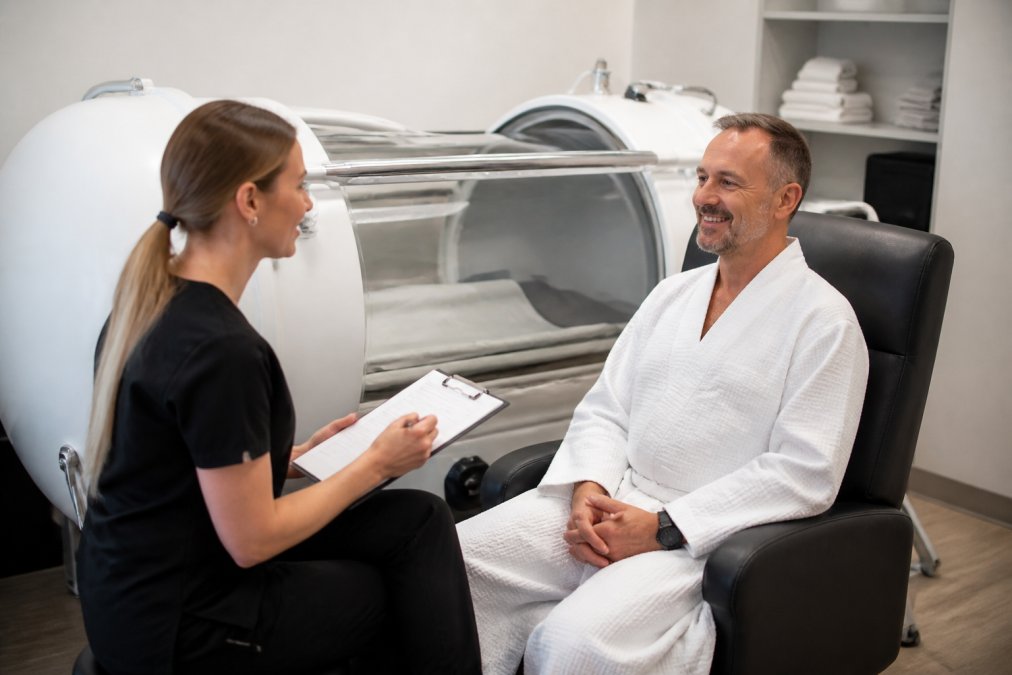
This model requires significantly more regulatory structure: a medical director overseeing the program, physician referral relationships, proper coding and billing infrastructure, and documentation systems that support insurance claims. Insurance reimbursement rates for HBOT sessions are typically higher than wellness pricing, and patient volume is more predictable because referrals come from established physician networks.
The hybrid approach, operating both wellness and medical billing simultaneously, is increasingly common. A clinic might serve self-pay wellness members during off-peak hours while billing insurance for clinical referrals during peak hours. This maximizes chamber use and revenue diversification.
Hyperbaric Oxygen Therapy Insurance Billing Codes and Reimbursement
If you're pursuing medical billing for your hyperbaric chamber business, understanding coding and reimbursement is essential. HBOT services use specific Current Procedural Terminology (CPT) codes: CPT 99183 (first 30 minutes) and CPT 99184 (each additional 15-minute increment). Reimbursement rates vary by payer and geographic location, but Medicare typically establishes the baseline rate that commercial insurers reference.
Prior authorization requirements vary significantly by payer. Many insurers require pre-approval before beginning treatment. Your billing staff needs to understand each major payer's authorization process. Documentation standards are strict, each session must be documented with patient condition, treatment parameters, and clinical response.
Common reasons for claim denials include missing prior authorization, insufficient documentation of medical necessity, treatment protocols exceeding payer-approved session limits, or use of non-FDA-approved chamber types. Building a strong billing process with experienced coders reduces denial rates and improves cash flow predictability. Many clinics partner with billing services to manage this complexity.
Mild vs Hard Hyperbaric Chamber Business ROI Comparison
The choice between mild (soft-shell) and hard-shell chambers significantly impacts your financial model.
Hard-shell chambers deliver higher atmospheric pressure (typically 2.4-3.0 ATA) and are FDA-approved for clinical indications (the FDA). They command higher per-session reimbursement rates from insurance and support broader clinical applications. However, they require substantial facility investment, dedicated space, medical oversight, and trained technicians. The ROI timeline is longer because of higher capital requirements, but mature use rates can generate substantial revenue.
Soft-shell chambers operate at lower pressures (typically 1.3-1.5 ATA) and are marketed primarily for wellness applications (the FDA). They require minimal facility modification, lower staff training intensity, and faster installation. The per-session revenue is lower than hard-shell, but the lower capital requirement means ROI is achieved faster. For clinics with space constraints or limited capital, soft-shell systems often deliver better financial returns.
Hard-shell systems require dedicated operators and strict safety protocols. Soft-shell systems can often be managed by existing staff with brief training. For a typical clinic with 150-300 members, a soft-shell system often delivers faster ROI and lower operational risk. For larger facilities or those with established physician referral networks, hard-shell systems can generate substantially higher total revenue.
Regulatory Compliance, Certification, and Safety Standards
Operating a hyperbaric chamber business requires navigating multiple regulatory frameworks. FDA classification determines which chambers are approved for specific applications. Hard-shell chambers are FDA-cleared medical devices for specific therapeutic indications. Soft-shell chambers are often marketed for wellness use and may fall outside FDA medical device classification, though some states regulate them more strictly.
State licensing requirements vary significantly. Some states require specific facility licenses for hyperbaric operations. Others regulate the medical director's role or require technician certification. Your state's health department and medical board websites contain the relevant regulations.
Safety standards are established by organizations like ASME (American Society of Mechanical Engineers) and UHMS (Undersea and Hyperbaric Medical Society) (asme.org). These standards address chamber construction, pressure testing, emergency protocols, and operator training. Compliance with these standards is essential for insurance coverage and liability protection.
Facility design and safety code requirements include proper ventilation, emergency decompression systems, oxygen monitoring, fire suppression systems, and patient safety equipment. These requirements are detailed in NFPA (National Fire Protection Association) standards and state building codes.
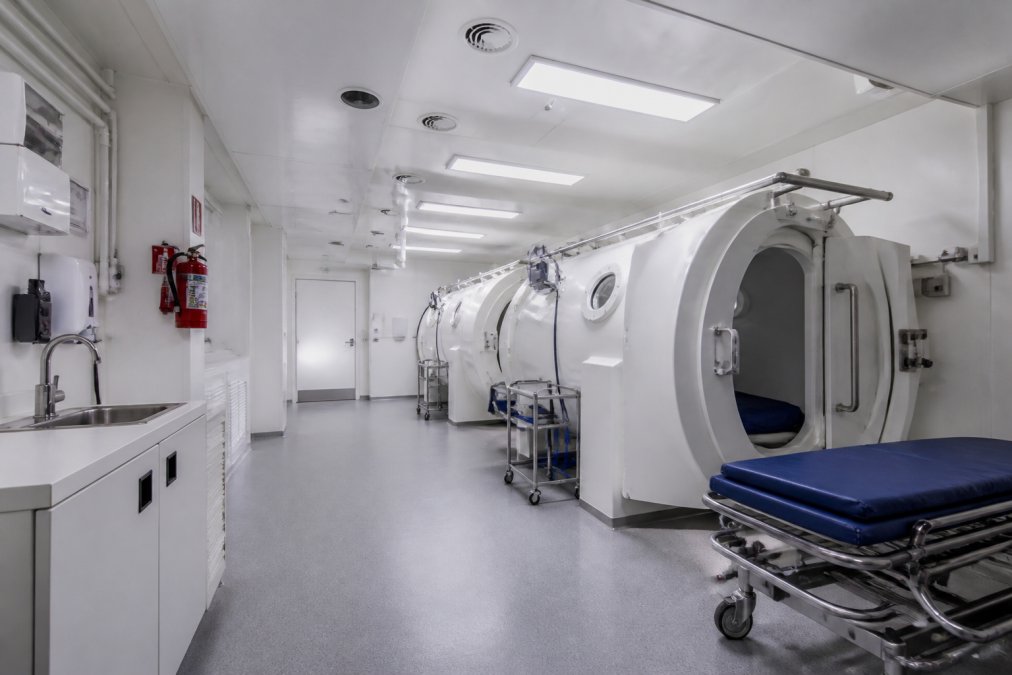
Medical director requirements apply if you're billing insurance or operating under a clinical model. The medical director must be a licensed physician with HBOT training and experience. Their role includes reviewing patient referrals, approving treatment protocols, overseeing clinical outcomes, and ensuring regulatory compliance.
Malpractice insurance is critical and often overlooked. Standard clinic policies may not cover hyperbaric operations. You need specific coverage for HBOT services, which typically costs more than general clinic insurance but is essential for liability protection.
Patient Acquisition, Retention, and Revenue Scaling
The most profitable hyperbaric chamber business maximizes use through strategic patient acquisition and aggressive retention. Most clinics operate well below theoretical maximum use, the gap between current and potential use is where growth revenue lives.
Patient acquisition in wellness models focuses on educating existing members about recovery benefits. Education campaigns highlighting specific benefits (faster recovery from training, improved endurance, accelerated injury healing) convert skeptical members into users. Trial pricing or introductory packages reduce adoption friction.
For medical models, physician referral development is the primary acquisition channel. Building relationships with orthopedic surgeons, wound care specialists, and other referral sources creates predictable patient flow.
Retention economics are compelling. A member who completes a multi-session protocol and continues with maintenance frequency generates substantially more lifetime value than a one-time trial user. Your retention strategy should include post-protocol engagement, offering discounted maintenance packages, seasonal protocols, or complementary services that keep members engaged with HBOT.
Pricing strategy significantly impacts both revenue and use. Most successful clinics use tiered pricing: higher rates for individual sessions, discounted rates for packages, and lowest rates for memberships. This structure encourages commitment while allowing price-sensitive trial users to access services.
Revenue scaling comes from increased use and expanded service integration. As your program matures, consider adding complementary modalities (compression therapy, infrared sauna, cryotherapy) that drive additional chamber use.
Staffing, Training, and Operational Support
Operating a hyperbaric chamber business requires trained staff, but the complexity depends on your chamber type and operational model. Soft-shell systems typically require less intensive training than hard-shell chambers.
For soft-shell operations, many clinics use existing staff with brief training. Training covers basic operation, patient safety, emergency procedures, and equipment maintenance. Hard-shell chamber operations typically require dedicated staff with more extensive training and formal HBOT technician certification in many states.
Medical director time commitment varies based on patient volume and operational complexity. A small wellness program might require a few hours monthly. A larger clinical program with insurance billing might require more hours monthly.
Patient education is often underestimated as a staffing requirement. Effective programs dedicate time to explaining HBOT benefits, setting expectations, and educating patients on how to maximize results. This education directly impacts patient compliance and outcomes.
Operational support includes equipment maintenance, safety inspections, documentation management, and patient scheduling. As programs scale, dedicated operational staff often becomes necessary.
A hyperbaric chamber business model offers substantial revenue potential for clinics willing to navigate the operational and regulatory requirements. Success depends on choosing the right chamber type for your facility, understanding your regulatory obligations, building a sustainable patient acquisition strategy, and maintaining operational excellence.
The clinics generating the strongest returns treat hyperbaric services as a business opportunity, not just another equipment purchase. They evaluate ROI rigorously, invest in patient education and retention, and scale thoughtfully as use increases. Eternall Wellness supports this approach by helping facilities evaluate their specific opportunity, select appropriate equipment, and develop operational strategies that turn capital investment into recurring revenue. Get started with Eternall Wellness and transform idle treatment space into a consistent, scalable revenue stream.
Frequently Asked Questions
Is a hyperbaric chamber a profitable business investment for clinics?
Yes, when properly positioned and operated. Profitability depends on your business model (wellness vs. medical), chamber type, utilization rates, and local market demand. Wellness models typically generate revenue per session with lower overhead, while medical clinics pursuing insurance reimbursement require higher upfront compliance costs but access recurring revenue. Your specific ROI depends on startup capital, operational costs, patient acquisition strategy, and whether you operate cash-pay or insurance-billing services.
What are the FDA regulatory requirements for operating hyperbaric chambers?
The FDA classifies hyperbaric chambers as Class II medical devices. Facilities must comply with 21 CFR Part 1020.3000 (Performance Standards for Hyperbaric Chambers) and adhere to ASME standards for chamber construction and safety. If you operate a medical clinic model, you must have a qualified medical director, maintain treatment protocols, document patient outcomes, and follow state licensing requirements. Wellness models operating soft-shell chambers for non-medical purposes face fewer FDA restrictions, but you must still comply with manufacturer specifications and state health department rules. Always verify current requirements with your state health department and legal counsel.
How do you bill insurance for hyperbaric oxygen therapy?
Medical clinics bill HBOT using CPT codes 99183 (initial evaluation and treatment) and 99184 (subsequent treatment). Medicare and most private insurers require a physician order, documented medical necessity (typically for approved conditions like diabetic wounds or carbon monoxide poisoning), and treatment protocols meeting established guidelines. Reimbursement rates vary by payer and region. You'll need credentialing with insurance networks, proper documentation systems, and a medical director overseeing treatment protocols. Cash-pay wellness models skip insurance billing entirely, simplifying operations but limiting market reach.
What is the difference between mild and hard hyperbaric chambers for business use?
Hard-shell chambers (rigid, pressurized to 3+ atmospheres) are FDA-approved for medical use and support insurance billing, making them ideal for clinical settings pursuing reimbursement. They handle higher pressure, accommodate multiple patients, and meet strict safety standards, but cost more to purchase and install. Soft-shell chambers (fabric, pressurized to 1.3-1.5 atmospheres) are marketed for wellness and recovery, cost less, require minimal installation, and suit gyms and spas targeting cash-pay clients. Soft-shell cannot bill insurance and lack medical-grade approvals, but offer lower capital requirements and faster ROI. Your choice depends on your target market, budget, and revenue model.
What are the ongoing operational costs of running an HBOT service?
Monthly operational costs typically include oxygen supply, maintenance and inspections, staff labor (depending on utilization), facility overhead (utilities, rent allocation), liability insurance, and equipment servicing. Total monthly overhead varies for a clinic. Hard-shell chambers require more frequent inspections and higher oxygen consumption, while soft-shell chambers cost less to operate. Profitability depends on session volume and pricing; a clinic running a certain number of sessions weekly at a specific price per session typically covers operational costs and generates positive cash flow.
Can a small gym with 150 members support a hyperbaric chamber business?
Yes, if positioned correctly. A soft-shell chamber requires minimal upfront investment and can generate revenue at modest utilization. Position it as a premium member perk or paid add-on service rather than free member access. Market it to your existing members first, then to non-members in your local area seeking recovery services. Many small gyms achieve utilization within 6-12 months by bundling HBOT with personal training packages or offering introductory pricing. Start with one soft-shell chamber to test demand before scaling to hard-shell or multi-chamber setups.
How fast do hyperbaric chamber systems pay for themselves?
Payback timelines vary by model and utilization. Soft-shell wellness chambers typically pay for themselves faster at high utilization. Hard-shell medical chambers require a longer period at high utilization, especially when pursuing insurance reimbursement and accounting for compliance costs. Financing options can preserve capital while systems generate revenue, allowing payback to occur through monthly service income rather than upfront cash outlay. Your actual timeline depends on session pricing, utilization rate, operational costs, and whether you pursue cash-pay or insurance-billing revenue. Request specific projections based on your facility size and market.
What training and support does Eternall Wellness provide for hyperbaric chamber operation?
Eternall Wellness provides comprehensive support focused on both technology operation and business integration. This includes equipment training for your staff, guidance on operational protocols, assistance with utilization strategies, and ongoing support to ensure your system performs and generates revenue. The company helps you evaluate ROI, pricing strategies, patient demand, and integration into your existing operations. Specific training details, support hours, and ongoing resources should be confirmed directly with Eternall Wellness to understand what's included with your equipment purchase or financing agreement.
This article was written using GrandRanker