 ultimate-guide
Commercial Red Light Therapy: 2026 Business Guide
Table of Contents
- Why Commercial Red Light Therapy Is a Revenue Opportunity
- FDA-Cleared Red Light Therapy Devices: What Business Owners Must Verify
- Wavelengths That Matter: 660nm, 850nm, and Power Density
- Commercial Red Light Therapy Bed Pricing and Financing
- Red Light Therapy Session Duration and Treatment Protocols
- Space, Electrical, and Operational Requirements
- ROI and Maintenance: The Numbers Behind the Service
- Frequently Asked Questions
Last Updated: September 25, 2026
Why Commercial Red Light Therapy Is a Revenue Opportunity
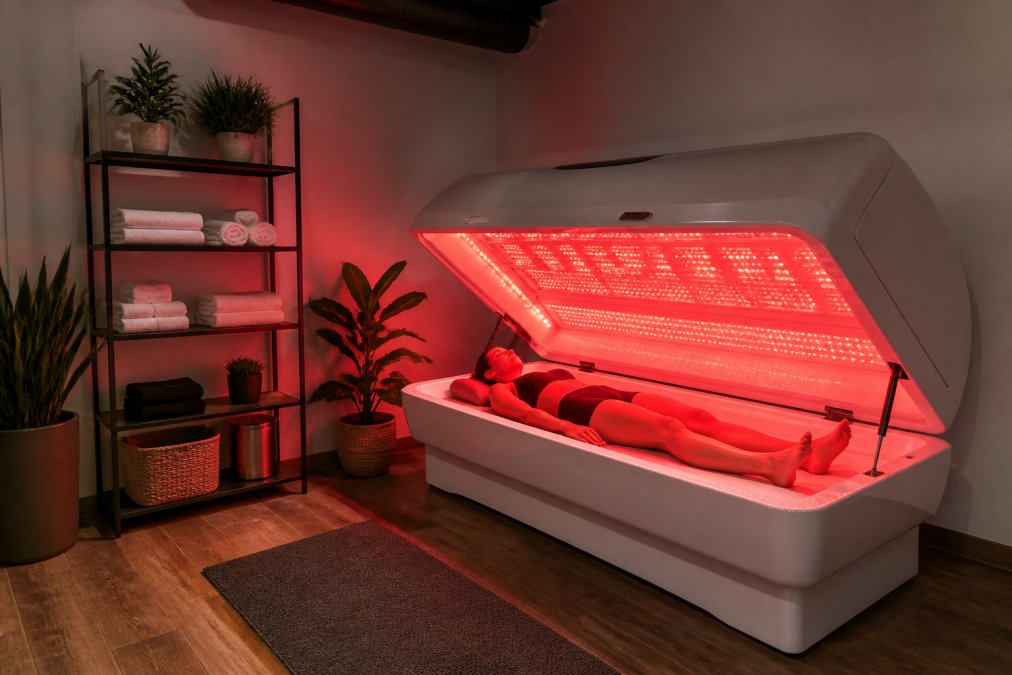
Commercial red light therapy is the use of high-output LED panel systems in a gym, med spa, or clinic to deliver photobiomodulation, a light-based process that supports cellular energy and recovery, as a paid service. At Eternall Wellness, we help facility owners stop treating recovery equipment as a sunk cost and start treating it as a billable service line. The appeal is simple: you already have the members, the rooms, and the front desk.
FDA-Cleared Red Light Therapy Devices: What Business Owners Must Verify
The first question to ask any supplier is whether the device is FDA-cleared for a specific intended use, not just marketed as "FDA registered." Those are different things. Registration lists a facility; clearance covers a medical claim.
Ask for the clearance documentation and confirm three items:
- The exact intended use the device is cleared for
- The model number matching the unit you're buying
- Whether clearance covers professional or home use
Wavelengths That Matter: 660nm, 850nm, and Power Density
Two wavelengths do the heavy lifting in professional-grade systems: 660nm red light and 850nm near-infrared. The 660nm wavelength sits at the skin's surface and supports skin health and surface tissue. The 850nm near-infrared penetrates deeper, reaching muscle and joint tissue where recovery and inflammation reduction matter most.
| Spec | What It Controls | Why It Matters |
|---|---|---|
| Wavelength (660nm) | Surface tissue response | Skin health, surface recovery |
| Wavelength (850nm) | Depth of tissue penetration | Muscle, joint, deeper recovery |
| Power density | Session time and depth | Shorter, effective sessions |
| Pulsed light / hertz | Delivery rhythm | Protocol customization |
Commercial Red Light Therapy Bed Pricing and Financing
Pricing for commercial red light therapy beds and full-body panel systems depends on wavelength configuration, power density, treatment area, and build quality, so there is no single number. What buyers actually need is a framework for comparing quotes and understanding the true cost of ownership, not a headline figure that will not hold.
What Drives the Price
Four variables move the number more than anything else:
- Wavelength configuration. Single-wavelength panels cost less than dual 660nm/850nm arrays. Dual-wavelength systems command a premium because they cover both surface skin protocols and deeper muscle and joint protocols.
- Power density and total irradiance. Higher-output panels cost more to build and let you run shorter sessions, which raises throughput per room.
- Treatment area. A targeted panel for a single body region costs a fraction of a full-body bed or enclosed pod that treats the whole body at once.
- Build quality and certification. Medical-grade housing, cooling systems, and documented FDA clearance add cost but also reduce downtime and marketing risk.
Financing Structures to Expect
Most facilities do not pay cash. The common structures are:
- Equipment lease or fair-market-value lease. Lower monthly payment, and you return or buy out the unit at the end of term.
- Equipment finance agreement. You own the unit at the end of the term; payments are typically higher than a lease.
- Manufacturer financing. Often the fastest path, but compare the effective rate against a bank or equipment lender.
- Section 179 deduction. Under current federal tax rules, qualifying equipment purchases can be deducted up to the annual limit in the year placed in service, which can materially change the after-tax cost. Confirm eligibility with a tax professional.
Total Cost of Ownership, Not Sticker Price
The purchase price is only the first line. Build a five-year TCO model that includes:
- Electricity. A commercial-grade LED array running several hours a day adds a real line to the utility bill. Ask the vendor for the system's wattage draw and estimate hours of daily use.
- LED lifespan and replacement. Diodes degrade over thousands of hours. Ask for the rated lifespan in hours and the cost of a replacement panel or diode array.
- Service and support. A service contract or per-visit repair cost should be budgeted even in year one.
- Consumables and cleaning. Eye protection, sanitizing supplies, and staff time are recurring costs.
- Installation and training. Turnkey packages that include both cost more upfront but shorten the path to a working service line.
Client-Side Payment Options
Confirm whether the equipment and the service are HSA- or FSA-eligible for your clients. Eligibility depends on the specific intended use and how the service is prescribed or documented, so verify before you advertise it.
Red Light Therapy Session Duration and Treatment Protocols
Red light therapy session duration typically runs from a few minutes to around twenty, depending on the device's power density and the treatment area. Higher irradiance means shorter sessions; lower-output panels need more time for the same dosage.
A workable default protocol:
- Start clients at the shorter end of the range
- Standardize session length per device, not per whim
- Track how clients respond over the first few weeks
- Adjust only when the device or use case changes
Space, Electrical, and Operational Requirements
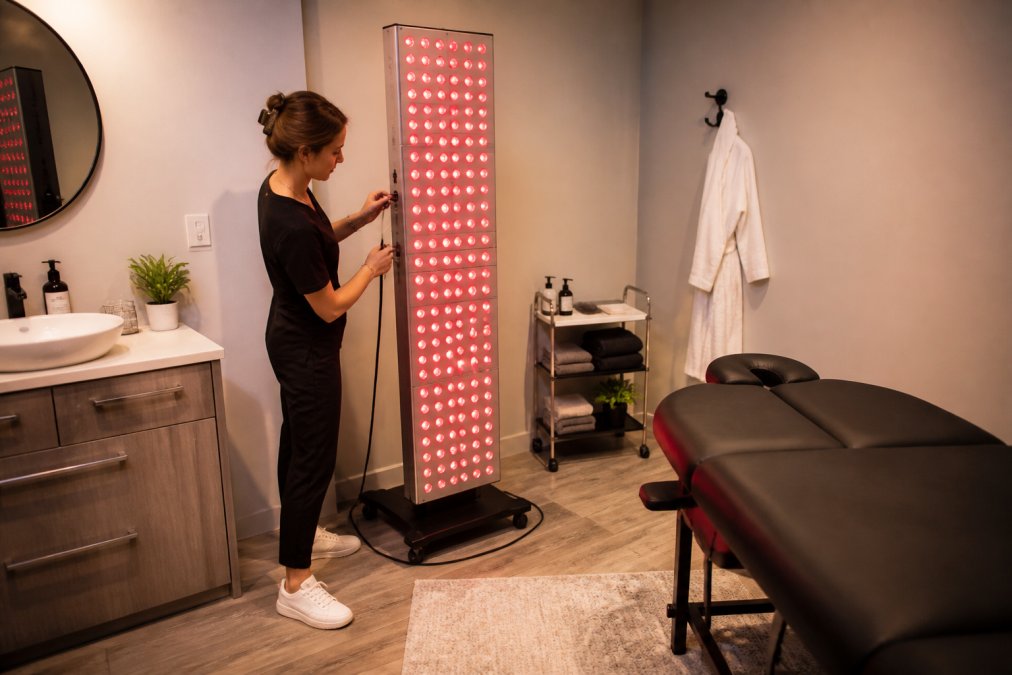
Space and power are where recovery projects quietly stall. A full-body panel system needs a defined treatment area, clearance for entry and exit, and enough room for a client to stand comfortably in front of the array. Measure before you buy, not after.
ROI and Maintenance: The Numbers Behind the Service
ROI for a recovery service comes down to three inputs: use, price per session, and operating cost. Maintenance sits inside that third input and is the line most owners underestimate. But the bigger gap in most guides is what happens between the sale and the session, the workflow, sanitation, and billing mechanics that decide whether the service actually runs profitably.
Building the ROI Model
Start with conservative assumptions:
- Sessions per day. Base this on realistic booking behavior, not capacity.
- Price per session. Compare against local med spa, chiropractic, and recovery studio pricing.
- Operating cost per session. Electricity, staff time, cleaning supplies, and amortized maintenance.
A common pattern is that the service breaks even at roughly a third of daily capacity and becomes meaningfully profitable above half. Run your own numbers against your room and your market.
Operational Workflow
A repeatable session flow keeps turnover tight and the experience consistent:
- Check-in and intake. Confirm the client's goals and any contraindications; direct health questions to a qualified professional.
- Setup. Position the client at the correct distance from the panel for the device's specified irradiance.
- Session. Run the standardized duration for that device and protocol.
- Post-session. Offer water, log the session, and book the next visit before the client leaves.
- Turnover. Wipe down the treatment area and reset the room for the next booking.
Sanitation Protocols
High-traffic use means high-touch surfaces. Build a written protocol that covers:
- Eye protection. Clean or replace eyewear between clients.
- Panel surfaces and controls. Use manufacturer-approved cleaners; harsh solvents can damage coatings and void warranties.
- Treatment area. Wipe down tables, mats, and handrails between sessions.
- Documentation. Keep a cleaning log so staff accountability is clear.
Billing and Reimbursement
This is where most guides stop, and where operators need the most help. Whether red light therapy is reimbursable depends on the payer, the diagnosis, and how the service is documented. In practice:
- Cash-pay is the norm. Most med spas, gyms, and recovery studios bill clients directly.
- Some clinical settings bill under established codes. Certain phototherapy and physical medicine codes may apply when the service is part of a covered treatment plan, but coverage varies widely by payer and plan.
- Documentation matters. If you intend to bill insurance, the treatment must be tied to a covered diagnosis and supported by clinical notes.
- Verify before you promise. Confirm coverage with the specific payer and consult a billing specialist or compliance advisor before advertising insurance acceptance.
Maintenance and Support
Recurring costs to plan for:
- LED panel lifespan and eventual replacement
- Replacement cabling and control components
- Cleaning supplies and staff time
- Any service contract or support plan
The long-term maintenance picture is why support matters as much as specs. Equipment vendors that vanish leave you with a dead panel and no parts. Ask what happens in year three, not just at delivery.
Frequently Asked Questions
What features distinguish commercial red light therapy beds from home-use devices?
Commercial red light therapy beds deliver higher irradiance and power density across a larger treatment area, so full-body sessions take minutes rather than the longer times home panels require. They are built for continuous daily use, include medical-grade LED arrays, and often carry FDA clearance for specific applications. Home devices typically cover a smaller area at lower output. For a clinic or gym, the deciding factor is throughput: how many clients you can treat per hour at a therapeutic dosage.
How do you determine the ROI of adding red light therapy to a wellness clinic?
Start with three inputs: your per-session price, realistic daily utilization, and operating days per month. Multiply sessions by price to get gross monthly revenue, then subtract financing payments, staff time, and consumables. Break-even depends on how many sessions you actually book, so track utilization for the first 60 to 90 days before projecting. Facilities that bundle red light therapy with existing recovery or aesthetic services may see stronger retention, which can improve the overall return.
What are the FDA regulatory considerations for commercial light therapy equipment?
In the United States, red light therapy devices are regulated by the FDA as medical devices. Devices marketed for pain relief or other clinical claims typically require FDA clearance, while general wellness devices fall under a different pathway with no medical claims allowed. Before buying, ask the supplier for the device's clearance number and the specific indications it covers. Marketing claims you make to clients must match the cleared indications. Verify current status directly with the FDA's device database.
How do you maintain and sanitize commercial red light therapy panels?
Wipe panels and bed surfaces with a manufacturer-approved disinfectant between clients, and avoid abrasive cleaners that cloud the LED covers. Check fans and vents weekly for dust buildup, since airflow affects thermal performance. Schedule a professional inspection annually and keep a maintenance log. Most commercial systems are designed for high-volume use, but following the manufacturer's cleaning and service schedule protects both the equipment and your clients.
Adding a recovery modality is a capital decision wrapped in an operational one, and the facilities that get it right plan for both. Eternall Wellness helps gyms, spas, and clinics evaluate commercial red light therapy as a revenue-generating service, with premium multi-modality systems, financing options that preserve capital, and guidance on ROI, utilization, and integration. Get started with Eternall Wellness and turn an idle room into a service your clients book again and again.